English
 Español
 Français
 Deutsch
 Italiano
 Português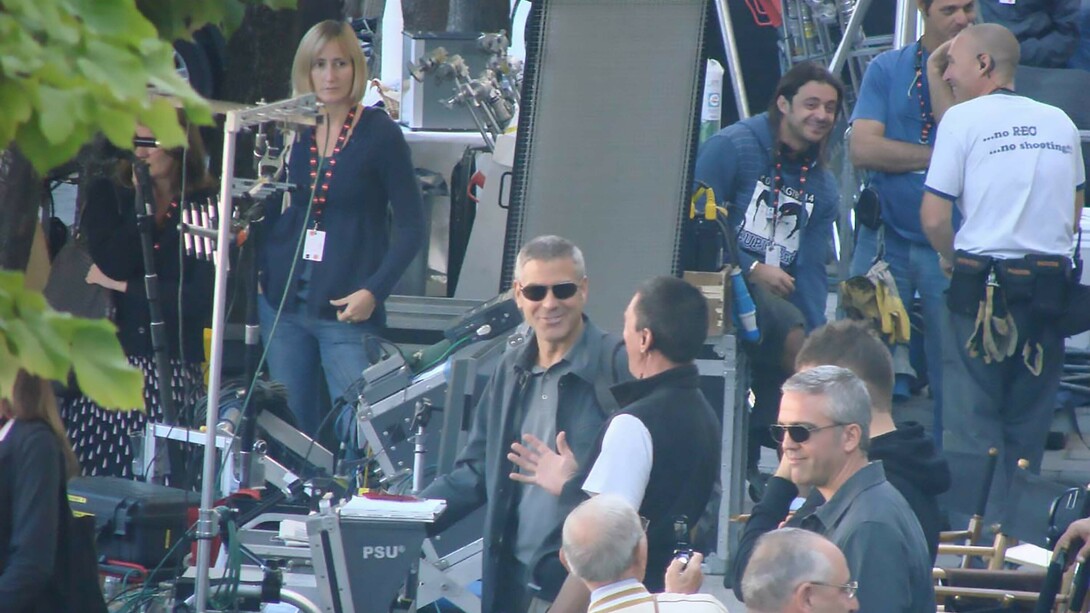
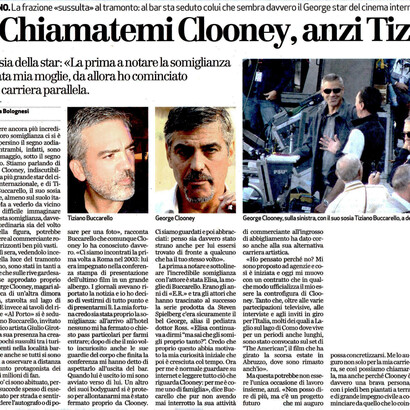
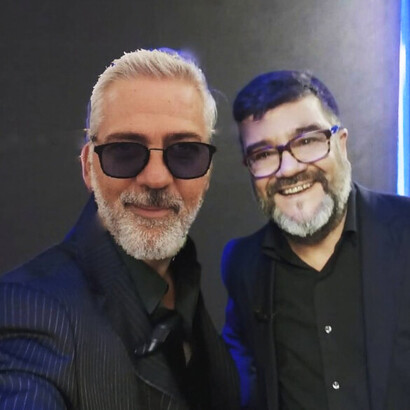
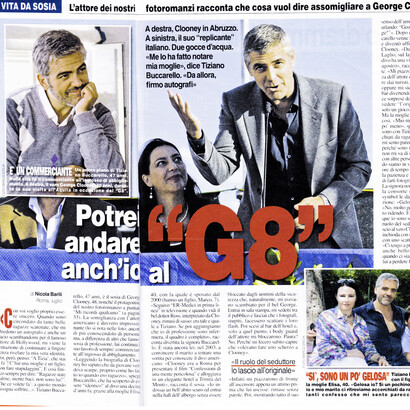
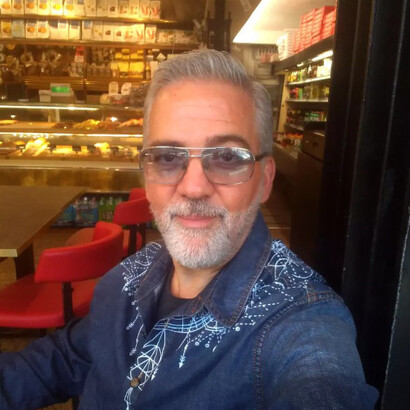
Following the interview published in the Italian edition of this publication on July 17, 20251, I felt that the conversation between Tiziano Buccarello and me could not be considered concluded. There is an invisible boundary that separates who we are from who the world has decided we must be, and for Tiziano, this boundary is traced by George Clooney’s features.
But this is not the chronicle of an imitation: it is an inquiry into identity.
Reaching George Clooney is an endeavor that defies the laws of physics and Hollywood bureaucracy. His sensitivity is well known, as is his protective barrier made of managers and time-keepers. Yet, in this labyrinth of images, Tiziano has walked for twenty-five years. Today I pick up that interrupted thread, posing more radical questions and attempting to pierce the veil between mask and soul, in an interview that goes—and must go—beyond the reflection.
Tiziano, let’s get straight to the point. You were on the set of The American in Sulmona, officially his shadow, just a few steps away. Why didn’t you dare break protocol to ask for a personal meeting? Was it fear that in front of the original your reflection would vanish, or the fear of discovering that the “myth” was not ready to see himself in another man?
It wasn’t fear. It was respect.
When you represent a man so famous, respect is the foundation of everything!
If a meeting is to happen, it must happen naturally.
My reflection does not vanish before the original. It exists because the original exists.
And that, for me, is already enough.
In our previous interview, I asked you about the fine line separating a man from his image. But today I ask: have you ever felt resentment toward that face? How many times have you wanted to “break the mirror” to see if the world would finally notice Tiziano?
Never, not once. That face has given me indelible experiences, encounters, emotions.
Breaking the mirror would also mean breaking a part of my own journey. I have never wanted to destroy the reflection. I only tried not to lose myself within it. And those who truly know me understand that behind that face, there has always been a man with his feet on the ground, a family, a real life.
In a world that lives on appearances, you have chosen not to lose yourself. But don’t you think that this extreme honesty is precisely what keeps you apart from George? If you had been more of a “character” and less of a “man,” perhaps the dialogue you seek would have already happened…
I don’t know if the dialogue would have ever happened; perhaps my honesty has certainly kept me away from the Myth!
Being a “character” is easy when the lights are on.
Being a man is hard when they go out.
I returned home to my wife and my child. And there, I didn’t need to imitate anyone!
You said that “your soul is only yours.” If you could lend this soul to George Clooney for a single day, which part of your experience as his double would you have him live to make him understand what it means to live in his shadow?
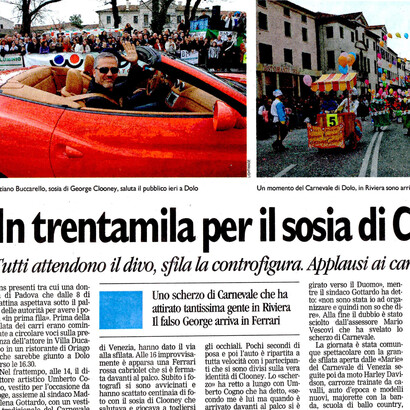
I would have him experience an ordinary evening. A provincial event, an appearance, where he would feel that strange sensation of being celebrated for something that does not fully belong to him.
Being the reflection means living in balance: you receive applause, yet you know the light originates elsewhere.
I think he would understand that behind all this, it’s not just imitation.
There is study, discipline, and respect. And also a small, silent renunciation.
Many stop at the surface, but I wonder: after twenty-five years spent interpreting a reflection, who is the man that remains when the set lights go out, and George becomes just a name on a contract while you remain Tiziano in front of your home mirror?
When the lights go out, there is a normal man.
One who looks in the mirror without a suit, without a script.
He remains a husband.
A father.
A man who made a particular professional choice but never stopped being himself.
I am Tiziano in front of my home mirror. And there, I don’t see a reflection.
I see my story, even if George is not just any name on a contract.
Tiziano’s words stop here.
Not for lack of further questions, but because at a certain point, the dialogue with a man who has lived for twenty-five years beside his reflection can only give way to something beyond a simple interview.
It is at that moment that another question arises. No longer directed at him.
Directed at the mirror.
As a filmmaker and writer, I feel that this story possesses a force that transcends the written page. It is a cinematic narrative pressing to emerge, a project I intend to submit directly to those who live through cinema and identity: Smokehouse Pictures, George Clooney’s production company. For who better than him, who has made his own image a bridge for human and civil battles, can understand the paradox of a man living as his reflection?
Yet I am a professional and know the dynamics of this world. I know that without the right connection or a lucky coincidence, this project risks becoming just another file left on a desk buried under thousands of other proposals—or worse, discarded before even being opened.
It is the fate of many ideas born from the heart but lacking an official pass.
And yet, precisely because of the almost magical nature of this story, I feel compelled to attempt this “impossible mission.”
Not with the illusion that a door will open by chance, but with the simple respect owed to stories when they demand to be fully told. For this reason, the next step will be a simple and concrete gesture: an official letter addressed to his production company.
Perhaps it will never reach the right hands. Perhaps it will truly get lost among a thousand other forgotten projects. But at least this story will have completed its last natural step: to leave the reflection and try to knock on the door of the man who, without knowing it, is its origin.
Synopsis: The man in the mirror
For over twenty-five years, an Italian man has lived a singular and almost paradoxical condition. Without seeking it, his public life was progressively shaped by a striking resemblance to George Clooney.
From mere physical curiosity, that resemblance became a professional and human destiny. Events, appearances, institutional meetings, media stages. In many contexts, his face was received as a credible reflection of an image known worldwide.
Yet behind that reflection, there has always been a man with his own story, a family, a real life continuing far from the spotlight. A man compelled to walk along an invisible line between recognition and identity. Between what others immediately saw and what he knew himself to be.
Over the years, their destinies even came close to intersecting. The man met his model on set, experiencing an almost mirror-like presence that never became a direct dialogue. From that moment began a silent conversation spanning decades. An imaginary dialogue between the original and the reflection, between what belongs to celebrity and what remains profoundly human.
The film explores this fragile and fascinating territory. The boundary between identity and representation, between real person and public image, between dream and reality. It is the psychological journey of a man who lived for years inside a mirror while striving not to lose his own voice.
But it is also a broader reflection on our time. An era in which image often precedes being, and public recognition can turn into a mask as powerful as it is fragile.
This cinematic project is born precisely from this. From the simplest and deepest question that this story carries:
Who are we when the world looks at us through the face of someone else?
At this point, the narrative leaves the synopsis and returns to the reality from which it all started, because this article is more than an interview. It is a message in a bottle.
Perhaps it will reach the right desk in Los Angeles or, why not, directly George’s hands in Laglio. Perhaps, more likely, it will get lost in the background noise of an industry that often has no time for dreams arriving from below.
Smokehouse Pictures receives projects, ideas, and visions every day, seeking space and attention. Yet some stories possess a special force. They are not born from calculation but from a nearly mysterious coincidence between reality and destiny.
This is one of those.
Because behind the distance separating two men lies a question that cinema knows well. A question about the face, about identity, about the way humans recognize themselves in others.
Who knows? Perhaps one day we will truly meet in the same place. Me, Tiziano, and George Clooney. Not for a game of resemblances, not for worldly curiosity, but for something much simpler.
To look each other in the eyes and finally say:
Now I see you.
Because, in the end, the truest stories are precisely these. Those that seem to have been born by chance but were in truth waiting for the right moment to happen.