English
 Español
 Français
 Deutsch
 Italiano
 Português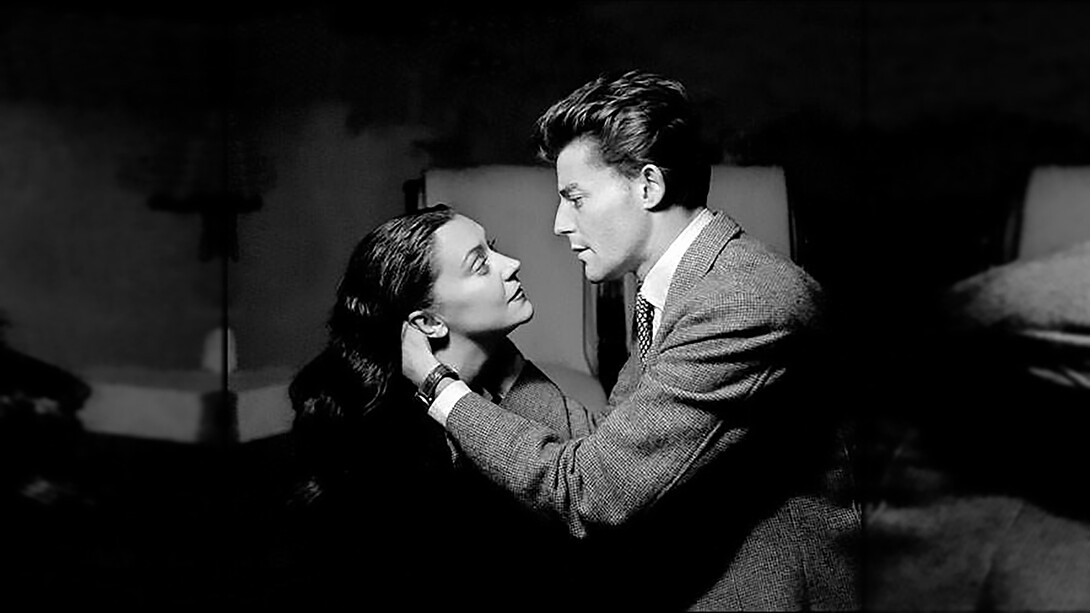
The aim of Gérard Philipe et Maria Casarès, les enfants du siècle, is to restore the complexity and depth of two emblematic figures of 20th-century French theatre and cinema. Far from any hagiographic temptation, the book stems from a desire to challenge crystallized images: Gérard Philipe reduced to an icon of eternal youth or a romantic myth, Maria Casarès too often confined to the role of Albert Camus' lover or monumental tragedienne.
Through diverse but coherent contributions, the work explores the craft of acting, the relationship with the media—theater, cinema, radio, and television—and the deep connection with the historical, cultural, and political context of their time. What emerges are two versatile performers, Philipe, who was also involved in trade unions and civil activism, and Casarès, a total artist, actress, and author, capable of embodying characters who have marked the history of theatre.
This choral interview highlights the new critical perspectives offered by the volume, the work on archives and memory, and the dialogue between academic research and cultural transmission. The result is an explicit invitation to rediscover films, shows, and texts and to look at Philipe and Casarès not as figures of the past but as artists still capable of questioning the present.
What inspired you and your co-authors to bring together contributions about Gérard Philipe and Maria Casarès for this book?
Corinne François-Denève: I had already worked with Arnaud on a book about Vivien Leigh. Our idea was to take a fresh look at the “myth” of the one-role actress. The book showed that Vivien Leigh was a remarkable actress, both in theater and cinema, but that posterity had frozen her in an overly simplistic image. It seemed to us that the same was true for Gérard Philipe and Maria Casarès. Casarès is a legendary figure, but often only her love affair with Albert Camus is highlighted. Gérard Philipe was a big star in his day, but today he is forgotten or ridiculed. Yet he played some extraordinary roles and also had a political role that is often overlooked. We wanted to present new images of these two children of the century who, despite their differences, are ultimately quite similar.
How did you approach the artistic and personal relationship between Philipe and Casarès in the various contributions to the book?
Corinne François-Denève: Casarès and Philipe acted together and knew each other well, but we decided to explore their personalities individually. The book is divided into two parts, and the texts from the exhibition that brought them together at the Maison Jean Vilar in Avignon a few years ago form the ‘joint’ of the book. However, we tried to explore the same aspects in greater depth. What can be said about the acting of these two actors, especially when it takes them out of their usual image? There is an article on Casarès acting for television and another on Philippe playing villains, far from his image as a likeable young swaggerer. There are also interviews with artists for whom Casarès and Philipe are role models or who have worked on these two figures. Finally, I wrote a text imagining what would have happened if Philippe had not died so young.
The book differs from classic hagiographic accounts: in your opinion, what new critical perspectives does this work bring?
Corinne François-Denève: The idea, really, is to look at the work of two artists. Philipe is not just the young Cid cut down in his prime, and Casarès is not just a larger-than-life tragedienne.
What aspect of the artistic legacy of Gérard Philipe and Maria Casarès do you hope readers will take away from this book?
Corinne François-Denève: I would like people to see Maria as the author she is and Gérard as an actor of his time—from both an artistic and political point of view. Above all, I hope that the book will make readers want to revisit the films of Casarès and Philipe!
Gérard is considered the first contemporary actor. Where do you think the secret of his enduring success lies?
Emmanuelle Pesqué: His fame stems from a combination of factors. During his lifetime, Gérard Philipe was ‘the embodiment of a collective need, which is difficult to define precisely because it needs an individual to express itself,' as his friend, the writer Georges Perros, put it. His successive roles reflected the feelings of a wide audience and what could be called the ‘spirit of the times,' a Zeitgeist, unlike some of his colleagues whose personas remained more fixed. Thus, when Philipe played El Cid in Avignon, this heroic character reflected the need for escape and compensation that was necessary in 1951, in a postwar period still marked by global conflict. Of course, his acting talents (supported by methodical and relentless work, as Jean Vilar pointed out), his ‘presence’ on stage (which we can glimpse in an excerpt from Le Prince de Hombourg filmed by Franju), his photogenic qualities in cinema, his way of occupying space, his ideal physique for wearing costumes in theatre or cinema, and his unique voice did the rest.
In addition to his talent as a performer and creator (let us not forget that he was also a director and filmmaker), his generous and effective work on behalf of his profession, at the head of the French Actors' Union, had a lasting and significant impact. Due to his early death, his eternal youth (‘our eternal youth,' as one of his biographers described it) dazzled the public and became intertwined with their own, blending admiration and nostalgia. This image has long been passed down from generation to generation, a tradition that began early with records for young people (The Little Prince, Peter and the Wolf, etc.). In 1967, Gérard Philipe's posters were still extremely popular. The power of this myth was analyzed by Geneviève Winter in her biography published in 2022 and in an interview1 she gave me.
But is this success truly ‘eternal’? Although his fame has endured for decades, French children and teenagers in 2025 know little about him, even those who attend secondary schools named after Gérard Philipe. The fact that his films are no longer frequently broadcast on French public television channels has probably been a major factor in this decline in popularity. Most of his films are in black and white, which is often a deal-breaker for this audience. In addition, their dialogue can be perceived as sophisticated or difficult to understand: Fanfan la Tulipe, a film aimed at the general public when it was released, has over the years become a film for cinephiles. Furthermore, there are few tangible traces of his extraordinary theatrical career, as cinema has taken center stage. However, his ethics, his influence, and his professional and trade union commitments still appeal to many.
Two accounts of his last weeks, Le temps d'un soupir (1969) by Anne Philipe and Le dernier hiver du Cid (2019) by Jérôme Garcin, have touched and continue to touch a wide readership, perpetuating his memory. It is also worth highlighting the tireless involvement of the Philip(e) family in keeping his legacy alive and ethical, aimed at all audiences and particularly young people. In addition, the Maison d'Anne et Gérard Philipe association (AMAGP2) is supporting the ongoing renovation of the former Philipe family home in Cergy: this restoration will prolong the life of the place, bearing witness to its past and promoting an ideal of cultural openness in line with the couple's commitment, in a threefold heritage, artistic, and environmental approach.
I would like to ask you what the challenges are in managing the long-awaited online archives dedicated to Gérard. What have been the most significant discoveries you have made over time?
Emmanuelle Pesqué: My research into Gérard Philipe's career has unfolded in several stages: first, a completely fortuitous find (the theft of his shirts and underpants, prompted by an admirer3 , which I found very amusing and which was also the starting point for the article published in Gérard Philipe et Maria Casarès, les enfants du siècle); then surveys in the press at the time, which ended up feeding into a blog4. The aim was documentary, as the blog sought to explore certain aspects of Gérard Philipe's career that existing biographies had not covered and to place the actor in his context by highlighting interviews, articles on his artistic activity, and press reports. These elements contributed to the construction of his public image, i.e., his persona as a star. Fundamental elements therefore, sit alongside other more secondary and trivial ones, reflecting the perception of the time. These online publications allowed me to share my most striking findings, those most representative of the spirit of the time, and sometimes the most amusing, with readers interested in the actor and his era.
This project was reinforced by more methodical research on a wider variety of sources, as certain aspects of his career had sometimes been underestimated. This research project will culminate—I hope!—in a book currently being written for the Maison d'Anne et Gérard Philipe association.
As for my ‘most striking discoveries’ (due to the forthcoming book, I will mention only a few):
Jean Vilar was not so opposed to filming the Théâtre National Populaire (TNP) performances, but scheduling and funding issues prevented these shoots (which were not a priority in his mind). As early as 1951, there was talk of filming Le Cid, starring Gérard Philipe, either for television or for the cinema (in 1952, Philipe was supposed to direct the film). Excerpts from Lorenzaccio were broadcast on television in 1953, but this live broadcast was not recorded on film...
Gérard Philipe played Lorenzaccio as early as 1946 on the radio, and two years later, rumors circulated about a film adaptation in which he would star, well before he took on the role in 1952 at the Avignon Festival. Unfortunately, this radio drama does not seem to have been recorded, only broadcast live.
Alongside his film and theater career, Gérard Philipe had an important ‘radio’ career in the 1940s and early 1950s, of which there are many examples.
Above all, I was struck by the intelligence and intellectual curiosity with which he pursued such a versatile career. Had he lived longer, Philippe would undoubtedly have directed regularly.
In your essay on the idolatry that still surrounds Philippe today, what conclusions do you draw about his charisma?
Emmanuelle Pesqué: This text follows on from Edgar Morin's work on ‘star worship’ and analyzes the attitudes and testimonies of admirers. What is striking is the continuity between gestures of medieval devotion and certain practices or mindsets of fans observed between 1940 and 1970. These are not new and have been observed among fans of other stars, but they are reinforced here by the angelic roles played by Philipe, the ‘poetic’ or supernatural nature of some of his film roles, and the aura of his great performances at the TNP. During his lifetime, for many, he represented a kind of ideal, a “big brother," a comforting heroic model, and a model of social justice (as evidenced by his left-wing political commitments and his trade union involvement in the service of his profession). From 1960 onwards, regret and nostalgia often reinforced this attachment.
Philipe's presence and charisma, his ability to communicate and convey a text or emotions to a ‘popular’ audience, manifested themselves in a different way after his death. While there have been large-scale crowd movements (those sparked by the death of Rudolph Valentino remain exemplary), the admiration crystallized around Gérard Philipe (for his talent, his ethics, his persona, and his beauty) was transmitted over a longer period of time, testifying to a certain charisma and seductiveness that extended far beyond his death. Charisma, like stage presence, defies rational analysis.
I would like to begin with the genesis of the book. How did the idea come about?
Arnaud Duprat: The book was born out of Corinne François-Denève's desire to devote two days of study to Gérard Philipe and Maria Casarès in 2022, on the occasion of their centenary. We had already collaborated on a symposium and a collective work devoted to Vivien Leigh, and I had also devoted a few academic articles to Maria Casarès. A collaboration between Corinne's university and mine (Rennes 2) was therefore set up, with the collaboration of a colleague, Virginie Dumanoir, a Hispanist and medievalist at Rennes 2, who had worked on La Célestine and was therefore interested in Casarès's portrayal of the character in the 1970s. These two days gave rise to the collective book, as well as various meetings with artists, the management of the Maison Maria Casarès, and the Maison Jean Vilar...
Often considered legendary and romantic heroes, Philipe and Casarès were defenders of total art. How is their legacy still visible in French culture?
Their legacy is still very much alive, but it has evolved since their lifetime and the moment of their passing. Despite his great popularity, Philipe was long shunned by many film buffs and researchers, certainly under the influence of some very negative articles, notably by François Truffaut. However, today, our project has allowed us to note with pleasure that young researchers, young actors, and creators are taking an interest in him and re-evaluating his legacy, particularly in cinema, in a positive light. As for Casarès, whose filmography includes some great films but is less extensive than Philipe's, her name has remained a prestigious theatrical reference but was perhaps less present in the collective imagination until the publication of her correspondence with Albert Camus. This publication revived the general public's interest in the actress but also in the writer, while tending to place her in Camus's shadow, giving great importance to the lover, perhaps to the detriment of the memory of the actress. One of our objectives with our project was to put the artist back at the center of attention.
Why is Casarès' performance in Lady Macbeth still considered a milestone in her career and in the history of theater?
Fewer and fewer people have seen Casarès on stage as Lady Macbeth. Nevertheless, there are photographs of these performances by Agnès Varda, a short scene filmed by Georges Franju in his short film dedicated to the TNP, a sound recording, and even a television drama directed by Claude Barma. These few documents give us a glimpse of Casarès' artistry and allow us to imagine the impact of her performance on stage. Moreover, this Lady Macbeth is part of the memory of a mythical era of French theatre, that of Jean Vilar's TNP and the beginnings of the Festival d'Avignon.
Critical essays on memory, performance, and star devotion
In ‘Faut-il accepter un futur dont vous êtes absents?’, a variation on a phrase by Anne Philipe, Corinne François-Denève sets out to explore the posthumous lives and memories of Gérard Philipe and Maria Casarès. She examines their respective obituaries, which are necessarily different, and cites traces of Philipe's memory preserved in the fictional collections of the Performing Arts department of the BnF (National Library of France).
Arnaud Duprat compares Franju's scene—Le somnambulisme de Lady Macbeth—with the same scene in Barma's ‘television drama’ to determine whether the filmed recording of Casarès' performance distorts her art or, on the contrary, proves that she is also a great film actress. He concludes by asserting that Franju adapts his editing to Vilar's staging and, above all, to Casarès' artistic ability, revealing it and even encouraging the actress to perform for the camera.
Emmanuelle Pesqué's work, ‘Un saint ange? Gérard Philipe, ses admiratrices et la dèvotion populaire' fits squarely into the tradition of Edgar Morin's studies of celebrities. Pesqué, who runs an exceptional blog on Gérard Philipe, examines a considerable number of sources to highlight the links between star worship and saint worship. Gérard Philipe's appearance as an angel in Sodom and Gomorrah initiates the metaphor, although Philipe primarily wished to be a man, and his personality also predisposed him to roles as demons or devils, revisiting the terms "virtue" and "ethics," often associated with the actor.
References
1 Pesqué, E. (2023, March 28). 2023 – Geneviève Winter nous parle de Gérard Philipe et de la biographie qu’elle lui a consacrée. Gérard Philipe (1922–1959) : archives d’un art en mouvement.
2 Association Maison d’Anne et Gérard Philipe. (n.d.). Maison d’Anne et Gérard Philipe.
3 Pesqué, E. (2021, November 12). 1948 – Gérard Philipe est cambriolé! Butin : chaussettes, pulls et caleçons. Gérard Philipe (1922–1959) : archives d’un art en mouvement.
4 Pesqué, E. (n.d.). Gérard Philipe (1922–1959) : archives d’un art en mouvement.
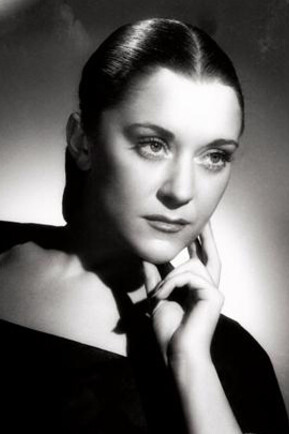
![Gérard Philipe (French pronunciation: [ʒeʁaʁ filip]; born Gérard Albert Philip; 4 December 1922 – 25 November 1959) was a prominent French actor who appeared in 32 films between 1944 and 1959](/attachments/5c14d7acd16cbb58b33be41280154c24cb54dd30/store/fill/410/615/020f195eae634bde2fd6b7a62204b8874fb9e48b0d237d1c8ccce9883b1b/Gerard-Philipe-French-pronunciation-ZeRaR-filip-born-Gerard-Albert-Philip-4-December-1922-25.jpg)
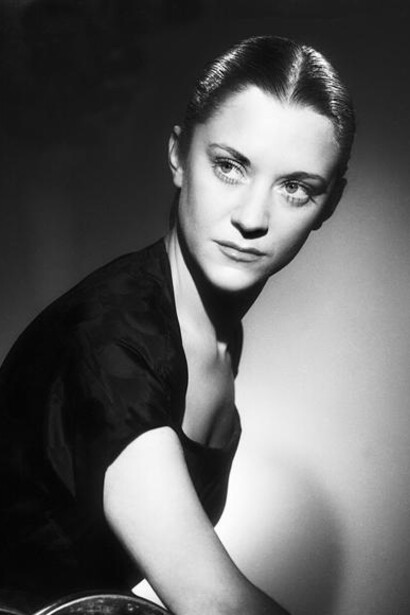
![Gérard Philipe (French pronunciation: [ʒeʁaʁ filip]; born Gérard Albert Philip; 4 December 1922 – 25 November 1959) was a distinguished French actor who starred in 32 films from 1944 to 1959](/attachments/f5bf1569daf7f5753864e95fee8bd266ef1a16d1/store/fill/410/615/4c390730d5fc34f710b64f7349bb4763138dcc0b6e0881cee9f42f74e963/Gerard-Philipe-French-pronunciation-ZeRaR-filip-born-Gerard-Albert-Philip-4-December-1922-25.jpg)
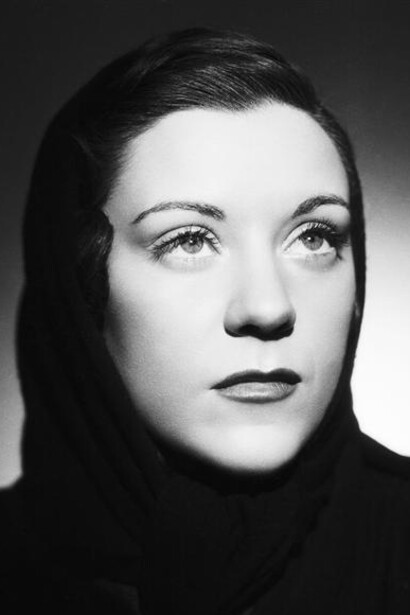
![Gérard Philipe (French pronunciation: [ʒeʁaʁ filip]; born Gérard Albert Philip; 4 December 1922 – 25 November 1959) was a leading French actor, appearing in 32 films during his career between 1944 and 1959](/attachments/dd973da6fed24d8133ed46f91567852270cc0b0e/store/fill/465/698/d80f29a49c4af1aca8d29353849a890ff342684eb1847efc14c695010b74/Gerard-Philipe-French-pronunciation-ZeRaR-filip-born-Gerard-Albert-Philip-4-December-1922-25.jpg)