English
 Español
 Français
 Deutsch
 Italiano
 Português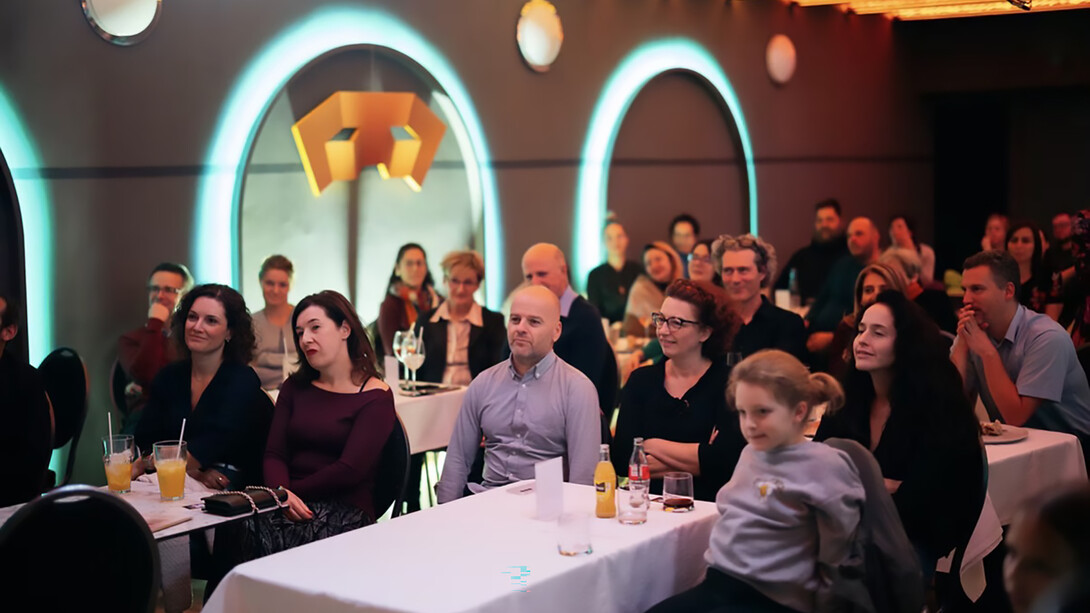
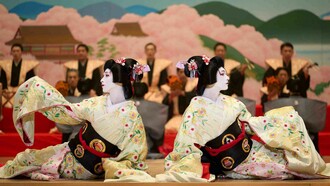
Improvisational theatre has ancient roots, emerging as a form of survival and social connection. In ancient Greece, early ritual performances relied on improvisation to respond to the moment, engage audiences, and adapt to changing circumstances. Similarly, in African oral storytelling traditions, performers improvised to convey history, emotion, and communal knowledge, ensuring stories and cultural memory survived across generations. Later, in 16th-century Italy, Commedia dell’Arte formalized improvisation on stage, with actors creating dialogue spontaneously from loose scripts and fixed character types.
In the 20th century, educators like Viola Spolin and Jacques Lecoq developed improvisation as a training method, while in the U.S., groups such as Second City established it as a public performance format. Today, improvisational theatre is global, crossing languages and cultures, and remains centered on presence, listening, and collaboration.
Recently, I discovered one of the greatest groups working in this way—interpreting the world casually and spontaneously, through improvisation and presence.
Founded in Budapest, Grund Színház has spent the past fifteen years shaping and redefining the landscape of improvisational theatre in Hungary. More than a performance venue, the company functions as a creative ecosystem where theater, training, and community intersect—united by a belief in collective intelligence, collaboration, and the creative potential of uncertainty.
At the heart of Grund Színház’s work lies improvisation, not merely as a genre, but as a methodology. Drawing on international improv traditions while developing its own pedagogical approach, the theatre has introduced audiences to a form of performance grounded in listening, trust, and shared authorship. Each show is created live, without a script, making every performance singular and unrepeatable.
Beyond the stage, Grund Színház has played a significant role in education and professional development. Through workshops, long-term courses, and training programs, the company has nurtured generations of performers and facilitators—many of whom now actively shape Hungary’s contemporary theatre and applied arts scenes. Improvisation here extends beyond performance, becoming a transferable skill that informs communication, leadership, and group dynamics across disciplines.
The company’s repertoire balances accessibility with artistic risk. Signature formats such as Maestro!—an improvisation—foreground the performers’ virtuosity while drawing audiences into an atmosphere of playful tension and collective responsibility. At the same time, Grund Színház consistently experiments with form and collaboration, ensuring that its work remains dynamic, responsive, and relevant.
Community is central to the theatre’s identity. Through festivals, open workshops, and special events celebrating key milestones, Grund Színház has cultivated a loyal and diverse audience. These initiatives reflect a long-standing commitment to inclusivity and cultural exchange, positioning the theatre as a meeting point—not only for artists and audiences, but also for ideas, practices, and perspectives.
And yet, perhaps the most revealing way to understand Grund Színház is not through description, but through experience.
There is a particular kind of theatre that does not ask for translation. It demands presence.
Based in London, I arrived in Budapest on what was meant to be a “holiday” when I received an invitation to attend a performance. Nothing unusual—except for one decisive detail: I do not speak or understand Hungarian. One of the greatest actresses in the cast, a friend of mine, hesitated before asking, “Do you still want to come?” The answer was immediate: of course.
I finished my Jameson with Coca-Cola, took a seat in the last row, and allowed myself to open every possible—and impossible—perceptual dimension. What followed was not an exercise in comprehension but an encounter with pure theatrical language.
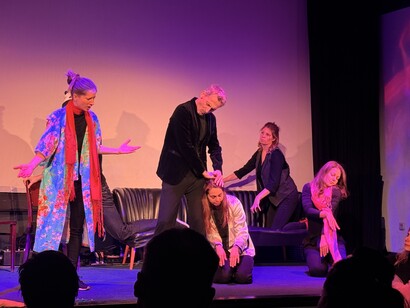
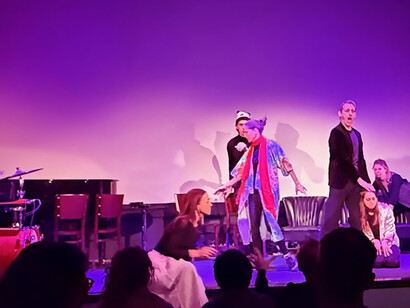
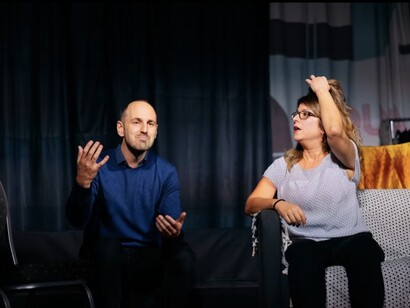
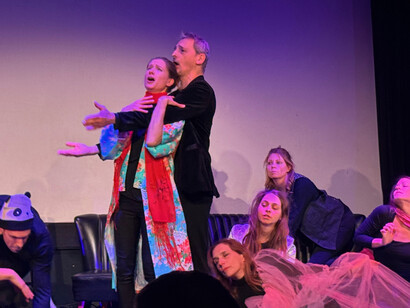
This is theater rooted in physical precision, spatial intelligence, and collective rhythm. Gesture, timing, and silence function as narrative tools. Facial expressions require no subtitles. Emotional arcs unfold without verbal explanation. Laughter emerges instinctively—a reminder that humor, like emotion, precedes language.
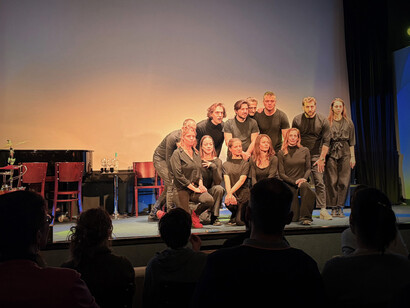
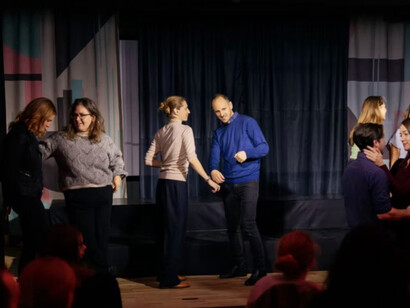
On an intimate stage, the ensemble constructs multiple realities with remarkable fluidity. The performance is dynamic without becoming chaotic, controlled without losing spontaneity. What stands out most is the rare synergy among the actors—an organic responsiveness that allows scenes to breathe and transform in real time.
Ironically, I found myself understanding more—emotionally and dramaturgically—than I often do when watching performances in languages I fully master. This is theater that trusts the intelligence and sensitivity of its audience, offering complexity without didacticism.
After fifteen years, Grund Színház stands as a testament to what sustained curiosity and collective creativity can achieve. By embracing uncertainty—on stage and beyond—the company continues to expand the boundaries of improvisational theater in Budapest.
This is theater that travels. Not only through words, but also through human presence.
It moves through gestures, laughter, and shared breath, reminding us that the truest stories are felt beyond language.
In an era shaped by fragmentation and acceleration, such theatre offers something quietly radical: attentiveness. It reminds us that meaning is not always transmitted but sensed; not explained but shared. Within that shared space, improvisation becomes more than performance—it becomes a practice of listening, presence, and being together in the world.