English
 Español
 Français
 Deutsch
 Italiano
 Português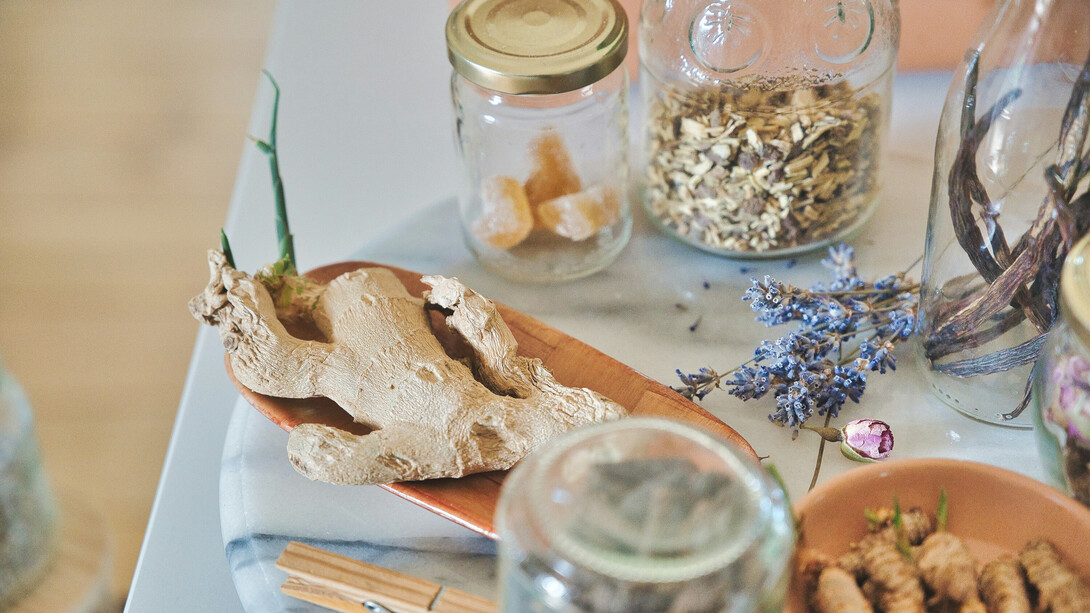
We typically think of healing as something that someone “does” to us. I suggest that healing is much the opposite. It is broader as well as innate at the same time. What do I mean?
Neanderthal stubs toe
This addresses the domain of self and innate healing. Some say that all healing is self-healing.
Imagine that one of our distant ancestors is romping through the forest foraging for food. As he runs, he trips, stubs his toe, and hurts his foot. It bleeds, so he washes it in a nearby creek, grabs a part of his garment, and wraps it up to stop the bleeding. His foot was also hurting, so he instinctively put his hands on it. He feels the warmth of his hands and also instinctively massages the foot, which reduces the pain.
Two forms of healing occurred in this scenario simultaneously: first, he grabbed the injured area, washed and then bandaged it, which is the outer form of self-healing. This allowed for the innate healing to occur, the inner form of natural, biologically-based, self-healing, because that’s what the body does to preserve its life.
Innate healing occurs as a function of biology. The body neutralizes exogenous toxins, such as harmful bacteria, by sending white blood cells to the injured area to clean it up. It also seeks homeostasis to bring the injured area back to balance, all at the same time.
The body-mind heals itself: this is how we were biologically designed
A doctor wasn’t around or needed during this incident. We were born with these instincts and a body that is biologically designed1 to heal itself per the word’s etymology, which goes back to the Indo-European,2 “to make whole”.
This idea of “making whole” has terrific implications and ramifications, physically, emotionally, and spiritually. In fact, we also derive the word “holy” from the same etymology, so by definition, each domain, when in concert with the others, forms a harmony, a whole.
This sense of wholeness, when applied to the Self, is a key concept in Jungian Psychology and would include the developed presence of one’s personhood, one’s character.
Healing began literally when biological life appeared on the planet. The body is a self-healing organism. It is designed to establish and maintain balance, homeostasis and survival every single moment.
If one scrapes one’s knee and it bleeds, the process of white blood cells to clean, and other cells to coagulate, is the body healing itself. Outside intervention not needed!
The era of the shaman and the medicine man
In the larger arc of human history, we see that different roles in the community developed. The hunter and gatherer, the homemaker, mother, the meal preparer, child-rearer, the farmer, the tradesman, the peacemaker, the spiritual guide-priest, the joker, the warrior, and the healer-shaman for a few—these are the archetypal roles in the human community.
In Greek mythology, the archetype of the healer was symbolized by Asclepius. Before and simultaneous to that were shamans in indigenous cultures around the world—the Australian Aborigines, the Siberian and Saami shamans, and those in Africa and in the Americas who were playing the role of healer/medicine man or woman.
Mircea Eliade has written about this in depth in his classic book on Shamanism, which sheds light on the nature and role of this archetype in the human community.
One who plays this role has been ill themselves, wounded, or even considered, in Western psychiatric terms, in some cases, schizophrenic. What’s so interesting is that this individual has essentially come through their own process and healed themselves. This was the practical antecedent, the requisite experience, qualifying him to then facilitate healing others.
Having gone through such a process has given them a deep sense of empathy and compassion for others, which is exactly the trait needed to be a healer, that degree of awareness, sensitivity and empathy.
When the healing process is shared with another, such as a shaman/healer, the process can be guided, deepened and accelerated. It remains, however, a psycho-spiritual, psycho-biological self-healing process, with some assistance from another who has “passed through those portals”.
Shamanic healing tools
The shaman utilizes tools, such as talismans, herbs, stones, gems, stars, sunlight, the moon, Earth, incantations, prayers, dance, drums and song to help awaken the body-mind’s innate healing mechanisms. He doesn’t “do” the healing but thinks the better understanding is that he facilitates, evokes, or invokes it.
The tools used are all part of the natural world in his environment. The healing could be said to work empirically because these indigenous groups are still with us thousands of years later. Something was working!
Ayurveda, Tibetan, Chinese medicine, and the herbal tradition: healing with nature
These are ancient systems of medicine, wholly integrated into each respective culture’s cosmology. Medicine doesn’t exist as a “separate” entity, just as spirituality doesn’t exist as a “religion” one practices on Sundays.
Everything is woven into a holistic system, a whole “gestalt” if you will, microcosms of macrocosms. Certain foods correspond to meridians, which correspond with organs, which correspond with notes played on an instrument, which correspond with a season, certain senses, and a respective emotion. Each of these corresponds with an astrological pattern and an animal. There is nothing random in the cosmology. In short, nothing is separate from anything else but a full, cosmological understanding of the intimate relations between all things, material and spiritual, gross and subtle.
What’s interesting is that the use of herbs and their applications to different body systems in these respective cultural contexts have been found over and over again to be validated by modern science.
Reading the pulse reads the mind-body
How could reading a pulse in three places and at two depths reveal facts of a person’s childhood, trauma, accident, imbalance, and present condition? A good medical practitioner can do this, seeing things that an X-ray, ultra-sound or MRI cannot reveal.
How did these folks, literally 5-10,000 years ago, know these things?
The skill of being a traditional Chinese physician or Ayur Vedic practitioner involves not just academic study, but years of disciplined work directly with the energy fields of the body-mind. Listening, touching, looking at the eyes, smelling, and the power of observation are developed over time. The ability to listen “with the fingers” is part of this traditional science and art.
The herbal traditions are typically passed on generationally from the grandmother to the mother to the daughter, and are another rich tradition of healing all over the world. This is a long-standing way in which herbal knowledge and practice have been preserved over the centuries.
These ancient traditions gave rise to several innovations in the West that dovetailed with what followed from the medicine of Maimonides and later Hippocrates, the Fathers of Western Medicine. Out of these came homeopathy, naturopathy, herbalism, and later osteopathy and chiropractic.
Along comes Western allopathic medicine, the new kid on the block
I always remind my clients and students that natural healing and medicine have been with us for thousands of years. When I tell people that I am an acupuncturist, they ask me, “Does it really work?” I refer them to the billion-plus people who live in China, for whom acupuncture, herbs, T’ai-chi, Chi-Gong, and meditation have been kept alive for thousands of years. I guess we could safely state that these really do work! It is the lack of education, at least, if not hubris, of the western mind, to think that anything that didn’t originate here, “in our own backyard,” couldn’t have efficacy, especially if it’s so darn ancient!
It wasn’t until the 1860s that allopathic medicine began to emerge in barber shops and leeching salons. It was primitive at best, yet hell-bent on putting homeopaths and naturopaths out of business. How therapeutic is that attitude and intent? It entered with a scalpel to cut these out of the world of medicine, and indeed, it succeeded in some ways, at least for a while.
Enter the Rockefeller petrol-money, the Flexner Report,4 and before you know it, medical school curricula were being commandeered to replace these natural approaches with synthetic drugs, which were not infrequently derivatives of the petrol industry, Rockefeller’s ride to riches. What was a form of emerging medicine, sharing some characteristics of naturopathy, became railroaded into purely synthetic drugs and away from natural substances and approaches.
Medicine has become just another business for private equity to exploit
Allopathic medicine searches for symptoms and has many ways to alleviate them. It’s mainly with drugs, often with side effects that are much worse than the symptoms. Or sometimes worse even than the disease is the drug it’s supposed to cure. Cure? Not a word used these days. The politically correct word is “manage”. Allopathic medicine excels in diagnosis. The bio-medical machinery is extraordinary. The actual healing, however, leaves much to be desired.
Why, with so much advancement, investment and understanding of physiology? Since Goldman-Sachs5 published their paper on how much profit there is in managing disease, private equity firms have gobbled up hospitals and clinics across the vast expanse of our otherwise very beautiful country.
As a result, accountants, in effect, are determining treatment based on cost analysis, all based on cost and profit. It’s no longer a doctor’s decision with patients.
No one wants to believe that medical practice in America6 would become so debased, but it has. A noble profession has been pillaged by Big Pharma & Big Finance—it’s nothing short of tragic. Good doctors are limited in saving lives by bottom lines.
Needless to say, there are exceptions to this rule, some of which are brilliant and notable. These tend to be for the economically affluent, upper echelon. The healthcare, however, for the everyday American, has sunken to new lows. This is not an opinion or overstatement. This is the case, according to the Lancet7, the most prestigious medical journal in the world.
The phenomenon of private equity has exploited modern medicine to such a point that it has crippled it.
Allopathic medicine
Medications medicate. They don’t heal or cure, they mask. They offer temporary, symptomatic relief but don’t touch the root cause. Sometimes symptom relief is extremely useful, so some medications to have a therapeutic use.
But in short, they are a series of band aids that stop the bleeding but don’t address what caused it. There are so many good doctors and nurses, but they’re compromised by an overly profit-driven system and training only about pathology and virtually nothing about optimizing wellness, well-being, or healthy longevity.
Thanks to HHS Secretary Robert F. Kennedy Jr., medical schools have just increased training in nutrition across the board. It’s still incremental, but a good deal better than it has been for many decades. Western doctors who are oriented, pardon the pun, toward traditional medicines, nutrition, lifestyle improvements, and holistic thinking are more effective. Otherwise, one’s practice is engaged in one form or another of superficial, “symptom-only” relief.
There have been major advocates across the country, such as Dr. Gary Null, once known as the “nutritionist to Hollywood”, who has been teaching how people can resolve and heal the most serious of diseases through nutrition, exercise and lifestyle through his 100+ books and 100+ award-winning documentaries.8 His recommendations could have saved, and still can save our country literally trillions of dollars and over the decades, likely millions of lives.
Iatrogenesis is a leading cause of death in the U.S.
Despite Western medicine’s sophistication in certain respects, it is ironic that the third leading cause of death in the U.S. is doctor-originated illness or fatality. Visiting a hospital has been a death sentence for too many.
The statistics of iatrogenic fatalities are staggering. If it’s not being given the wrong medication or wrong dosage to the wrong patient, it’s sepsis or a surgery gone wrong. I am on the Board of a small but powerful company, CarePoint Solutions9, that has a remedy to iatrogenesis with a software program which gives labs and hospitals a solution to this horrible and menacing problem.
My work for decades as a holistic psychotherapist, holistic practitioner, teacher, writer, and podcaster10, is largely about empowering people to create a healthy lifestyle and to be self-reliant when it comes to creating their own sense of well-being.
The doctor-patient relationship needs significant reform
This relationship needs to be free from the authoritarian nature of a doctor and replaced with a partnership with the patient. The doctor has statistics, but the nurse often is the one with compassion and a relationship with the patient. To be a good doctor, as well as being a good shaman, along with skills, listening, communication and compassion need to be cornerstones.
It is also true that when one is in crisis, Western medicine excels. We are all grateful for an emergency room and the skills and compassion of emergency medicine docs. They tend to be exceptional practitioners and human beings. Profit margins don’t seem to get in their way.
They are the closest to the original blueprint of a doctor at his best.
Coming full circle
Healing is self-healing. Indigenous communities, the traditional shaman and medicine man, the grandmother herbalist, have been saying this for centuries.
It is what the body-mind does as a system to preserve its survival. Traditional medicine recognizes this and supports it. Western medicine knows it but seeks in general to intervene anyway, usually with medication that has deleterious side-effects that are not really ‘on the side’.
As a society, I suggest that we need to respect the body’s own natural healing system, and rely more on our body’s innate intelligence, wisdom, and that of our mind and immune system.
The work of Dr. Joe Dispenza11, along with many others such as Dr. Bruce Lipton12, has shown us that one’s mind and belief system itself can have and do have extraordinary effects on lifting us up from disease and creating a true sense of health, happiness, and well-being.
Food is medicine, clean, structured water is medicine, sunshine and Nature are medicine, music is medicine, beauty is medicine, mind is medicine. And true, sometimes an antibiotic is useful, as is setting a bone, and sometimes even surgery. But Nature should be consulted first.
If we become more self-reliant and honor our body’s own ways, which are Nature’s, we can go a long way in maintaining and advancing our own health and well-being.
These are the most important levels. Economically, if people took care of themselves and embraced the idea of self-healing, the country would save trillions of dollars and be a lot healthier and happier.
Notes
1 God has provided our bodies to heal itself at Open Bible.
2 The American Heritage Dictionary Indo-European Roots Appendix at AH Dictionary.
3 Shamanism:Archaic Techniques of Ecstasy at Everand.
4 The Flexner Report of 1910 and Its Impact on Complementary and Alternative Medicine and Psychiatry in North America in the 20th Century at Research Gate.
5 Insights on Healthcare at Goldman Sachs.
6 How the American health care system is failing its people at Forbes.
7 Health care in the USA: money has become the mission at The Lancet.
8 Dr. Gary Null.
9 Care Point Solutions.
10 A Better World.
11 Dr. Joe Dispenza.
12 Dr. Bruce Lipton.