English
 Español
 Français
 Deutsch
 Italiano
 Português
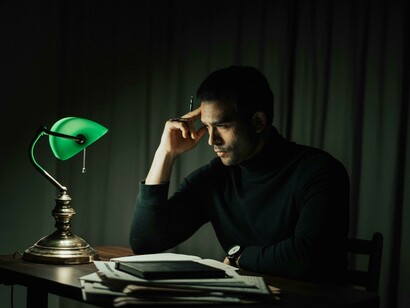
Wide awake at 3 am. Staring at the ceiling. Feeling like a fraud.
As a coach, you're expected to have all the answers. The irony is that I've been struggling with sleep myself lately. Most of us won't admit it. We're supposed to have our shit together. That's literally what people pay us for. But I bet you've been there too.
Lying in bed with your brain spinning like a washing machine on the final cycle. Wondering if you're actually good at this or just convincing enough that people can't tell the difference.
A coach told me something last week that I haven't been able to stop thinking about. She said she'd started taking sleeping pills six months ago. Not because her doctor diagnosed insomnia. Not because of some underlying condition. But because at 11 pm every night, when she finally stopped working and tried to sleep, her brain would start running inventory.
Revenue projections. Potential refunds. Who might unsubscribe tomorrow? Whether that last client session actually landed or if she just performed well enough to mask the fact that she didn't have the answer they needed. She's doing objectively well. Booked out for eight weeks. A waitlist of people wanting to work with her. Testimonials that would make most coaches envious. She charges premium rates, and people pay them without hesitation.
But at 3am, none of that evidence matters. At 3am, she's convinced she's one bad month away from being exposed as someone who doesn't actually know what they're doing. I asked her what she was really afraid would happen if everything fell apart. She looked at her coffee for a long time before answering. "That I'll realize I'm not actually helping anyone. That I've just gotten good at sounding like I know what I'm talking about." The vulnerability in that admission stayed with me. Because it's not just her. It's most of us. We just don't say it out loud.
Here's what nobody tells you about running a business. The work doesn't exhaust you because it's demanding. Plenty of demanding work is energizing. The work exhausts you because you never let your nervous system believe the danger has passed. You check messages before your eyes are fully open, still half-asleep but already scanning for problems. You scroll through what other coaches are posting while you're still in bed, immediately comparing your behind-the-scenes to their highlight reel. You treat every notification like it might contain evidence that you're failing. Your brain has a master clock called the suprachiasmatic nucleus, tucked deep in your hypothalamus. It's responsible for regulating your circadian rhythm, your sleep-wake cycle, and your entire sense of when to be alert and when to rest. But here's the problem: it can't tell the difference between an actual threat and a perceived threat.
Your amygdala, the part of your brain that detects danger, evolved over millions of years to keep you alive in environments where threats were physical and immediate. A predator in the grass. A rival threatening your survival. Real danger that required real action. It didn't evolve to handle the constant low-level anxiety of watching your competitor announce another sold-out program while you're struggling to fill yours. Or seeing someone with half your experience charge twice your rates. Or lying awake, wondering if that client who asked to reschedule is actually about to ask for a refund. But your amygdala treats them all the same.
So, it keeps you in fight-or-flight mode. All day. All night. Your sympathetic nervous system is activated, flooding you with cortisol and adrenaline, preparing you for a threat that never quite arrives but also never quite leaves. When you're stuck in chronic sympathetic activation, three things happen with brutal predictability.
First, you start making reactive decisions instead of strategic ones. Your prefrontal cortex, the part of your brain responsible for planning and rational decision-making, gets overridden by your limbic system. You're operating from fear, not clarity. That's why you launch things you don't actually believe in because you saw someone else do it successfully. Why do you say yes to clients who drain you? Because you're afraid to say no. Why do you implement strategies that don't align with what you actually want to build?
You're not stupid. You're just dysregulated. Second, you attract clients who need rescuing instead of clients who want growth. There's a phenomenon called emotional contagion. People unconsciously mirror the emotional states of those around them. If you're operating from scarcity and fear, you broadcast that frequency. And you attract people resonating at the same level.
These aren't bad clients. But they're people in crisis. People who want you to fix them, who need you to take responsibility for their results, who text you at odd hours because their emergency feels more urgent than your boundaries. They don't want transformation. They want rescue. And rescue is an exhausting business model. Third, you confuse exhaustion with productivity. There's this perverse badge of honor in coaching culture around being busy. Back-to-back calls. Instant responses. Never taking a full day off because what if someone needs you? What if an opportunity slips by? What if you lose momentum?
But that's not dedication. That's dysregulation in professional clothing. The irony is brutal when you actually look at it clearly. We became coaches because we wanted to help people transform. To guide them out of patterns that weren't serving them. To help them create lives that felt aligned and authentic. But we're operating from the exact state we're trying to help them escape.
I'm not going to pretend I've solved this completely. I haven't. Some nights are still rough. But here's what's made a measurable difference when my brain decides 3am is the perfect time to review every business decision I've ever made. This sounds counterintuitive, but it's backed by solid research on something called sleep effort. The harder you try to force sleep, the more you activate the very system that prevents it. The moment you start thinking, "I need to fall asleep, I have to fall asleep, why can't I fall asleep," you've triggered performance anxiety. Your heart rate increases. Your mind becomes more alert. You're now performing sleep, which is the opposite of sleep.
Instead, give your body permission to just rest. Not to achieve sleep. Just to lie there without agenda or timeline. Let your mind wander. Don't check the clock. Don't calculate how many hours you have left. Just exist in a state of rest without requiring it to be anything more. When the anxious thoughts start, and they will, don't fight them. Fighting creates more activation, more tension, and more of exactly what you're trying to avoid. Instead, write them down. Not on your phone, which will just expose you to blue light and pull you into the digital world. Use pen and paper. Write down what's bothering you. Then write one thing you learned from it. This isn't toxic positivity where you pretend everything is fine. It's honest reflection. What did that difficult client reveal about the kind of person you actually want to work with? What did that failed launch teach you about what you're really trying to build?
This practice is based on research into cognitive reappraisal, the process of reconstructing the meaning of a stressful situation. Your brain needs closure. It needs to know the experience served a purpose, even if that purpose is simply learning. Reflection provides closure. Brooding just keeps the wound open.
When you experience stress, your body floods with cortisol and adrenaline. These hormones exist to fuel physical action. Fight or flight requires massive energy expenditure. But if you sit through a stressful client call and then move directly to your desk to prep for the next one, those stress hormones never get metabolized. They just accumulate in your system. Walk around the block. Do some stretches. Dance badly in your kitchen to a song you loved in high school. It doesn't matter what the movement is. What matters is that movement tells your nervous system the threat is over. That you survived. That it's safe to begin the recovery process.
This is the one I still struggle with most. But it's also the one that makes the biggest difference when I actually do it. One hour before you want to sleep, close the professional loop entirely. No client works. No content creation. No scrolling through what other coaches are doing. No checking to see if anyone commented on your post. No reading business books or listening to marketing podcasts. Your brain can't wind down if you're still performing. Read fiction. Make tea. Stare at the wall. Take a bath. Journal about literally anything except your business. Dim the lights. Your suprachiasmatic nucleus uses light as a primary cue for whether it should be producing melatonin or cortisol. Bright overhead lights late at night tell your brain it's still time to be alert. Soft lamplight signals that it's time to wind down. Most coaches treat their business like an emergency that never ends. Then wonder why they feel hollow even when things are going well objectively.
But here's what I keep coming back to. Why do we do this to ourselves? Why do intelligent, capable people who help others set boundaries completely abandon their own? Why do we preach rest and recovery while running ourselves into the ground? I think it's because we've internalized a fundamental lie about what creates success in this industry. We’ve been sold this narrative that the coaches who make it are the ones who want it most. Who are willing to sacrifice most. Who shows up no matter what. Who never stop pushing. And there's some truth to that. Persistence matters. Consistency matters. Showing up when you don't feel like it matters. But it's incomplete. The coaches who build sustainable practices, the ones who are still doing this work five and ten years later without burning out, aren't the ones who pushed hardest.
They're the ones who learned to trust that rest isn't weakness. That clarity matters more than volume. That better work attracts better clients than more work. They figured out that you can't help people regulate if you're dysregulated. You can't guide people toward sustainable success while modelling unsustainable hustle. Fix your relationship with rest, and you won't need another productivity hack or time management system. Because rest creates clarity. Clarity creates better decisions. Better decisions create better work. Better work creates the kind of business you wanted when you started this whole thing.
I started writing this article thinking it would be advice for other coaches. But halfway through I realized I was writing it for myself. Because I still catch myself checking my phone before my feet hit the floor in the morning. I still have nights where my brain won't shut up about all the ways I might be failing. I'm not standing on a mountain dispensing wisdom. I'm in the middle of this mess with you, just trying to figure it out as I go. And maybe that's the point.
Maybe the coaches who are most helpful are not those who have it all figured out. Maybe they're the ones who are honest enough to admit they do not. So, if you are lying awake at 3am wondering if you're good enough, if you're actually helping anyone, or if you're one bad month from being exposed as a fraud, you're not alone. And you're not failing. You're just human. Which, ironically, might be exactly what your clients need you to be.