English
 Español
 Français
 Deutsch
 Italiano
 Português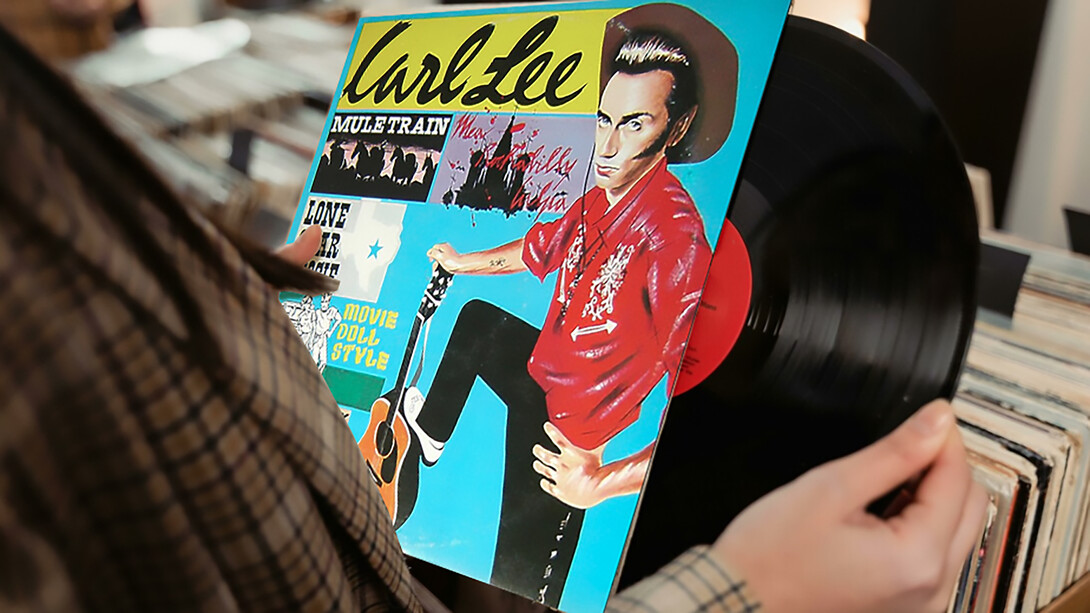
Giulio Tedeschi was born in Piacenza in 1952. At nine years old in Palmanova, he manifested his interest in media by preparing little newspapers for his schoolmates. Often handwritten on large squared paper.
At 12, he was living in Foligno, finding his first influences by reading the French and Russian classics.
Contained in the family library, excited by those atmospheres, he attempted to write the first historical novel. Setting the history in the 19th century, it was supposed to describe the amazing adventures of a fearless brigand. A strange kind of Fra Diavolo…a novel that did not survive more than ten pages...
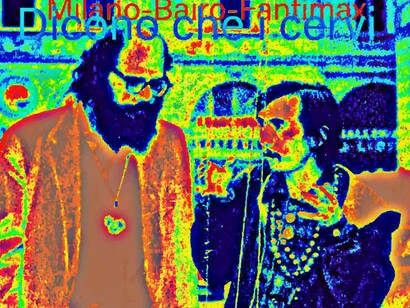
Anyway, the roaring sixties knocked at the door of Giulio’s life around his fourteenth birthday, in August 1966. He discovered science fiction, abandoning the idea of becoming a Navy officer. As a teenager, he followed the left-wing wave, becoming a Maoist sympathizer. Listening to Bob Dylan and Fabrizio De André on the small record player at home, his life opened the windows to the new culture. A basic episode was the encounter with the poet Allen Ginsberg, who strengthened the love for poetry and the Beat counterculture.
The love for this discovery was so big that it led Giulio and his wife, Carla, to name their little boy Allen.
Seventies and eighties
As with many other people born in the fifties and becoming adults during the seventies, Giulio can’t avoid appreciating the evolution of music during those magic years. Pink Floyd. Genesis, Deep Purple, Led Zeppelin, and songwriters like Cat Stevens, Donovan, and many others are basic influences to follow without discussions…but the times, they are changing again.
Meccano and Toast Records
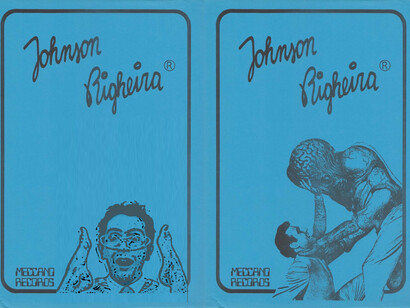
Starting to self-produce simple musicassettes Stereo 7, Giulio founded his first label, Meccano, in 1978, a punk project tuned to the new sounds arriving from the UK and New York. Discovering a young man in his late twenties who called himself Johnson Righeira, a naive lover of the new sounds that were starting to take hold in the West. It was the end of the year 1978, and soon after, Giulio released for Johnson a 45 RPM vinyl entitled "Bianca Surf." In the following years, under the name of Meccano Records, other remarkable records are published. We want to remember the single “Torino è la mia città” (Turin is my city) written and performed by a punk band named “Rough,” featuring the future members of other famous bands like “Africa Unite.”
Toast Records is an idea born around 1984 (and officially announced the following year), having as its goal to be the real start of producing, distributing, and promoting alternative Italian music with a strong underground feeling. A mission that has remained largely consistent since its inception.
Giulio positioned himself early as an active participant in the emerging independent music scene. Opening the business with an initial capital of 500,000 lire. A relatively small initial capital, even by the standards of the time.
Giulio, his wife Carla, and five other partners no longer exist today. They are establishing their first office in a quarter near Porta Susa Station in Turin. A desk, two shelves, and a telephone are the first tools to sustain the challenges. These early conditions shaped the operational model that Toast Records would later develop.
By the 1970s, Giulio had accumulated experience through involvement in alternative publishing, music production, and musical events, and had developed an international network of contacts, particularly in the United States and France.
Toast Records developed a model that emphasized collaboration across different artistic and production contexts, supporting projects that operated outside the mainstream structures of major record labels.
The label operated through informal networks and collaborative practices that contrasted with the hierarchical structures of major record companies (maybe the Toast Records main goal!).
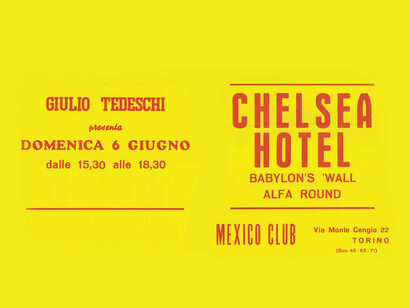
Needless to say, Toast Records has had strong relationships with the "free" radio network since the early eighties, and the use of live stages, often improvised, to showcase new works and young artists just discovered and supported less than a month before.
Obviously, we have to admit that the “indie label” world was not always the best place to be.
Toast Records faced the typical caution of the average Italian—always with clashes—prone to patronage, and often becoming the first betrayal of sincere friendship in favor of easy gains. Being aware of it, Giulio passed through those difficulties, overcoming them with creative work against all odds.
Wise after the events, Toast Records functioned as a space for experimentation, avoiding strict alignment with a single genre or aesthetic.

Giulio Tedeschi, portrait.
Across the “2000”
After the year 1990, Toast Records rejected remaining linked to his old image of a “typical punk and new wave label.”
Music was always changing, sometimes with strange returns like the “buried” progressive rock, blues rock, beat, ska, psychedelia, and singer-songwriter music.
At the end of the eighties, Toast Records had already launched interesting bands like Eazycon, Afterhours, Statuto, No-Strange, and the rockabilly singer Carl Lee.
During this period, the label was involved in projects associated with artists such as Gang, JoJo Mundi, Manuel Agnelli, and Max Casacci, as well as initiatives connected to the revival of Italian beat music with Avvoltoi and Barbieri, the publication of the debut album by the progressive rock band Cage, support for the Independent Music Fair (MEI), and the co-founding of the AudioCoop distribution network. The label also collaborated with the Radio RAI program Demo, hosted by DJ and talent scout Michael Pergolani and journalist-producer Renato Marengo.
Toast Records follows many festivals, like "Wanted Primo Maggio" and "Attentato alla Musica," organizing the national music scene, releasing the audio magazine Punto Zero on 33 RPM vinyl, and creating awards like the "Premio Toast," dedicated to Italian instrumental music, and the "Premio Macchina Da Scrivere," where we can find the original love of Giulio for writers and poetry.
And the future?
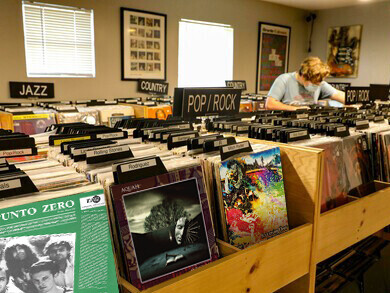
In more recent years, Giulio has engaged with new artists such as Luigi Antinucci and with the renewed interest in vinyl records, which re-emerged after having been largely displaced by compact discs during the 1990s. Recent activities have included archival and curatorial projects focused on the Italian underground music scene, including reissues and posthumous releases. These have included Aquael Anthology, a gatefold compilation by a progressive rock band founded in Turin in 1979; Apocalisse di Diamante, a compilation of psychedelic music; and the posthumous release of After the Golden Age by Screaming Floors, an Italian new wave band active until 1990, based on previously unreleased recordings later remastered and issued on vinyl.
Taken together, Toast Records offers a revealing example of how independent cultural production has been sustained, adapted, and redefined within the Italian music landscape.