English
 Español
 Français
 Deutsch
 Italiano
 Português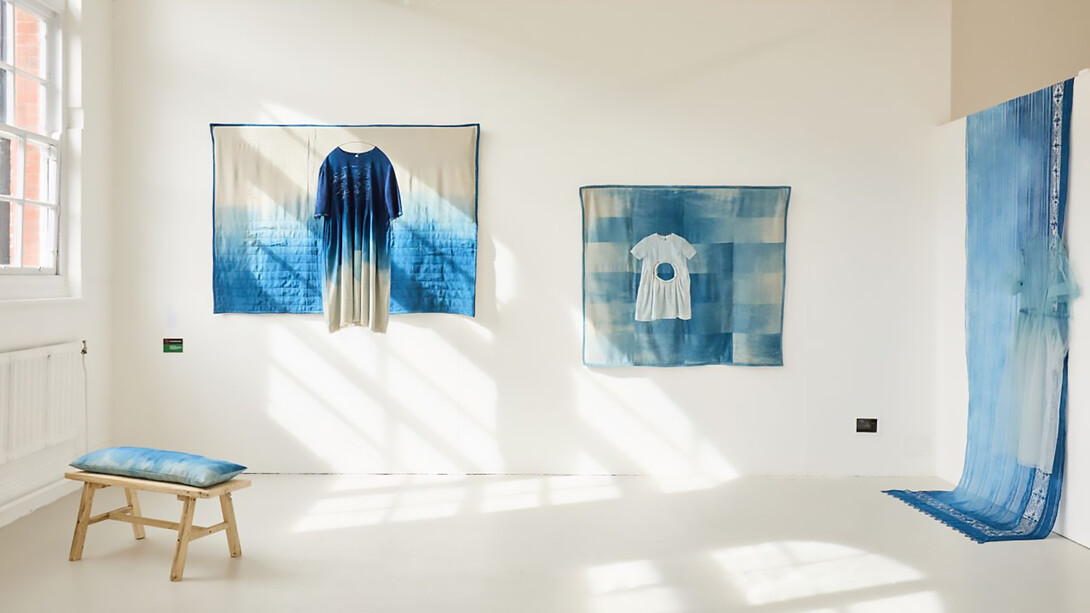
The contemporary art market likes to think of itself as a meritocracy of vision—a sphere where originality, intellectual rigor, and cultural relevance are rewarded both culturally and economically. Yet maybe I’m a lone voice when I argue that the empirical structure of the ‘global’ art market resembles an oligopoly more than a meritocracy? A relatively limited network of artists, dealers, auction houses, and collectors concentrates economic value, while the overwhelming majority of practicing artists operate in a condition closer to self-subsidized, practice-based research rather than engaging in art as professional employment.
This in itself is not a revelation, but our being accustomed to this status quo and the seeming acceptance of the profound inequities of artists’ relative value beg a whole raft of very uncomfortable ethical and moral questions for consumers and producers alike. To offer an example, people are repeatedly and regularly horrified to discover that their cell phone/trainers/clothes are created by workers on minimum wages or less, but rarely would they spare a thought for the artist who, self-funding, not only earns less than minimum wage but also pays for the 'privilege.'
Not wishing consciously to quote Mark Carney or Antony Blinken here, but the aphorism “if you’re not at the table, you’re on the menu”1 describes not only an exclusion from the top table of connoisseur dealer/buyers but also, apparently unknowingly, provides the future pool of talent from which the selective few that are fit for market will be able to be drawn. Most artists supply cultural capital that legitimizes a near-cannibalistic system from which they derive almost no financial return, but whose creative endeavors (inadvertently) maintain the very system that consumes, disappoints, or aggrandizes them by turns, and sometimes administers all three. To put this grand assertion into perspective, we would do well to consider the financial gravity exerted by a handful of artists: In recent auction data, the top ten contemporary artists generated nearly $600 million in turnover in a single year, accounting for 44% of the top 100 artists’ sales (source: ArtPro). In another report, Actus News found that just ten artists produced 29% of the entire contemporary art auction market in the United States and Europe.
This concentration is visible in named figures and their respective agents: Jeff Koons (Gagosian), Damien Hirst (White Cube), Yayoi Kusama (David Zwirner), Gerhard Richter (Hauser & Wirth), and, strangely perhaps, Jean‑Michel Basquiat, whose estate drives massive secondary-market turnover. Auction rankings routinely show these artists generating hundreds of millions in sales; Basquiat alone has exceeded $240 million in annual auction turnover (source: MarketScreener 2024). To be clear, such figures and market share do not simply indicate success—it is market dominance. The art market at this level functions as a luxury asset market in which scarcity, brand recognition, critical approval, and financial speculation reinforce one another. At the top end, collectors do not just buy artworks; they buy a position within a cultural asset class.
Perhaps surprisingly, the evidence proves that the gatekeepers of such market concentrations are more institutional/financial than aesthetic/critical. Three auction houses—Christie's, Sotheby's, and Phillips—together generate the overwhelming majority of global contemporary art turnover. Sotheby’s alone accounted for roughly 28% of total contemporary art auction sales, Christie’s 26%, and Phillips 13% (Source: Actus News Contemporary Art Market Report 2024).
Geography reveals the same concentration. Contemporary art sales cluster in three cities, with New York at 42% of value, London at 23%, and Hong Kong at 18%.
In practice this means the market is controlled by a transatlantic institutional circuit. American and European mega-galleries act as talent monopolies, vertically integrating primary sales, secondary market promotion, museum placements, and art-fair visibility. The reality is, therefore, that artists outside this network struggle not because their works lack quality, but because they lack distribution infrastructure and a way/means to enter that distribution network. Once and for all, I wish we could all stop pretending that critics and their unassailable (re)cognition of authentic creative quality is responsible for an intellectual location or worthy historical position in the canon of the history of art. I am not saying here, of course, that the likes of Kiefer, Hirst, et al. aren’t talented, but what I am highlighting is that for every recognition of a Kiefer, perhaps another 1000 ‘Kiefers’ live in relative anonymity and die in obscurity. It’s a harsh world.
The gallery, therefore, is not merely a venue; it is a pricing authority, or perhaps an even more base description would be a price comparison site. Without representation by one of roughly a dozen international mega-dealers, an artist rarely achieves sustained market visibility. The market rewards affiliation as much as, if not more than, production. For clarity, belonging precedes value.
Against these extraordinary revenues stands the stark economic reality of most practicing artists. While precise global statistics vary, multiple studies and surveys converge on a stark pattern: the median income from art practice alone approaches zero. In the UK, numerous sector analyses show that a large proportion of artists earn only hundreds—not thousands—annually from sales. Informal datasets and industry commentary repeatedly estimate that many artists make £0–£1,000 per year from their art alone (on this occasion I do actually believe Reddit!).
Even without precise national figures, the structural imbalance is clear from market distribution: we know that a few artists generate hundreds of millions, a small professional tier survives through teaching and commissions, and the majority subsidize their practice through unrelated employment. In economic terms, contemporary art resembles academic research: individual production is often funded privately while value accrues publicly elsewhere. The artist absorbs risk; the market captures the appreciation. What's not to like?
The mathematics of inequality is illustrated above; this is not a gap—it is a categorical divide. Basquiat’s estate's annual market activity equals the lifetime earnings of thousands of practitioners combined. More importantly, concentration compounds itself. Research into digital art markets shows that even supposedly democratic systems replicate the same structure: a few sellers capture most revenue, often supported by a single dominant buyer network. The pattern is therefore systemic, not technological. To understand this better, we need to recognize an equation that states the majority of artists produce cultural meaning, while the minority produce tradable assets. The difference lies not in intention but in institutional translation. An artist/artwork becomes financially valuable only when validated by major gallery representation, auction visibility, museum acquisition, and collector speculation. This sequence transforms cultural production into a financial instrument. Once embedded in that loop, price becomes self-referential—collectors buy because others buy.
The maintenance of this market model thus requires a large base of underpaid practitioners. Their exhibitions, artist-run spaces, residencies, and teaching roles generate the discourse that sustains contemporary art as an authentic cultural field. Without them, the symbolic value underpinning blue-chip artists would collapse. They are not excluded from the system; they are its raw material.
In summary, I would say that the art market differs from other labor markets in three decisive ways: Firstly, non-transparent pricing: There is no objective valuation metric; price is produced by narrative and institutional endorsement. Secondly, the economics of scarcity: a gallery can only promote a small roster. Artificial scarcity increases brand value. Thirdly, reputation compounding: Early success leads to exponential financial growth—a winner-take-all feedback loop. These characteristics generate what economists call a superstar market: marginal differences in recognition produce extreme differences in income.
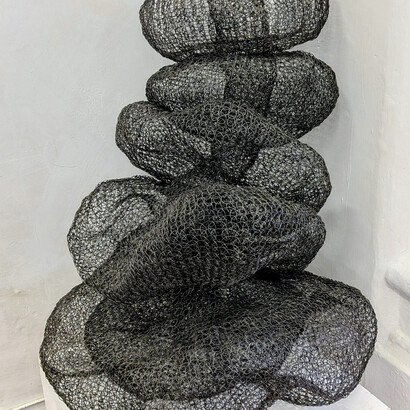
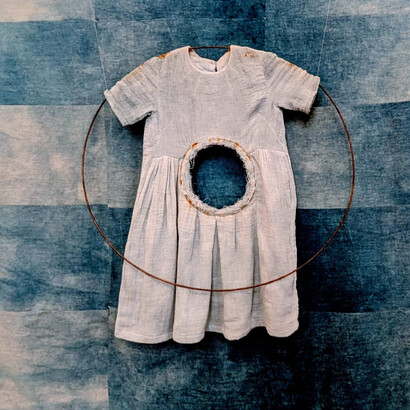
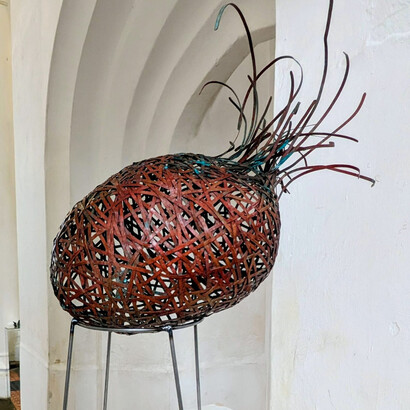
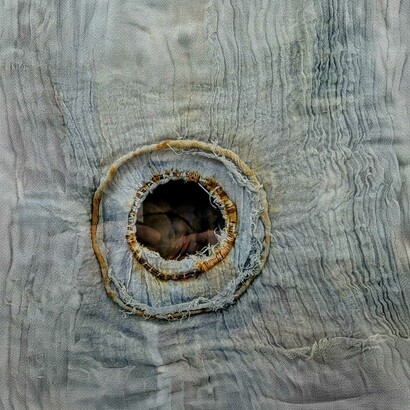
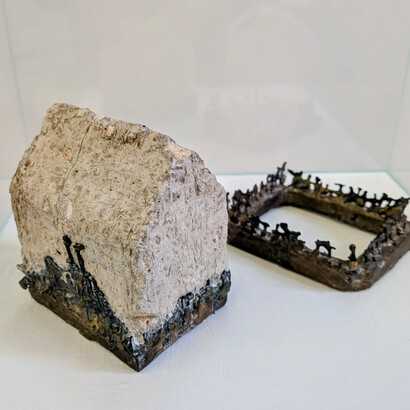
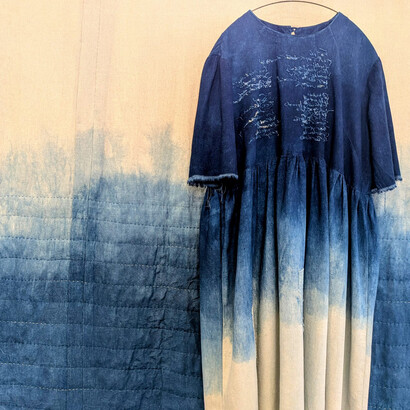
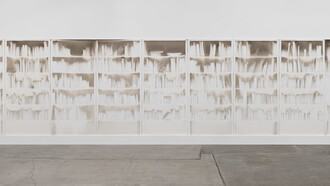
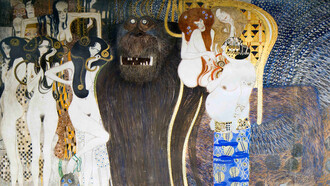
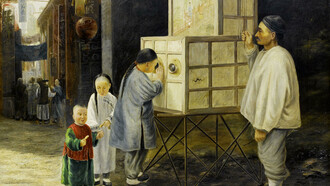
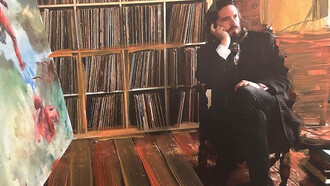
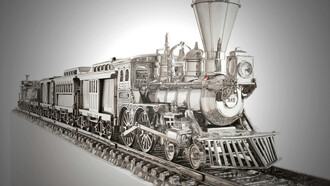
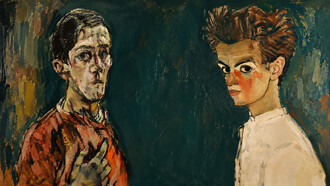
This month, therefore, I have decided to kick against the pricks2 by highlighting images selected from an art show3 that was self-funded by a group of ‘local’ artists. Such loose affiliations, common in the real world, grow talent and support career progression—to a point. I came across the show by accident, in a deconsecrated church. I chose the works/artists as an example of the honesty, integrity, and ability that may never see a wider public. These artists are the submerged portions of an iceberg. These artists are on the menu. I name them here in hope: Jo Bellamy, Carl Durban, Elizabeth Maw, and Caroline Mayers.
So, in conclusion, the structural reality of contemporary art is such that the system requires thousands of such committed artists who believe they are participating in a shared cultural enterprise, while only a few participate in its economic rewards. The mega-galleries, auction houses, and top collectors sit at the table—coordinating scarcity, narrative, and price. Superstar artists sit with them as branded producers. Everyone else supplies intellectual labor, unpaid research, and cultural legitimacy.
The inequality is not accidental; it is functional. The art market depends on a broad field of sincere, poorly paid practitioners (regardless of talent) to sustain the symbolic ecosystem that allows a handful of names to function as financial instruments. In other words, most artists are not failing to enter the market; they are what makes the market possible.
References
1 1993. “Lebanon—At the Table or on the Menu?” Middle East Insight 10, no. 6 (Sep.–Oct.): 5 (commentary on a pending Syria-Israel accord).
2 The phrase dates back to Evelyn Waugh, but also in more ancient ways to Greek literature, appearing in Euripides' The Bacchae (c. 405 BCE) and Aeschylus with reference to agriculture. It signifies fighting against the inevitable or resisting an irresistible force, which knowingly causes self-inflicted damage.
3 The Space Between exhibition.