English
 Español
 Français
 Deutsch
 Italiano
 Português

There’s no such thing as a free lunch.
In Indonesia in 2025, that phrase stopped being a metaphor and started sounding like a public-health advisory.
A horror story served at noon
Nobody expected that a free meal at school could land thousands of children in hospital. Yet that is exactly what happened. In West Bandung Regency, over a thousand students were rushed to nearby health facilities in late September with cramps, vomiting, dizziness, and, in some cases, shortness of breath. The local authorities were forced to declare a KLB, an Extraordinary Event.
This was not an isolated freak incident. The ripples began almost as soon as the program was launched. In Sukoharjo, Central Java, on 16 January 2025, barely ten days after the grand rollout, at least forty schoolchildren complained of nausea and stomach pain after eating the supposedly “nutritious” government lunch.
Over the months that followed, outbreaks appeared like an ugly rash across provinces: West Java, Banten, Sumatra, and Kalimantan. By September 2025, the cumulative toll had climbed above 9,000 children in more than a hundred outbreaks, according to Reuters. Health labs confirmed the presence of familiar, avoidable culprits: E. coli, Salmonella, and poor temperature control.
The National Nutrition Agency, set up to run the program, eventually ordered the closure of about forty supplier kitchens. It sounded less like a public-health policy than a giant, under-supervised catering experiment.
How did we get here?
During the 2024 presidential debate, the candidates were asked about stunting—the chronic child undernutrition that has haunted Indonesia for decades. The then-candidate Prabowo Subianto responded with two words: “Free meals.” When rival candidates pressed him on the science that stunting begins in the womb and must be tackled through maternal health and prenatal nutrition, he added, almost as an afterthought, “then… for pregnant women too.” The audience laughed. Nobody imagined the off-the-cuff answer would become a trillion-rupiah national policy.
Prabowo won the election. On 6 January 2025, the Makan Bergizi Gratis (MBG) programme was launched. It promised to feed 82.9 million Indonesians, from pre-schoolers to pregnant women, every single school day.
The 2025 budget allocation was IDR 121 trillion, mostly carved out of education and health spending. The president has repeatedly defended the program as an act of compassion for “children who only eat rice with salt,” a remark that may reveal more about his mental picture of poverty than about actual school demographics. The harsh truth is that children living in that level of deprivation rarely make it to school in the first place; many work or beg on the streets and are therefore untouched by a school-based lunch program.
The grand plan meets reality
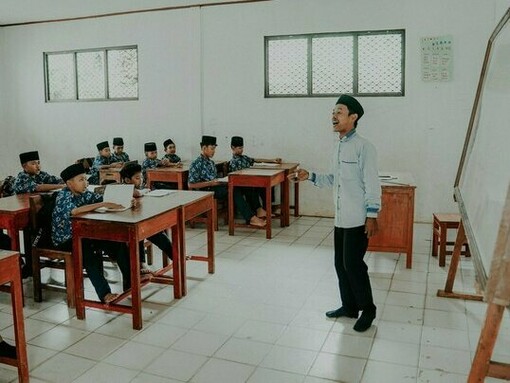
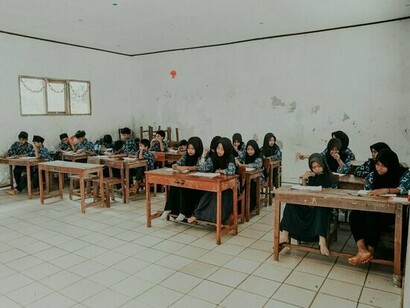
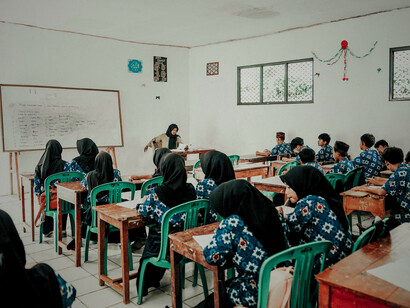
Indonesian schools are not Hogwarts. They don’t have gleaming cafeterias with stainless-steel lines. Most Indonesian schools, especially the rural ones most affected by malnutrition, do not have kitchens. Lunch has to be cooked somewhere else, packed, transported across pot-holed roads in tropical heat and humidity, and served hours later in classrooms or courtyards.
The trial run in 2024 involved just over a hundred schools in Jakarta, Bandung, and Tangerang. Hardly a test of the archipelago-wide logistics needed to reach tens of millions of children. Scaling that experiment nationwide without solving cold-chain and sanitation issues was like deciding to launch a space program before building a rocket.
The procurement story is no less troubling. Instead of strengthening the existing canteen ecosystem and enforcing food-safety standards there, the government created a brand-new body—the BGN (Badan Gizi Nasional / National Nutrition Agency)—reporting directly to the president. Several suppliers contracted to deliver the meals were later found to be politically connected; some reportedly had links to the ruling party or to retired military officers.
When the outbreaks began, BGN officials blamed “inexperienced nutritionists” and “kitchen staff unfamiliar with hygiene protocols,” as if the program were a harmless internship gone wrong. By September it emerged that, out of roughly 8,000 registered supplier kitchens, only 36 had proper hygiene certification.
Meanwhile, the fiscal picture inspires little confidence. By mid-2025, the government had managed to disburse only IDR 4.4 trillion, a mere 2.6 percent of that year’s IDR 171 trillion MBG budget. So the state was spending barely a sliver of the money yet already generating mass food-poisoning outbreaks. It is a rare feat to be both inefficient and dangerous at the same time.
Parents protest, buzzers gaslight
The human response has been predictable. Parents, especially mothers, have staged small protests, petitioning local authorities to suspend the program until proper audits and food-safety measures are in place. Public-health experts have urged a pause and a rethink. But the president insists the criticism is a form of political sabotage. He even described the affected children as representing “only zero-point-zero-something percent” of all beneficiaries, reducing the sick to a decimal point.
The government’s online communication machine, the infamous buzzers, has attacked critics as “enemies of the poor” or floated the idea that shadowy opponents “sabotaged” the meals. A theory that collapses under the simple fact that many of the tainted kitchens were run by politically connected suppliers themselves.
A country that deserves better
At the heart of the outrage is not the idea of feeding children—few would object to that. It is the reckless, top-down, headline-driven way in which the programme has been executed: conceived as a debate-stage sound-bite, run as a patronage-heavy procurement spree, and rolled out across an archipelago without the most basic infrastructure to keep food safe. Indonesia’s persistent stunting problem is indeed a national emergency, but fighting one health crisis by creating another is no victory.
A truly effective program would have begun with the hard, unglamorous work: strengthening local health posts, improving maternal nutrition, supporting school canteens to meet hygiene standards, building kitchens and water-sanitation facilities, training food handlers, and phasing in coverage region by region with transparent monitoring. Instead, the country got a one-size-fits-all spectacle. The tragedy is that the poorest children, the ones least likely to have a voice, have paid the highest price. They were supposed to be fed; instead, many were hospitalized.
A nation that can put a man on a debate stage promising free lunches should at least be able to keep the rice free of Salmonella. Until the government delivers rigorous oversight and independent audits or pauses the program long enough to fix the rot. The so-called free lunch is just another bill. And this one is being paid for in children's health.