English
 Español
 Français
 Deutsch
 Italiano
 Português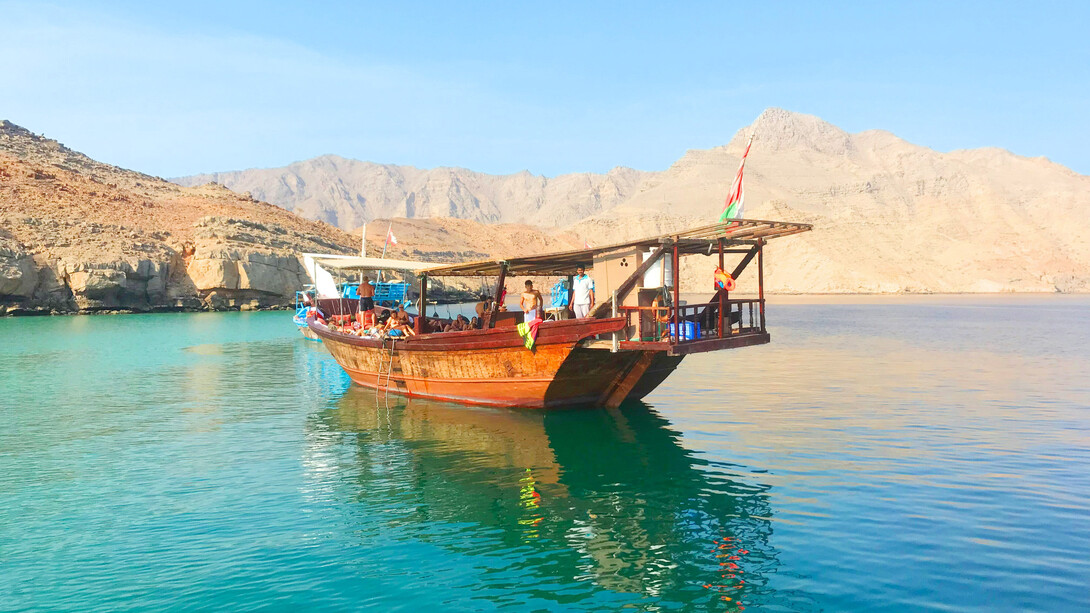
The Musandam Governate of Oman juts out from the Arabian Peninsula into the Strait of Hormuz, the narrow entry into the Persian Gulf, through which approximately twenty percent of the world’s oil trade passes. Musandam is an exclave, separated by a strip of the United Arab Emirates from the rest of the Sultanate of Oman, that gives Oman partial control of the strategic strait. Visiting picturesque Musandam is a popular day trip from Dubai, which is the nearest major city.
The sparsely settled area of Madha, located halfway between Musandam and the rest of Oman and considered part of Musandam, is also surrounded by the UAE, but is part of Oman. The Madhanis chose to align with the sultan of Oman in the late 1930s/early 1940s.
Following treaties established between Oman and Britain in 1891, as well as a 1970 British-backed Omani coup, Musandam came under Omani control. Control over Musandam enhances Oman’s geopolitical influence and increases maritime security over an area important to the world’s oil trade.
The peninsula was historically self-ruled by local tribes but was claimed by the Sultan of Oman in the early 20th century. It is isolated by mountainous terrain and a rocky coast. The natural harbor in the coastal area of Dibba has been an important site of maritime trade for millennia and it is now a popular tourist destination.
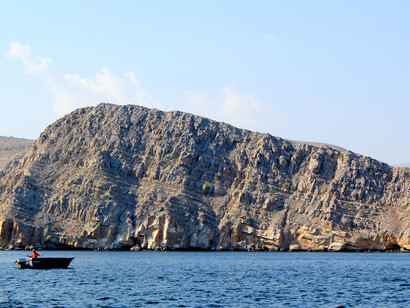
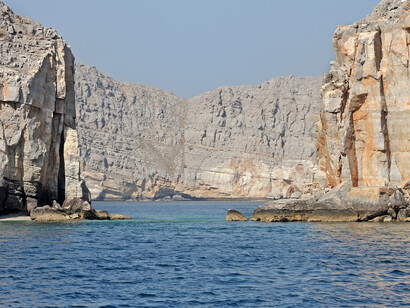
Its crystal clear waters and stunning mountain ranges, known as the Musandam fjords, have earned it the nickname, the “Norway of Arabia.” There you will find thousands of serrated khors (ravines) with spectacular drop-offs into the Strait of Hormuz. The longest fjord, Khor Ash Sham, is 16 kilometers long.
The fjords, known as Khawr, are rich in marine life and lined with traditional fishing villages, coves and dramatic cliffs, some reaching 1,000 feet above sea level. The local Khawajah and Shihuh tribes continue pearl diving and traditional fishing in the area.
Musandam culture is influenced by Oman, Persia and the Arabian Peninsula. The Musandam Souq serves as a cultural hub where visitors can engage with local artisans, sample authentic Omani cuisine and experience some of the region’s rich heritage. Cultural festivals, like the Musandam Heritage Festival, Omani National Day and Khalaji Music Festival, are also significant and worthwhile.
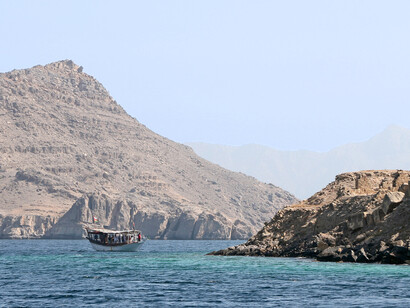
Numerous tour packages are offered to explore the region by traditional wooden dhow boat, some of which offer overnight stays on the vessel or on the beach. Dhows are an attraction in Oman, and have been part of Oman’s maritime tradition for centuries.
The tour I took included pick up and drop off at my Dubai hotel, a barbeque lunch on board, swimming, banana boat rides, speedboat rides, snorkeling, kayaking, fishing, cave viewing and a beach stop. Lunch included fresh grilled barracuda and chicken kabobs. The speedboat operator was a daredevil, thrilling participants with his high-speed maneuvers. Dancing on board started spontaneously among the ebullient Russian and Indian travelers. Because Russian tourists are common in this region, our guide gave narratives in both English and Russian.
Diving is another common activity in the area. Friendly humpback and bottlenose dolphins frequently entertain visitors on the water. Hawksbill sea turtles also may be observed. Telegraph Island (Jazirat Maqlab), once a British communications outpost, is a frequent stop.
The vibrant coral reefs below the surface teem with clownfish, parrotfish, urchins, sea cucumbers and others. The ecosystem supports more than 300 species of fish.
Jebel Harim peak is the highest spot in Musandam at 2,087 meters above sea level. Its name means “mountain of women,” referring to the Portuguese colonial time during which Omani women would hide up the mountain, fearing kidnapping and molestation by pirates and colonizers. The views are spectacular from this popular camping and hiking spot.
Omani coffee, called Kahwa, and local dates are common refreshments. Many of the tour companies offer barbeques on the beach or boat as part of their tours, featuring local cuisine.
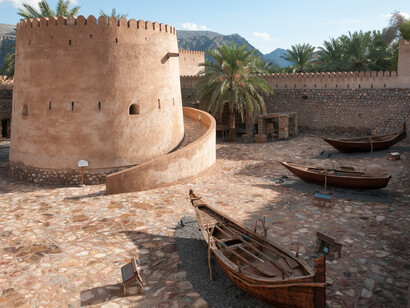
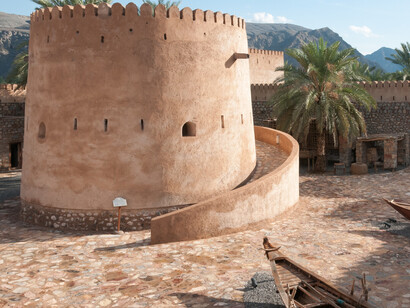
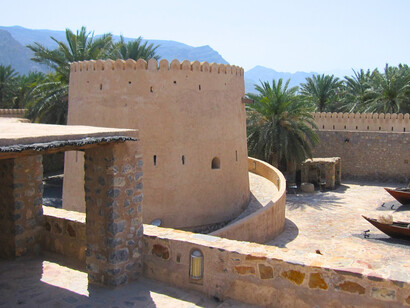
Khasab, the capital of the Musandam Peninsula, has a 17th-century fort that offers beautiful views of the surrounding landscape. The harbor is picturesque, lined with traditional dhows for fishing and tourism. The local souk is filled with handicrafts and spices.
The prime time to visit is from October to April. Temperatures from May to September can surpass 40 degrees Celsius/104 degrees Fahrenheit. On arrival, visas are available to citizens of many countries, including the United States and the United Kingdom. Tour operators facilitate the border crossings, which took only a few minutes both ways.
The majestic mountains and dramatic fjords with serene blue-green water make for a worthwhile travel destination in one of the most beautiful places to visit in Oman. The tan palette, acacia trees, roaming goats and tranquil sea make for a wonderful experience. Cultural heritage and outdoor adventures continue to entice travelers to this unique Arabian area.