English
 Español
 Français
 Deutsch
 Italiano
 Português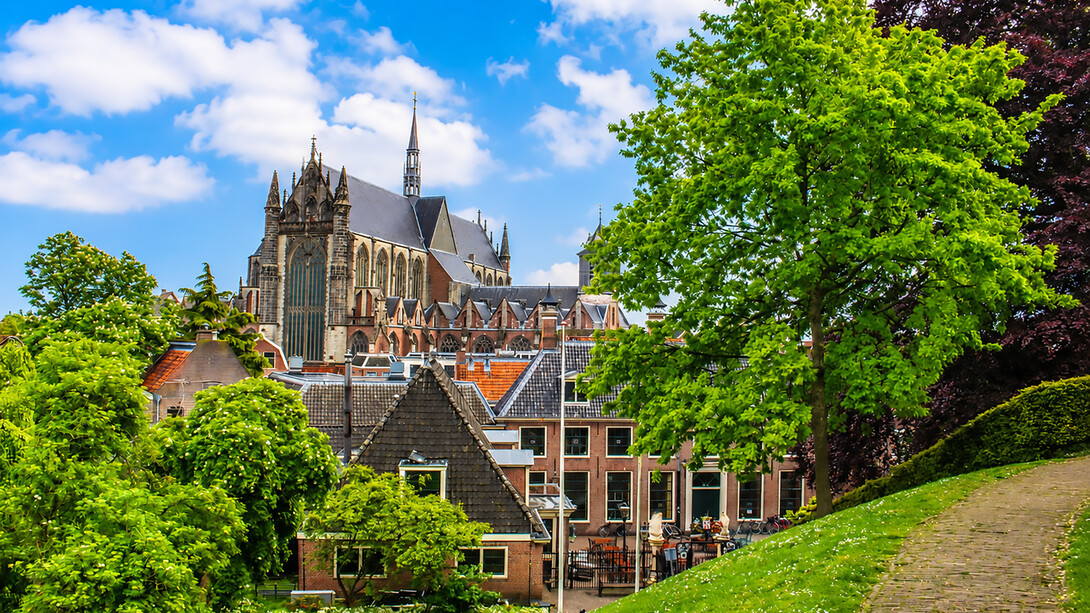
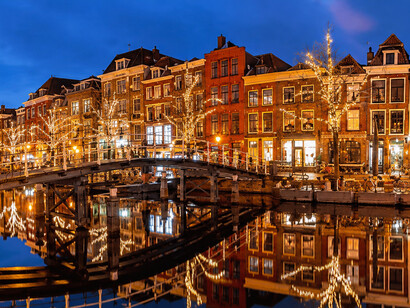
There is a specific quality to the light in Leiden. It is the same pale, luminous glow that spills across the canvases of the Dutch Masters, illuminating the surface of still canals and warming the facades of centuries-old brick houses. This is no coincidence. Leiden is the birthplace of Rembrandt van Rijn, and wandering through its remarkably preserved historic centre often feels less like visiting a city than stepping directly into a 17th-century painting. Yet Leiden is far from a static monument to the past. Beneath its serene exterior pulses an unmistakable intellectual energy, shaped by centuries of scholarship, scientific discovery, and artistic innovation. Known as the “City of Discoveries", Leiden possesses a character both contemplative and quietly ambitious, anchored by the oldest university in the Netherlands.
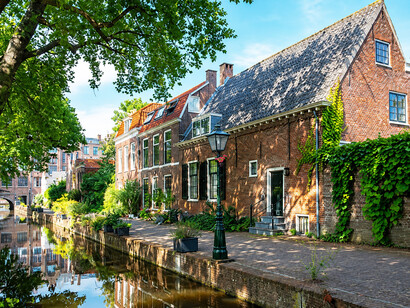
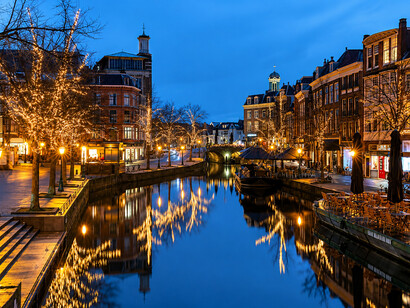
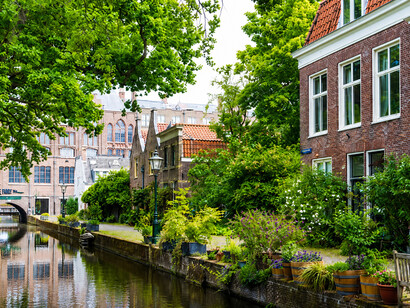
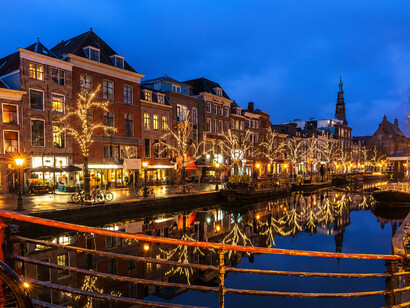
To arrive in Leiden is to immediately encounter its lifeblood: water. After Amsterdam, Leiden boasts the greatest number of canals and bridges in the country, a labyrinthine network that gives the city its distinctive rhythm and intimacy. The canals here feel less theatrical than those of Amsterdam and more deeply woven into the daily fabric of life. Houseboats drift quietly beside narrow quays, bicycles rest against iron railings, and reflections of church towers shimmer softly on the water’s surface.
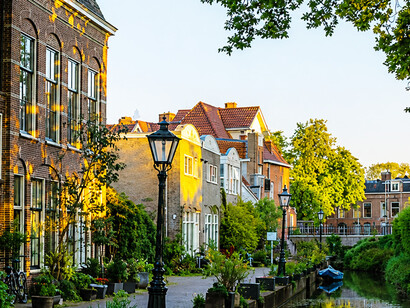
The most celebrated of these waterways is the Rapenburg, often described as one of the most beautiful canals in the world. Lined with elegant patrician mansions from the Dutch Golden Age, the Rapenburg exudes a restrained grandeur. Tall windows mirror the changing light, while ancient linden trees form a leafy canopy overhead, their branches swaying gently above the canal. Walking along the Rapenburg is like traversing an open-air corridor of European intellectual history. Philosophers such as René Descartes and Baruch Spinoza once walked these same cobblestones, drawn to Leiden by its atmosphere of relative tolerance and intellectual freedom. Even today, the canal retains an almost scholarly stillness, interrupted only by the chiming of bicycle bells and the subdued murmur of students moving between lectures.
At the heart of this intellectual tradition stands Leiden University, founded in 1575 by William of Orange as a reward for the city’s heroic resistance during the Spanish siege. More than merely an educational institution, the university became a symbol of Dutch resilience and freedom of thought. During the 17th century, scholars from across Europe flocked to Leiden, transforming the city into one of the continent’s foremost centres of scientific inquiry, philosophy, and medicine. The university’s influence continues to shape the city today. Its buildings are seamlessly integrated into the urban landscape, giving Leiden the atmosphere of a city-sized campus where academia and ordinary life coexist effortlessly.
Perhaps nowhere is this scholarly spirit more beautifully expressed than at the Hortus Botanicus, the oldest botanical garden in the Netherlands. Hidden behind university buildings, the garden feels like a secret sanctuary suspended outside of time. Established in 1590, the Hortus played a pivotal role in the development of botany and medicine in Europe. It was here that the pioneering botanist Carolus Clusius planted the first tulip bulbs in Dutch soil, unknowingly laying the foundations for the tulip craze that would later sweep through the Netherlands during the infamous Tulip Mania.
Today, the Hortus remains a place of remarkable tranquillity. Ancient trees tower over winding paths, exotic plants bloom inside historic greenhouses, and small ponds reflect the soft Dutch sky. Visitors wander slowly through collections of medicinal herbs, tropical orchids, and rare Asian flora, accompanied by the gentle rustling of leaves and birdsong. In a city defined by intellect, the botanical garden offers a quieter form of discovery: one rooted in observation, patience, and wonder.
Yet Leiden’s story is not solely one of scholars and artists. The city also occupies a surprising and deeply significant place in American history. In the early 17th century, a group of English religious dissenters fled persecution in England and sought refuge in Leiden, attracted by the city’s climate of relative tolerance and economic opportunity. For over a decade, these Pilgrims lived and worked within Leiden’s narrow streets before eventually departing aboard the Mayflower in 1620 to establish Plymouth Colony in the New World.
The traces of their presence remain strongest in the Pieterskwartier, the atmospheric neighbourhood surrounding the imposing Pieterskerk. Its maze of narrow alleys, hidden courtyards, and leaning brick houses has changed remarkably little since the Pilgrims walked there four centuries ago. The Leiden American Pilgrim Museum, housed within a beautifully preserved mediaeval building, tells the poignant story of this community and its difficult choice between religious freedom and economic hardship. Through this unexpected connection, Leiden becomes not merely a Dutch city but a quiet crossroads in the broader narrative of transatlantic history.
As one continues exploring Leiden, the city itself begins to reveal its literary soul. Scattered across walls throughout the historic centre are the famous Muurgedichten, or Wall Poems. More than a hundred poems are painted onto building facades in their original languages, transforming the city into an open-air anthology of world literature. A line of Shakespeare may appear beside a canal bridge; a poem by Marina Tsvetaeva might emerge unexpectedly in a quiet alleyway; verses by Bashō, Pablo Neruda, or E.E. Cummings decorate otherwise unassuming streets. Searching for these poems turns wandering through Leiden into a kind of intellectual treasure hunt, reinforcing the city’s cosmopolitan identity and deep reverence for language and ideas.
Despite its extraordinary cultural and historical significance, Leiden possesses none of the exhausting spectacle that often accompanies Europe’s great heritage cities. Its beauty feels understated and deeply lived-in rather than curated for tourism. One can spend an afternoon admiring early Rembrandt paintings at Museum De Lakenhal, examining ancient Egyptian artefacts at the Rijksmuseum van Oudheden, or simply sitting beside a canal with a glass of jenever while watching boats glide slowly beneath stone bridges.
Leiden does not seek to overwhelm visitors with grandeur. Instead, it reveals itself gradually, through subtle details and quiet moments. Its brilliance is whispered rather than proclaimed: in the rustling leaves above the Rapenburg, in the worn stones beneath centuries of footsteps, and in the luminous reflections dancing upon its canals at dusk. It is a city that rewards curiosity, patience, and contemplation, inviting travellers not merely to observe history, but to walk gently within it.