English
 Español
 Français
 Deutsch
 Italiano
 Português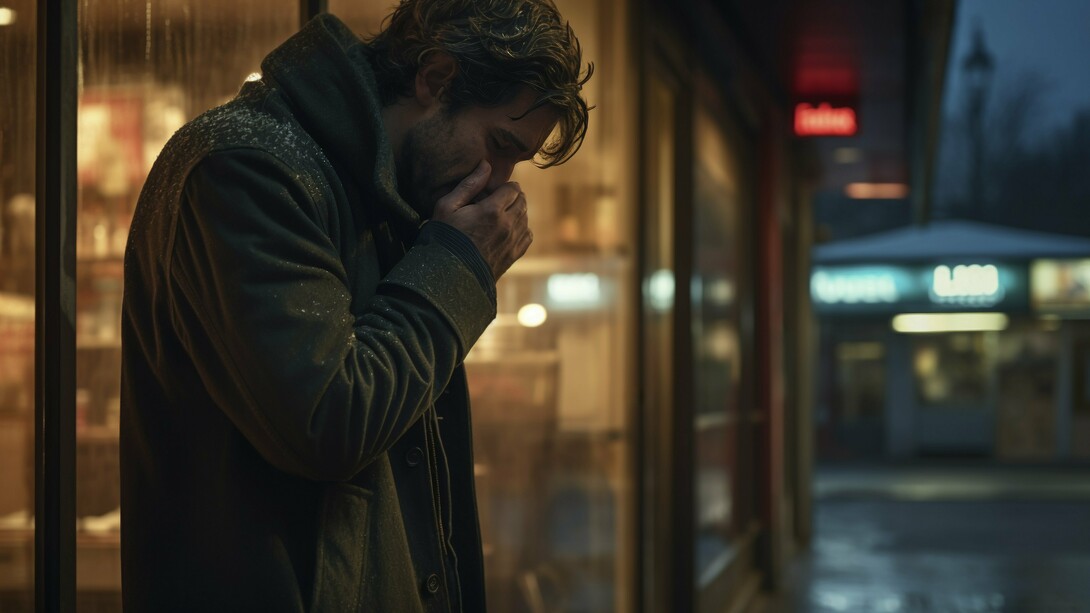
Insideous messaging stemming predominantly from Hollywood has become increasingly biased against straight men. The idea that men must be rendered worthless so women look strong isn’t equality, it is childish, petty, vengeful, and incapable of building real unity.
Hollywood’s version of progress has become a rewriting of men into caricatures: passive, hollow, and unreliable. Once the default protagonists, men today are often reduced to emotional liabilities, plot devices, or comedic backdrops that are stripped of agency, strength, or dignity. They become the “before” shot in a narrative meant to glorify the “after.” Do straight men have a shameful history of violence against women? Yes, undoubtedly. Can anything be solved by taking an eye-for-an-eye approach? The answer is unequivocally no.
We see it clearly in recent films. In ‘Companion’, the male lead isn’t a flawed man. He’s an empty husk, a walking cautionary tale rather than a person. Skinny, expressionless, and devoid of redeeming qualities, he exists only to highlight the woman’s journey. The message is loud and clear: a man’s role is to fail so a woman can rise. This same tired pattern repeats across many films, some exploring male vulnerability with respect, others portraying the polar opposite and attempting to convince Western audiences that misandry is the cure-all the world needs.
‘Beau Is Afraid’ (2023) offers Beau as a protagonist who is frightened, passive, and entirely dependent. Beau is a tragicomic martyr to his own anxieties. ‘Promising Young Woman’ (2020) turns almost every male character into some variant of predator, buffoon, or coward. Even characters who might once have been heroes have been neutered into emotional infants. “Strong but flawed” has become “emotionally unstable and dangerous.” What is the objective? To turn all women against straight men? It is a valid question.
In the quest to undo patriarchy, Hollywood seems to have forgotten that masculinity and humanity once shared a bed. Instead of evolving masculinity, the industry scrapped it and replaced it with neutral ground that satisfies no one. All of these films are impeccably well produced; they are well-told stories, with the exception of their male characters. This must be addressed and rectified if any sort of unity is to be achieved within the next decade.
Joseph Goebbels, lead propagandist for Adolph Hitler during his abhorrent war campaign, agreed with the saying, "Of all the arts, film is the most important to us.” To that effect, we must take notice and place great importance on the underlying messaging in Hollywood films. It has become much too on the nose who is framed as the villain in recent years: Men, more to the point heterosexual men.
This reversal of power dynamics is not necessary for stories that centre on female empowerment. This messaging does not build equality and will raise another hateful generation tailored to whoever Hollywood at large deems a suitable target. It erases the complexity that is intrinsically at the heart of what makes us all human; these one-dimensional characters are purposefully written this way.
What makes this trend even more frustrating is that audiences are clearly signalling what they want. Viewers continue to embrace stories where men and women exist together with nuance rather than hostility. The reception to series like ‘Better Call Saul’ and ‘Chernobyl’ proves that people crave layered human beings instead of ideological placeholders. When male characters are allowed to be complicated, not perfect, not villains, simply human, audiences respond immediately. These successes reveal something Hollywood keeps ignoring.
People do not want a gender hierarchy. They want emotional honesty, genuine conflict, and characters who feel real.
Take the recent remake of ‘Snow White.’ By the time the film premiered, it had already been ridiculed by critics and audiences alike, and yet the damage started much earlier. The film’s star, Rachel Zegler, was caught on camera saying her male co-star might be cut altogether because “that’s Hollywood, baby.”
A glib remark, a cheap and underhanded shot from someone (Rachel Zegler) just getting her start in Hollywood and with no cultural caché or work history in film to use as leverage for some, a bitter declaration of how it is for others: in a story that once balanced male and female archetypes, the man is now optional. Not because his character lacked depth, but because the studio wanted to avoid accusations of “toxic masculinity.” The result is a film that strips half its inherited cast down to irrelevance in the name of being modern.
That kind of “progress” is cheap. It asks women to carry stories alone, and expects men to vanish from them; both men and women crave realness, not reactionary symbolism and virtue signalling where an entire sex is vilified. When writers truly give men full lives (emotional, flawed, stressed but resilient, and capable), they create characters that connect deeply with their audience, a lot more deeply than seeing the tired trope of heroes and villains.
Think of Joel in ‘The Last of Us’: haunted, vulnerable, brutal when needed, and beautiful when possible. Or Carmy in HBO’s lauded television series ‘The Bear’: broken, brilliant, raw, fiercely alive. These aren’t perfect men. They’re whole ones. They carry agency. They carry pain. They have the same heart all human beings have, the same crimson blood we all bleed.
Women and men respond to this, not because of gender politics, but because of our shared humanity, which ought to be the presiding message of a majority of films in production in the 21st century. It is insane and immature to think otherwise; we desperately need introspection, not a gender war.
People are rapidly giving up on their idea of fairy tale love in large part because of a global cost of living crisis post global pandemic. When the current leader of the free world (Donald Trump) has been quoted as saying, "When you’re famous, they let you do it; grab ‘em by the pussy,” it is understandable why Hollywood sees men as the villain. Donald Trump’s disdain for the state of
California is well documented, and they had a reactionary response that affects us all through the same propagandist messaging championed by Joseph Goebbels.
Humanity will only survive extinction once we do away with the “us vs. them” mentality across cultures and creeds and races and religions, especially between men and women. If Hollywood cared about equality, real equality, it would stop equating male competence with cruelty or patriarchy and equating female strength with the idea that she had to overcome the “evil man."
Hollywood must stop assuming the only way to elevate female characters is to decimate male ones. Like a drowning person who keeps themselves afloat by propping themselves up on the back of another person, only to drown them, a flawed ideology in no way paves a road to global peace and unity.
Modern Hollywood has lost track of what unifies us and makes us human because what divides us is more profitable when you isolate humanity into particulars like gender, race, creed, and so forth. Hollywood has shifted toward a style of storytelling that diminishes male characters rather than developing them. Many films now portray men as passive, weak, or morally incompetent, which undermines genuine equality and fuels the gender divide.
Instead of evolving masculinity in a balanced way, studios often replace it with empty caricatures that exist only to elevate female protagonists. This trend ignores the audience’s clear preference for layered, complex men and women who feel authentic. Viewers respond strongly to characters with emotional depth, shared humanity, and believable flaws. Hollywood’s reliance on ideological messaging alienates the very people it aims to reach.
Real progress requires portraying men and women with equal dignity, strength, and vulnerability.