English
 Español
 Français
 Deutsch
 Italiano
 Português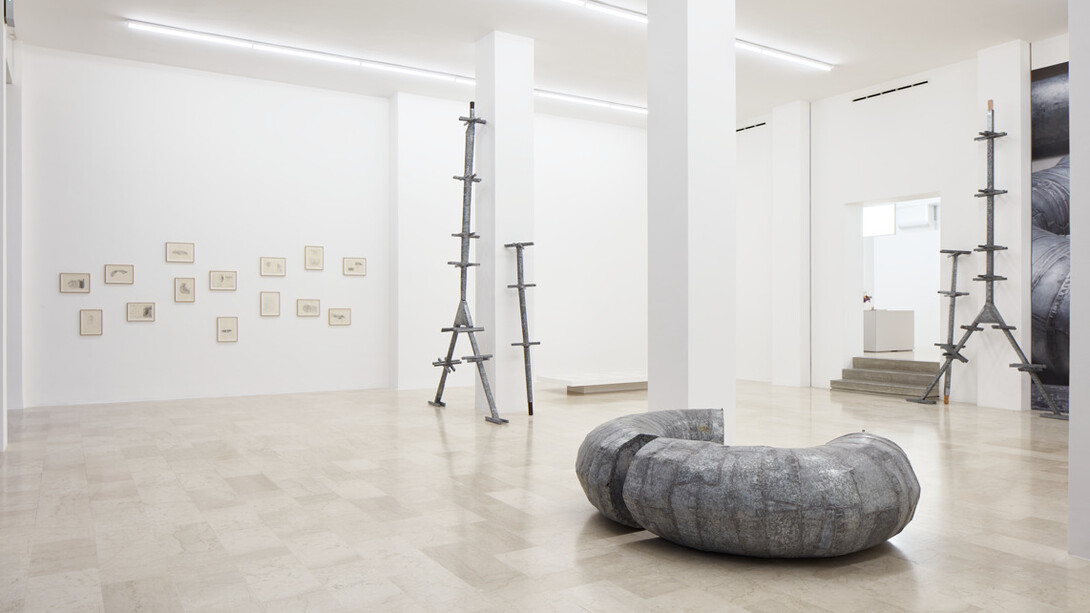
P420 is pleased to announce Armature, the first solo show by Ana Lupas (1940, Cluj, RO) in a private gallery. After the major retrospectives at the Stedelijk Museum (2024) of Amsterdam and Kunstmuseum Liechtenstein (2024-2025), this show offers an opportunity to reinterpret the work of one of the most radical figures of the conceptual avant-garde in Eastern Europe.
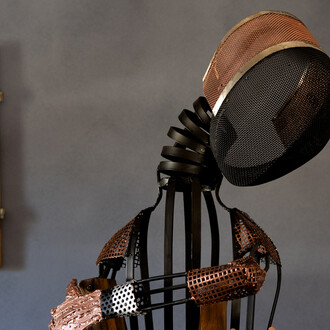
The title of the exhibition, intentionally in Italian, plays with a fundamental linguistic specificity and a dual semantic value. The term *armatura” simultaneously points to two key concepts for interpretation of the exhibition: that of physical, metal armor, for external protection, and at the same time that of the internal superstructure, that virtual armature that is worn to protect one’s own personality.
The entire show turns around the necessity to support and protect what is fragile. Whether in collective memory or individual identity, Ana Lupas responds to the threat of erasure of the self, with solid, long-lasting devices of protection.
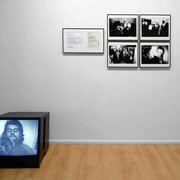
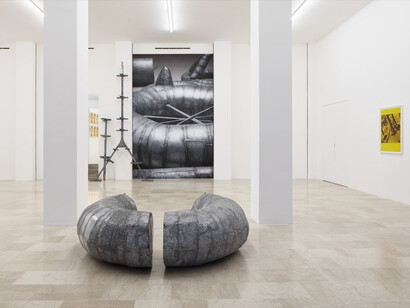
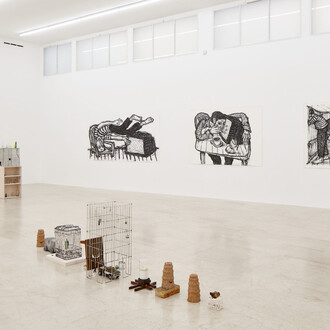
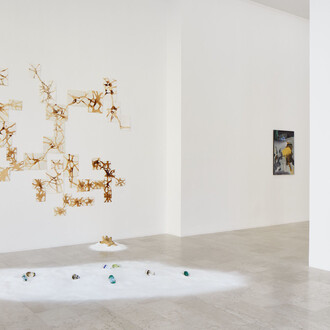
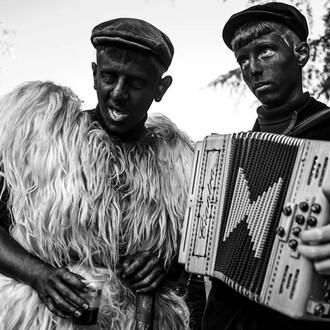
This defensive aspect appears, on the one hand, in monumental works in metal, utilized by Lupas to encapsulate the organic and rural materials she used to produce the sculptures of Wreaths of August (1964-2008), displayed in the first room of the gallery. Here the armature is present as a load-bearing structure, internal – clearly visible in the drawings on view from the series The solemn process (1964-2008) – and as an enveloping external metal structure, capable of preserving the ephemeral and transforming the fragile, perishable tradition into an eternal monument.
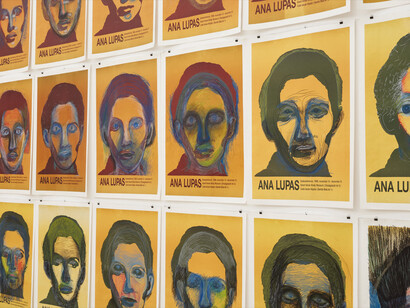
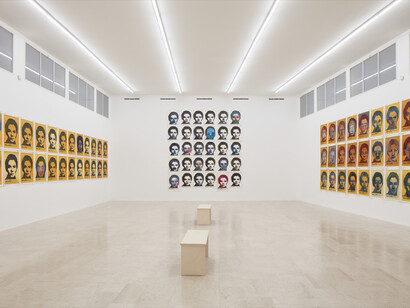
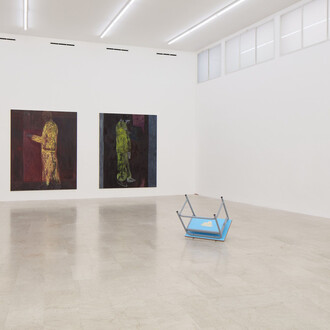
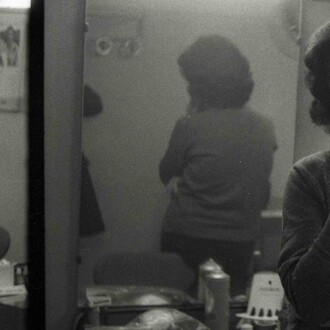
Likewise, in the Self-portrait series (1998-2000), shown in the second room of the gallery, Lupas graphically intervenes on her own features, altering the mechanical repetition, raising a barrier against regularization. As Sara De Chiara emphasizes in the essay that accompanies the show, “the assertion of the artist’s own individuality in opposition to standardization is a central issue in all of her practice, with the aim of assigning value to the individual element as opposed to seriality, human intervention with respect to mechanical production, aspects that take on particular meaning in the context of a totalitarian regime, under which much of the project was developed.”