English
 Español
 Français
 Deutsch
 Italiano
 Português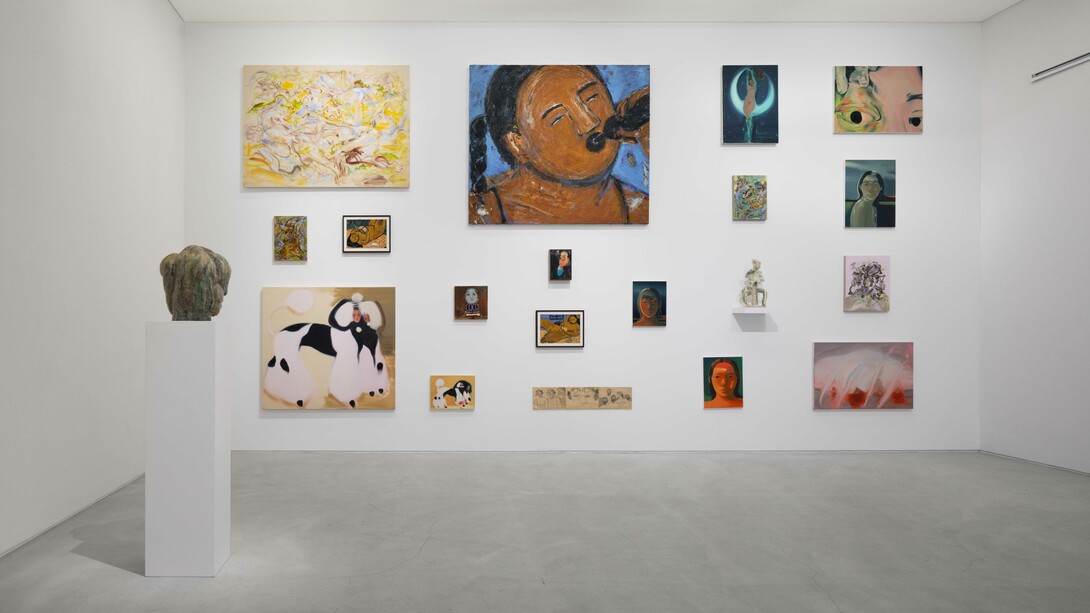
P21 presents Unapologetic, a group exhibition featuring nine women artists, as its first exhibition of 2026. The exhibition explores the contemporary female body and emotion, labor and identity through a wide range of media, including painting and sculpture. Drawing from personal experiences and private narratives, the participating artists candidly foreground sensation, play, and self-absorption that have often remained marginal for women.
The posture of the “good” moral subject long demanded of women has fostered an internalization of self censorship, rendering pleasure, desire, and the expression of excessive emotion objects of sustained suspicion. The works presented in this exhibition move beyond such normative controls, foregrounding forms of female self-indulgence, emotional excess, and repetition that have long been suppressed. Here, women no longer appear as subjects that must be explained or justified; instead, they emerge as beings who position themselves as the source of their own satisfaction. The participating artists resist reducing feminine existence to standards of morality or productivity, instead recalling women as human animals endowed with flesh and sensation. The self-absorption and self-affirmation evident in their works function as sensory practices for affirming life in its entirety, underscoring pleasure and freedom as fundamental forces that sustain existence.
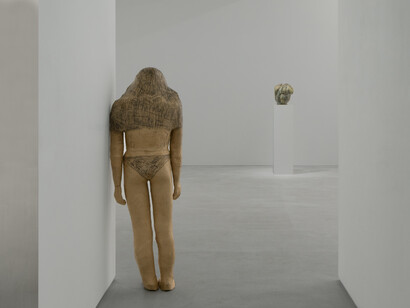
This critical perspective unfolds gradually through the spatial composition and circulation of the exhibition, beginning the moment one approaches the gallery. From outside the exhibition space, viewers encounter an agitated crowd visible through the glass façade. Created by Shin Min, whose practice has translated emotions of anger, tension, and threat into images that are at once sharp and ironic, the work signals the exhibition’s underlying tone even before entry. Gestures of mandated kindness and solidarity reveal their latent cynicism and fatigue through exaggerated forms and distorted bodies. Along the path toward the entrance, the viewer encounters the back of another sculptural figure, staging the beginning of the exhibition as a carefully composed scene.
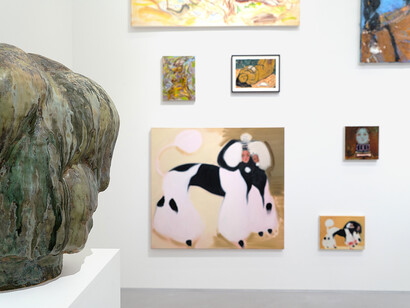
Upon entering the gallery, Myung-Joo Kim’s sculptural busts first draw the eye, condensing subdued emotions through material traces that flow down the surface. Along one wall, paintings and three-dimensional works unfold in dense succession. In Monica Kim Garza’s canvases, figures linger in states of idleness—reading books or drinking beverages. Their relaxed postures and rough pictorial surfaces ease visual tension, conveying the sensory experience of bodies fully immersed in their environments. This atmosphere flows seamlessly into the paintings of Sofia Mitsola.
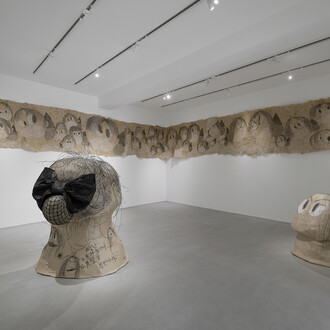
Works that visualize interiority through repetition and immersion follow. Na Kim constructs a continuum of forms through serially generated portraits, not to designate a specific individual but to build a stream of imagery that exists only within sustained imagination. Wu Jiaru likewise loosens control through painting practices grounded in spontaneity and automatism, treating the act of painting itself as a pathway to liberation.
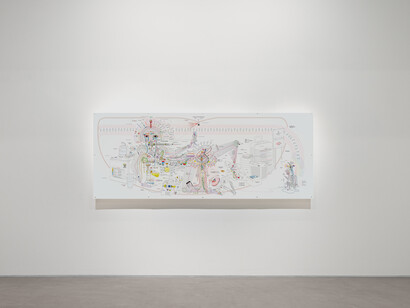
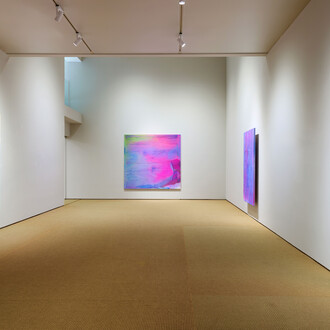
In Eunsae Lee’s works, which confront the viewer with striking intensity even from a distance, vital forces prior to control overflow beyond the picture plane. Anna Jung Seo reconstructs scenes captured in London through literary imagination, transforming the city into a stage where exaggeration and metaphor intersect. On the opposite side of the space, Minjeong An’s work is presented along the wall, reconfiguring her experiences of a postpartum care center following childbirth into signs and structures, translating personal memory into an analytical visual language.
Unapologetic reveals, through diverse media and visual languages, the multilayered processes by which women’s experiences, bodies, emotions, labor, and identities are formed and defined. Casting off the moral standards imposed on women and another form of self-censorship embodied in political correctness, the exhibition revisits the question of the right to fully enjoy and desire one’s given life. It declares that feminine subjects can exist through their own sensations and desires without the approval of others, offering a proposition to affirm life excessively—yet abundantly.