English
 Español
 Français
 Deutsch
 Italiano
 Português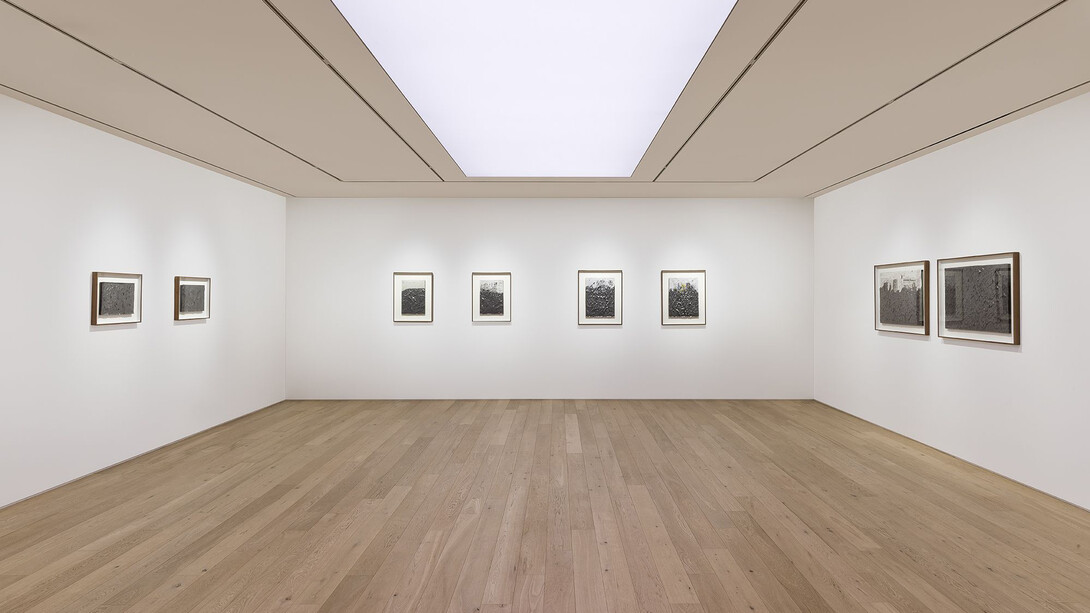
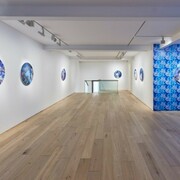
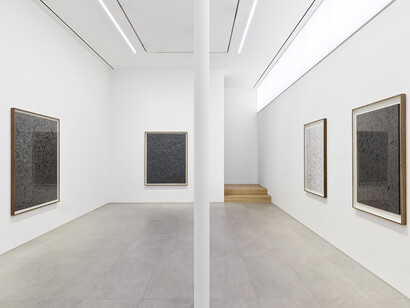
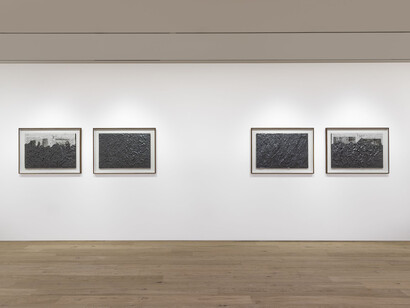
Perrotin Seoul is pleased to present Untitled, a solo exhibition by Korean artist Choi Byung-so as its first exhibition of 2026. This exhibition marks the first solo presentation of the artist’s work since his passing in September of last year.
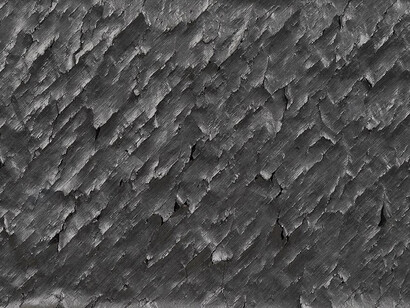
Choi Byung-so developed a distinctive artistic practice through a performative process of repeatedly erasing printed texts and images from newspapers and magazines using ballpoint pens or pencils. Through this act, he dismantled the informational and semantic functions of image and language, reducing them to material form. In this process, paper transcends its role as a mere support and becomes a site where time and labor accumulate, allowing the artist to reveal a renewed sense of materiality and visual density.
Focusing on works from the final decade of the artist’s life, this exhibition offers an in-depth view of Choi’s late practice and serves as an opportunity to reassess the significance of his work within the context of Korean contemporary art history.
A fragile, intense, peristent song
Nothing comes from nothing, and nothing that exists can be destroyed.
(Democritus)
In January 2026, four months after his death, Choi Byung-so’s work is more timely and relevant than ever. Since the previous century, it has questioned the system of constant accumulation of information by the media—this flood of news, advertisements, and speech that overwhelms and afflicts us. Choi Byung-so understood that this use of language separates us from life’s meaning, from our essential significance, from everything that allows us to live and to think and to be aware of our existence by a dense and silent presence.
Through a visual and then a conceptual approach, Choi Byung-so moved beyond aesthetic questions alone, adopting a critical stance and proceeding with a complete reversal of this invasion of messages and ideologies. His resistance to the alienating manipulations of the massive proliferation of rhetoric and images is a refusal of the tyranny of dysfunctionality. In 2026, this opposition to all that is fake was more necessary than ever, as power strategies threatened to transform individuals and societies into puppets twisted by an excess that threatens any attempt at understanding.
Choi Byung-so provides us with a negation of this topsy-turvy theater, offering the experience of a different space that he has created as an artist and a painter. The weapon of his resistance is drawing. Access to this space of liberation takes place through an approach that obliterates and covers the accumulated phrases with endless lines of ballpoint pen. He does not undo the words; he crosses them out, changing them into a different kind of writing. With seriousness and at times with humor, he preserves some magazine titles as basic philosophical questions, reduced to their clichéd media formulas: time, life….
This life, this real time, are exactly what Choi Byung-so allows us to discover. Through a patient process of ink drawing, he has stained, streaked, and torn the paper, creating gestures, rhythms, and surfaces that become opportunities to take back possession of ourselves. We experience these novel spaces created by art, which become paintings, sculptures, installations…and then paths and territories for reclaiming the self, through perception, body, and light. These paths are everywhere and, through the poetic practice of Choi Byung-so, they can come about from “nothing”—from an object, from a microcosm…a pack of cigarettes, a sheet of newspaper. Or, on the contrary, they can be a macrocosm…a set of gathered papers, a true cosmos. They are the result of a physical and mental experience. A laceration becomes a pathway that passes through destruction, that moves through traces and ruins—a kind of creative archeology that attains dazzling beauty. The beauty of a mass of furrows, an array of gashes, that lead us to a darkness shot through with glimmers and exhilarating vibrations. And then we forget the strategies of grammar, the immediacy of vocabulary, as we find and experience the silence “of another measure of time.” The time of escaping the contingency of the society we live in and discovering a penetrating, pared-down experience of boundlessness.
If it were up to him, to the
question of the world, he would
not reply or would hold out
to them in silence, between
waking and sleep
some substance
with a dark and luminous surface.(Olivier Kaeppelin)