English
 Español
 Français
 Deutsch
 Italiano
 Português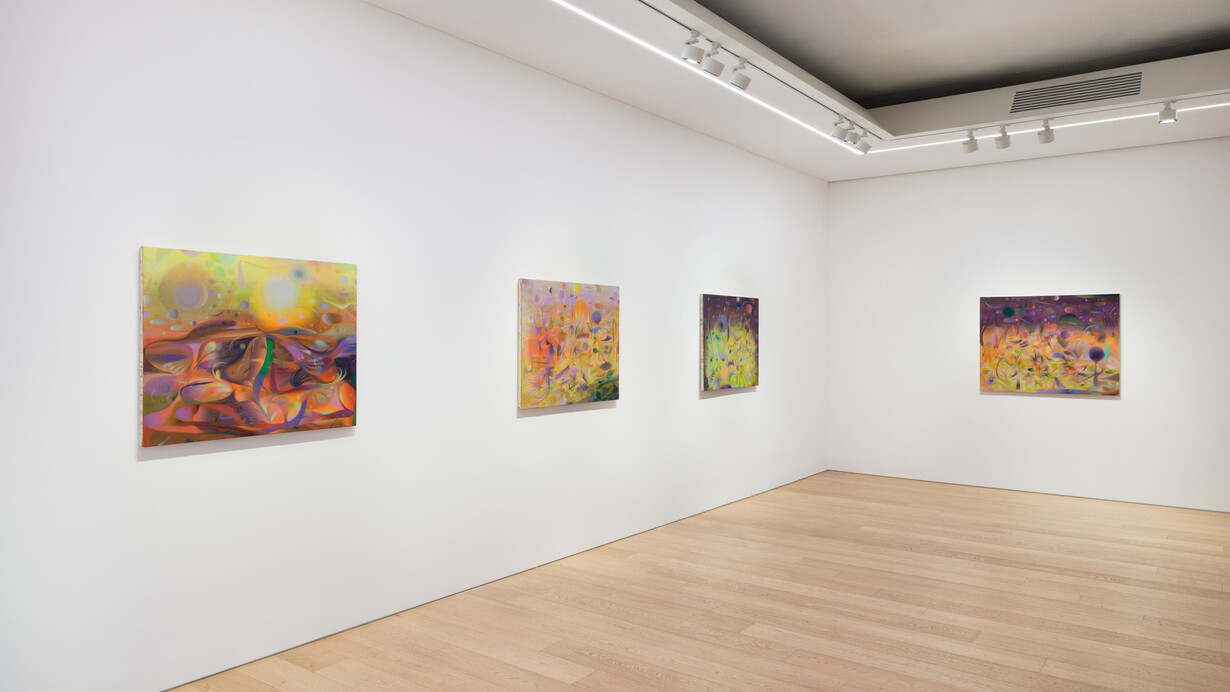
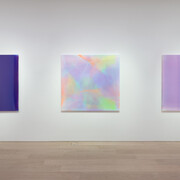
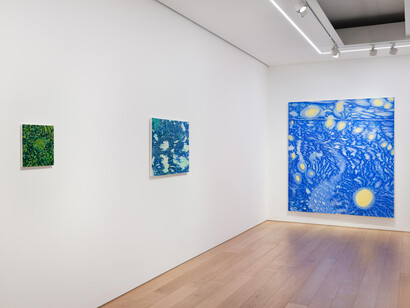
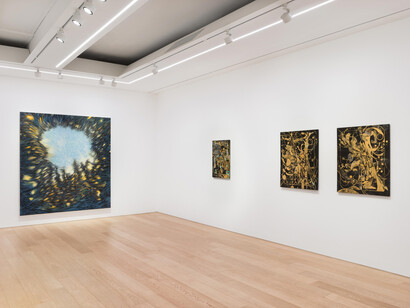
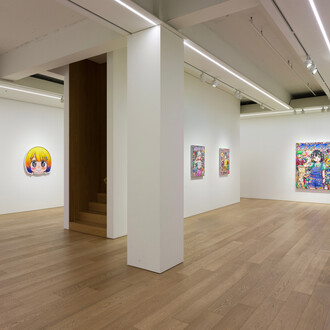
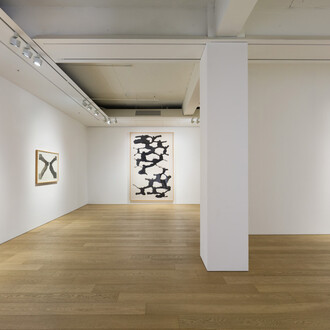
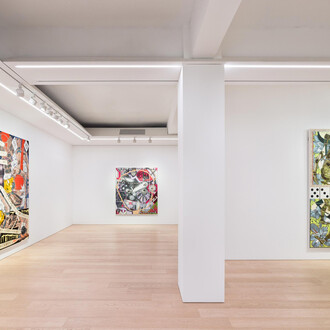
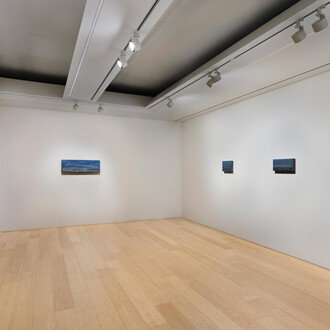
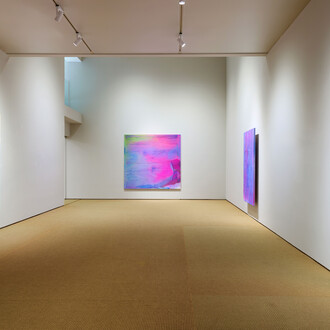
In Muted rhythm, Lehmann Maupin presents new works by three Korean abstract painters: Nakhee Sung, Sojung Lee, and Han Jin. Featuring three mid-career women artists, the exhibition offers a glimpse into the current landscape of Korean abstraction through the visual trajectories each artist charts. Curated by Jee Young Maeng, Muted rhythm highlights a synesthetic sensibility that resonates across their practices, exploring a new amplitude generated as these works move beyond the flat surface and exchange vibrations within a shared space.
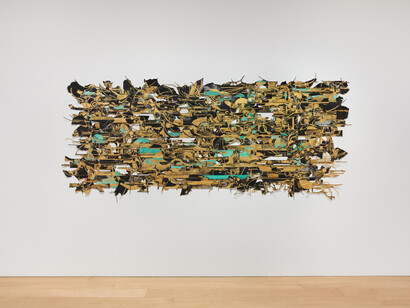
Nakhee Sung has developed a distinctive abstract language by ‘composing’ rhythmic arrangements of geometric and organic forms through dynamic flows and varied chromatic combinations. Her previous works and exhibition titles often evoke a musical temperament while prompting viewers to imagine the cross-sections, volumes, and three-dimensional spaces these images might inhabit. Trained in traditional East Asian painting, Sojung Lee has consistently pushed beyond convention, experimenting with diverse materials and techniques. The repeated processes of formation, rupture, connection, and layering inherent in her practice create a natural rhythm that expands and reverberates through the viewer’s gaze. Han Jin’s work explores sensory interaction—such as the imagery or sound held within an object of interest—by painting dense, labyrinthine abstractions. These works traverse the threshold between the artificial and the natural, finely calibrating the tension between absence and fullness produced by the interplay of the visual and auditory.
These diverse approaches converge in Muted rhythm, where each artist extends their practice through newly developed works. Sung’s Sentient page (2025) retains the natural rhythms generated by her signature combinations of form, layered structures, and gradational techniques, while introducing more recognizable motifs drawn from nature, such as flower petals and trees. Through broad, immersive compositions, stratified forms and nuanced tonal shifts coalesce into more fully realized, dreamlike abstract landscapes. Meanwhile, Lee builds upon the direction of her recent works, such as Unfenced and Genealogy of traces (both 2025), reworking remnants of paper and fragments from earlier experiments to create compositions at the intersection of improvisation and structure, memory and renewal. Finally, Han presents a new body of paintings shaped by the intuitive sensing and imagining of scenes pursued both visually and aurally. Presented alongside her first sound-based work entitled for Stars align (2025), Han expands her exploration of how visual and auditory experiences converge and unfold within the exhibition space. Collectively, the works cultivate a quiet yet palpable intensity, as each artist’s distinct visual language contributes to a shared, multilayered rhythm that permeates the space.