English
 Español
 Français
 Deutsch
 Italiano
 Português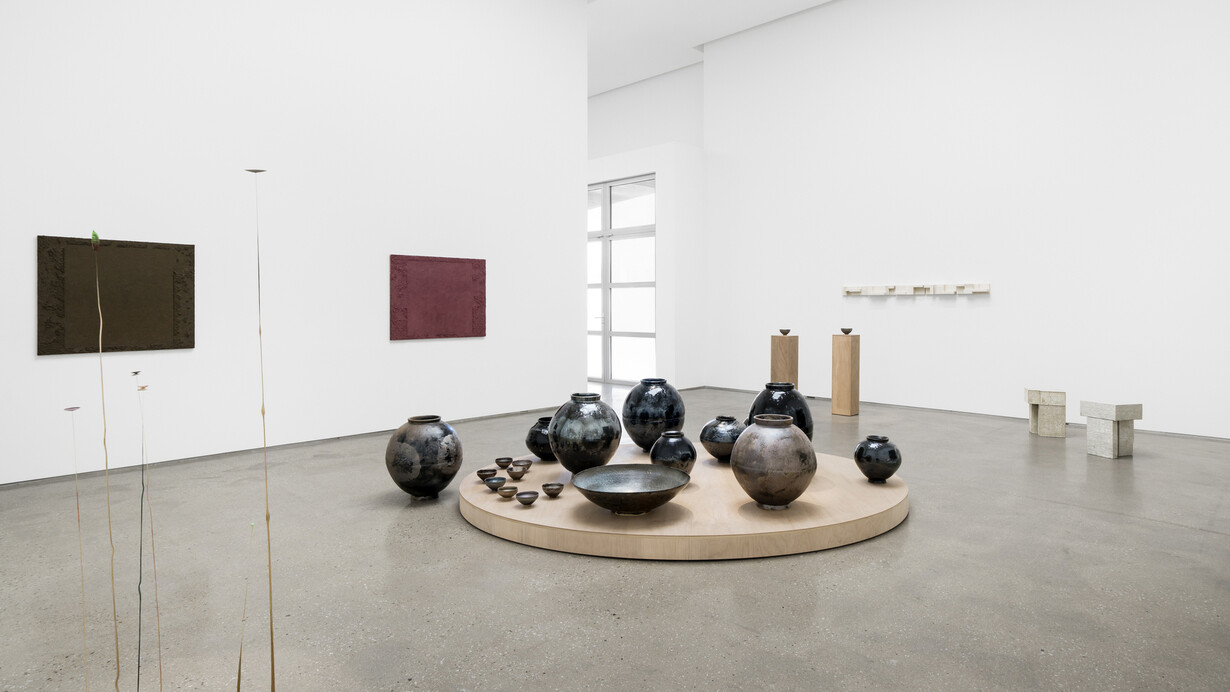
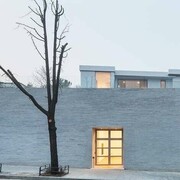
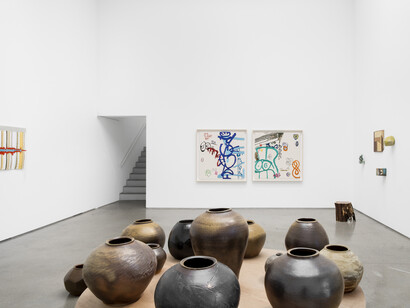
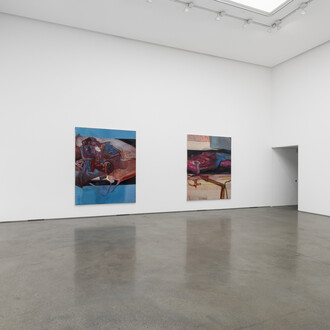
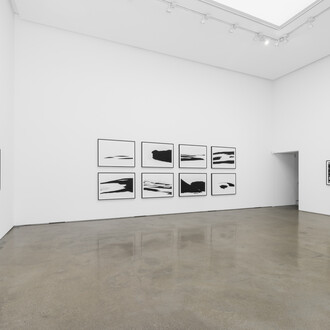
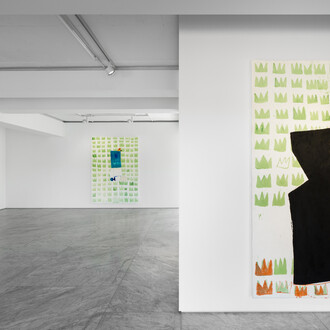
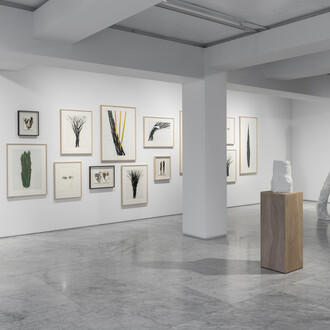
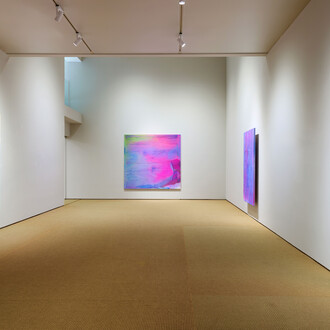
PKM Gallery will open the year with From hands, a group exhibition on view from February 4 to March 21 at the main building. This exhibition highlights the ‘handcrafted’ works of six artists— Inchin Lee (b. 1957), Kim Syyoung (b. 1957), Myungjin Lee (b. 1995), Koo Hyunmo (b. 1974), Young In Hong (b. 1972) and Chung Chang-Sup (1927–2011)—who focus on the tactile sensibility of the hand at the intersection of fine art and craft.
In an era where machines and digital technologies dominate human intelligence, tactile and bodily experiences have become increasingly precious. The trembling and sensations at the fingertips, which algorithms can’t easily predict, paradoxically seem to affirm what makes us human in the age of artificial intelligence. From hands illuminates a boundary-free world where fine art and craft converge, leaving behind the intangible virtual realm beyond glossy screens to focus on work created through direct physical engagement with materials. Relying on the primitive yet honest tool of the hand, the exhibition invites viewers to closely observe the ‘actual’ moment where the artist meets the material.
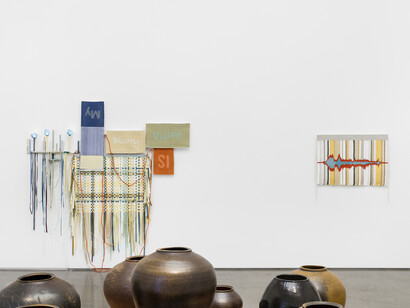
Ceramic master Inchin Lee, who prioritizes the value of labor, has spent the last 50 years crafting modest earthenware pieces using clay, fire, and wood ash. His practice involves wheel-thrown vessels fired in a wood kiln for five to six days without glaze—a technique that honors traditional craftsmanship while extending it into a contemporary vernacular. The natural patterns and hues on the ceramic surfaces result from not only the artist’s touch but also various organic factors including the properties of the clay and wood, the winds generated by flames within the kiln, and the dispersal of wood ash. This exhibition presents his major works from the 1990s onward, including generously proportioned jars, tea bowls, and vases. Lee honed his practice in the United States, Korea, and Bizen, Japan, and served as a professor in the Department of Ceramics and Glass at Hongik University for 24 years beginning in 1999, during which time he nurtured the next generation of artists. In 2023, he garnered international acclaim as a finalist for the Loewe Foundation Craft Prize. In cooperation with Arumjigi Foundation.
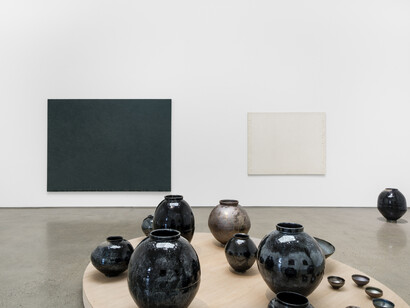
Master of black-glazed ceramics Kim Syyoung began his journey into black-glazed ceramics after discovering black-glazed shards while hiking the Baekdudaegan mountain range as a member of the university mountaineering club during his studies in materials engineering. For forty years, he created a unique artistic universe by reinterpreting and varying Goryeo black ceramics. The black in Kim’s ceramics is not a mere color but a luminous spectrum evocative of iridescent insect wings, peacock feathers, and seashells. This visual complexity is the result of ‘necessity’—derived from the artist’s scientific inquiry—meeting the ‘serendipity’ of physical reactions at temperatures exceeding 1,300°C. The exhibition features his Planet series, where moon jars and vessels exhibit striking structural coloration and yobyeon.1 Kim received the Hwagwan Order of Cultural Merit of the Republic of Korea in 2019, and his large moon jars are held in the permanent collections of the Victoria and Albert Museum in London and the Guimet Museum in Paris.
Young ceramic artist Myungjin Lee creates clay objects inspired by architectural elements. Beyond the volume and silhouette of buildings, he incorporates the intricate lines, markings, and proportions of blueprints into his work. Lee identifies parallels between the vertical construction of architecture and the ceramic coiling technique, where long rope-like clay is layered. By focusing on the physical properties of clay and the manual process of building, he achieves a balance between architectural geometry and fluid form, realizing a harmony between aesthetics and functionality. In this exhibition, he presents a modular block shelve series and stools.
Koo Hyunmo, majored in both ceramics and sculpture, flexibly integrates natural materials such as clay and wood with artificial materials like metal and acrylic through the tactility of the hand. Since last year, he has focused on ceramic work, immersing himself in experiments with the free forms of clay and the colors and textures of glazes. His latest works, including tree on the rock on the wall—where nature is translated into ceramics—and the standing sculpture forest island—where the wood grain vibrates like a forest swaying in the wind—utilize the gallery’s walls and floors to create a three-dimensional installation.
Young In Hong employs textile, sculpture, and performance to excavate individual narratives of animals and humans. Her Signalling series translates the sound waves of elephants in distress into abstract weavings. A colourful waterfall and the stars is a large-scale installation that dismantles and rewrites the testimonies of female textile factory workers in Korea from the 1970s and 1980s through thread and fabric. The Easton, Bristol series brings urban graffiti from the streets of Bristol, where the artist currently resides, into the realm of embroidery. Much like the logic of weaving, Hong constructs symbolic systems by unravelling and reweaving marginalized voices and fragmented images through the labor of the hand.
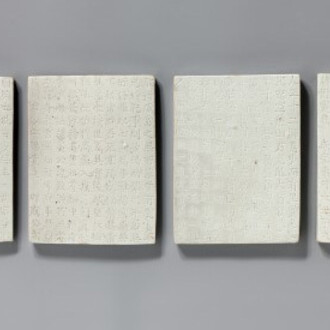
Lastly, the exhibition presents Chung Chang-Sup’s Tak (mulberry bark fiber) paintings from the late 1990s to the early 2000s. From the early 1980s onward, for thirty years, Chung engaged in a unique process of kneading soaked mulberry pulp directly onto the canvas with his hands, allowing it to slowly solidify. His work epitomizes the state where the artist’s gestures become indistinguishable from the vitality of the material. In particular, the Meditation series, a lifelong pursuit, exists as tactile objects that transcend the flatness of the painted plane, quietly revealing his profound aesthetic achievements within a restrained screen.
From hands broadly encompasses everything from the tradition-bridging ceramics of Inchin Lee and Kim Syyoung to Myungjin Lee’s architectural investigations in clay, Koo Hyunmo’s movement between ceramics and sculpture, Young In Hong’s textiles, and Chung Chang-Sup’s paintings that reached a state of spiritual unity. By examining the works of fine art and craft—which are different yet similar—without distinction, the exhibition invites the audience into a warm dialogue carried by the diverse movements of the hand.
Notes
1 A term referring to unexpected transformations that occur within the kiln during the firing process. Due to various factors, such as the nature of the flames, materials may undergo unforeseen changes in color, state, or form, resulting in unique aesthetic variations.