English
 Español
 Français
 Deutsch
 Italiano
 Português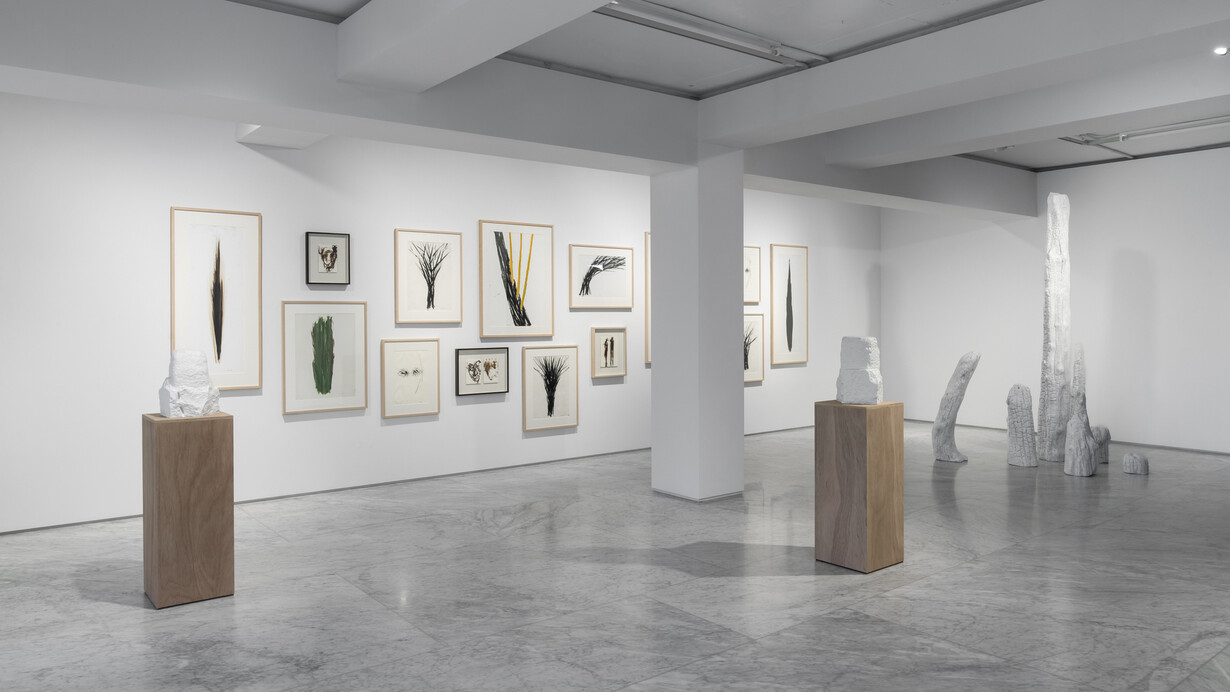
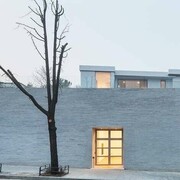
PKM Gallery is pleased to present The cumulative burst, a solo exhibition by sculptor Chung, Hyun, from October 22 to December 13, 2025. This comprehensive survey spans more than thirty years of the artist’s practice and marks a pivotal moment of renewal and transformation. Featuring 84 works—including sculptures and drawings created between 1991 and 2025—the exhibition gathers the trajectories of the past, condenses them into a moment of release, and invites audiences to reflect on existence and essential values amid a time of rapid change.
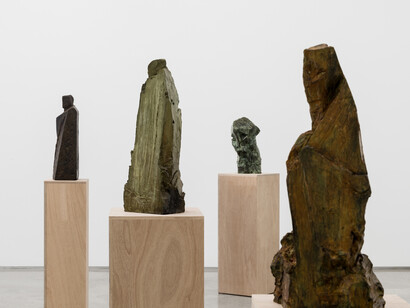
Chung, Hyun’s oeuvre begins with the ‘human’. In the early 1990s, he created distinctive bronze figures using spades and timber sticks as tools, balancing the raw materiality of clay with a sensitive, intuitive expression. Over time, his inquiry into the human expanded to materials and objects. Working with relic-laden substances such as railroad ties, steel bars, and charcoal—materials rich with temporal memory—he revealed the properties of matter and the traces of time embedded within it.
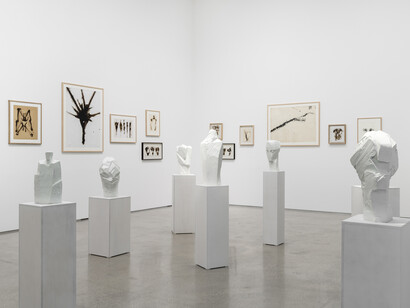
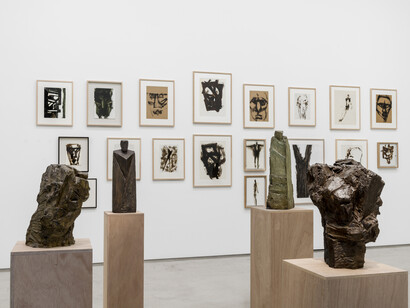
In The cumulative burst, Chung returns to his point of departure: the human form—and carries it forward. His newly unveiled bronze busts, formed by forcefully striking and compressing clay from all directions, evoke an inner energy forged through endurance, while its white patina recall the human in an unadorned state. Within the two eyes of each figure lies a fleeting instant when innumerable scenes of a lived life intersect. Concurrently, the rhythmically arranged sequence of bust sculptures from the early 1990s to the mid-2000s in the main gallery invites reflection on the passage and vicissitudes of human life.
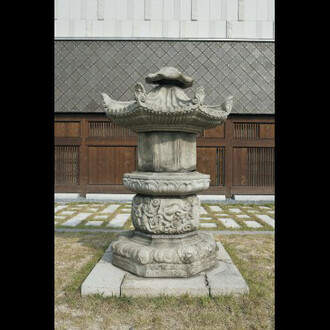
Installed in the outdoor garden is a monumental new sculpture inspired by the stone piers of Supyogyo Bridge on the Cheonggyecheon stream. Built during the Joseon Dynasty to measure water level, the bridge was displaced through the stream’s capping and later restoration and now remains, almost forgotton, in Jangchungdan Park. Chung was drawn to the lower piers of the structure—elements often overlooked—and discovered in their unrefined shapes and roughly hewn stone surfaces what he calls “the most Korean sense of form and texture, weathered by time.” He converted the massive stone pier into digital data by 3D scanning, recomposed the data, and realized it anew in aluminum sculpture. The undulating forms at the work’s crest, stretched from the digital data, evoke ripples of water—symbolizing both the original riverine setting of Supyogyo and the continuous flow of time and history from past to present.
A scaled maquettes of the Supyogyo sculpture are shown in the annex space—linking exterior and interior and offering an unfamiliar experience through shifts in scale. Displayed alongside are charcoal sculptures made from trees burned in the 2019 Goseong wildfire. He treated these burnt trees as if performing a cremation—refining their forms by fire and coating them with a white paint, akin to make-up, as a gesture of reverence for their final state. Across the exhibition, expressive drawings using coal tar—a residue from the distillation of coal or petroleum—chart the artist’s gestures, emotions, and thoughts.