English
 Español
 Français
 Deutsch
 Italiano
 Português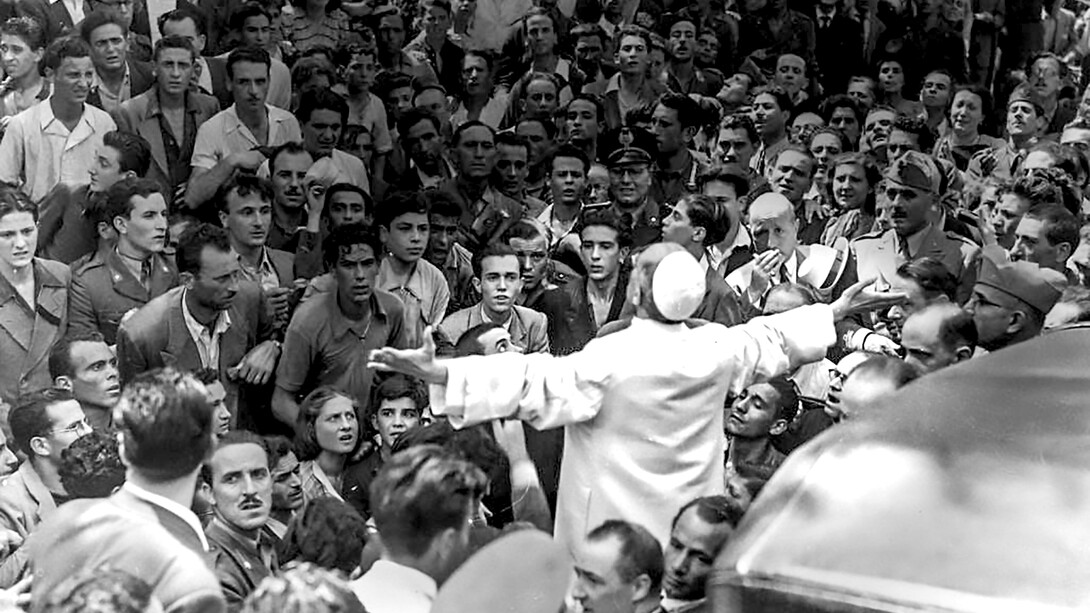
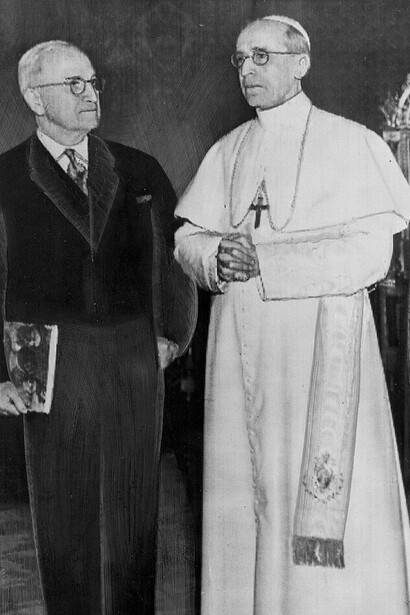
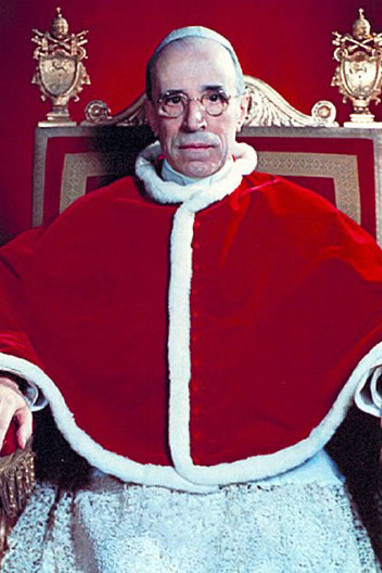
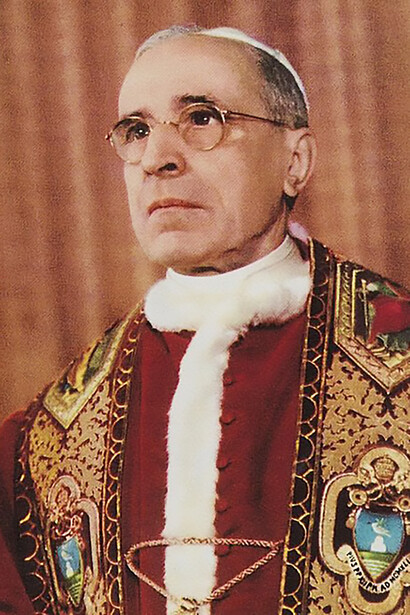
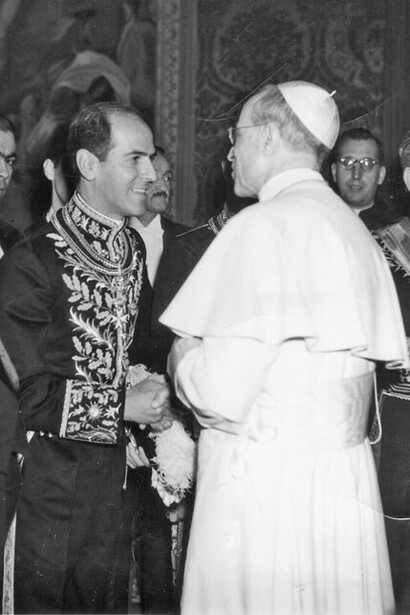
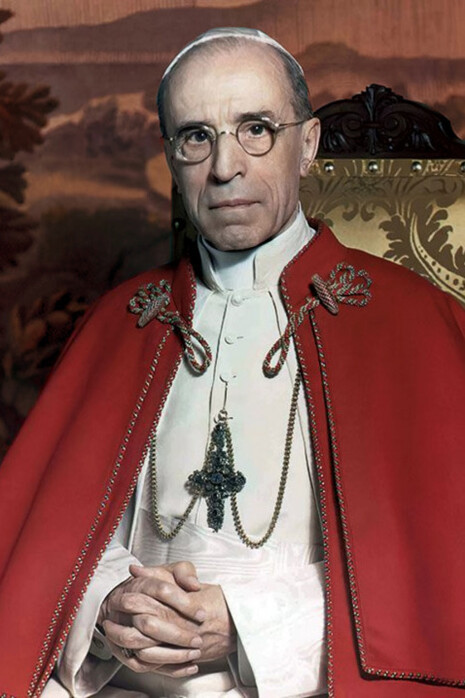
So, who was Pius XII? Eugenio Maria Giuseppe Pacelli became Pope Pius XII on March 2, 1939. His parents were Virginia Graziosi and Filippo Pacelli. His father was dean of the consistorial lawyers, and his brother, Francesco, was a jurist of the Holy See and member of the Vatican Commission that prepared the editing of the Lateran Pacts, an agreement with the Italian State that legally separated the Vatican from the nation of Italy and compensated the Vatican for the loss of the Papal States conquered by the Kingdom of Italy in 1870. The Vatican City was all that was left of the Church’s holdings and was legally separated into its own sovereign country in an agreement with the Prime Minister, Benito Mussolini, in 1929. The Pacelli family was very familiar with the safe and slow judicial offices of the Roman Curia.
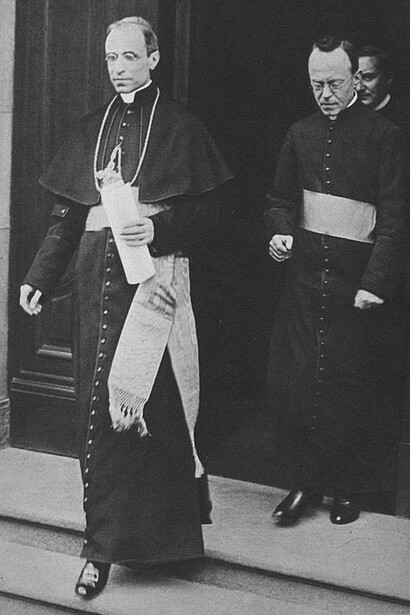
Pacelli was a student at the Gregorian University and the Pontifical University of the Roman Seminary of Apollinaris. For health reasons, Pacelli lived with his family and not in the colleges. Pacelli graduated in theology, was ordained as a priest on April 2, 1899, and was immediately hired as a minion by the Holy See Secretariat of State. In 1911, Pacelli became Undersecretary of the Congregation for Extraordinary Ecclesiastical Affairs. Then, in 1914, he was promoted to Secretary, where he collaborated with Cardinal Pietro Gasperi in the preparation of the Code of Canon Law, promulgated in 1917 by Pope Benedict XV. In the same year, Pacelli was appointed Titular Archbishop of the Seat of Sardi (Anatolia) and Apostolic Nuncio in Munich, Germany, where he assisted Italian prisoners of war and the German population during World War I.
In 1920, Pacelli was appointed Nuncio to the new Republic of Germany decreed by the Weimar Assembly. In this position, Pacelli crafted agreements between the Holy See and Bavaria in 1925 and Prussia in 1929. He had made it into the most elite circles of governance and agenda-setting. After the Nazis rose to power in 1933, Pacelli was instrumental in negotiating the Concordat with the Nazi regime. In the view of a number of historians, the Concordat helped to legitimize the regime in the eyes of German Catholics.
Following the death of Pope Pius XI on February 10, 1939, Cardinal Pacelli was elected pope by the College of Cardinals and named Pope Pius XII. No doubt Pacelli’s extensive diplomatic experience aided his election to the papacy and head of state.
His attitude toward Jews
Insofar as his attitude towards German Jews and Jews in general was concerned, Pacelli held traditional theological attitudes towards the Jews: Christianity had superseded Judaism. Christians were now part of a new covenant. Jews had erred; they had not accepted Jesus as the Christ. Their old covenant with God had been replaced.
Pius XII's Early Papacy in chronological order
From the outset of his papacy, Pius XII was more conciliatory towards Nazi Germany than his predecessor had been. He also maintained cordial relations with Mussolini. There is an ongoing scholarly debate as to how much Pius XII and the Church resisted the 1938 racial laws. With the outbreak of World War II, Pius pursued a studious neutrality, wishing to preserve his role as mediator. Like many other leading Catholic ecclesiastics at the time, he feared the Soviet Union and the communist menace.
In late 1942 and early 1943, the tide of war turned against the Axis powers, including Italy. On July 19, 1943, Allied forces bombed the San Lorenzo neighborhood in Rome. Pius XII personally went to the neighborhood to comfort the survivors. On July 25, 1943, the Grand Council of Fascism passed a motion of no confidence in Mussolini; the king dismissed him and had him arrested, appointing Pietro Badoglio as the new prime minister. The King of Italy, Vittorio Emanuele III, and the newly minted Prime Minister, Pietro Badoglio, agreed to surrender in an armistice with the Allies who had conquered Sicily and were slowly advancing up the Italian peninsula.
The Kingdom of Italy surrendered to the Allies on September 3, 1943, and publicly on September 8, 1943. Germany quickly invaded from the north, freed Mussolini, and occupied northern and central Italy, establishing a puppet government, the Italian Social Republic. Prior to September 1943, Jews in Italy were legally discriminated against, but they were beyond the reach of the Third Reich and the Nazis' extermination plan. Following the German invasion, Italian Jewry was in grave danger of deportation and extermination.
As German control tightened, concerns grew among diplomats and religious leaders as to the newly endangered Italian Jewish community. The Vatican, already navigating a precarious diplomatic landscape, faced mounting pressure to respond. Pius XII continued to balance caution with secretive lifesaving invention, aware that any open condemnation might provoke harsher reprisals and limit the Church’s remaining influence.
There is ongoing and vigorous scholarly debate regarding Pius XII’s actions toward Italian Jewry and the Holocaust in general. His defenders and critics continue to present sharply differing interpretations of his choices, motivations, and silences. As new archival materials become available, these debates persist, reflecting the enduring complexity of his papacy during one of the darkest periods of modern history.