English
 Español
 Français
 Deutsch
 Italiano
 Português
When I was young, I wanted to grow up to be like Leonardo da Vinci. I was captivated by the breadth of his genius—anatomy and architecture, painting and physics, engineering and art. Here was someone who refused to be contained by a single discipline, who brought an unending curiosity to everything he saw and touched.
Now, as an adult, I'm still in awe of Leonardo's range. But I've come to understand something deeper: Leonardo isn't just a historical figure to admire. He's a model for how we should live, especially now. The ideal of the polymath or Renaissance Human—someone who pursues excellence across multiple fields—isn't a relic of the past. It's a vision for the future.
This is because a polymath is someone who never completely "grows up", they just keep growing. And in an age when artificial intelligence will increasingly handle routine work, that capacity for continuous growth across diverse domains may be the most distinctly human thing about us.
The flow paradox
Psychologist Mihaly Csikszentmihalyi1 spent decades studying what makes people happy. What he discovered upends everything we think we know about work and leisure.
Through thousands of interviews and the research that culminated in his signature work Flow: The Psychology of Optimal Experience2, Csikszentmihalyi found that people felt happiest, strongest, and most creative when they were working—facing challenges that matched their skills. During leisure time, they felt sad, weak, and dull. Yet when asked, most people said they wished they could work less.
This paradox reveals something profound about human nature. We're not built for passive consumption. We thrive on engagement, on developing skills and testing them against meaningful challenges. We need what Csikszentmihalyi called "flow states", those timeless moments when we're so absorbed in an activity that everything else disappears.
The Renaissance Human ideal offers a solution to this paradox. Instead of accepting the false choice between work and life, between obligation and fulfillment, what if we could experience flow across multiple domains? What if our "work" encompassed not just our career, but our physical development, our relationships, our creative expression, our pursuit of knowledge, and our contribution to society?
The upper reaches of human potential
Abraham Maslow3 understood this instinctively. His hierarchy of needs mapped a path from basic survival to self-actualization—the drive to realize our full potential. When Maslow studied exceptional individuals, he found that they shared a remarkable characteristic: they worked harder than most, yet didn't experience it as drudgery. They were engaged in activities they found intrinsically meaningful, activities that expressed who they were and who they wanted to become.
Here's what makes this relevant now: we're entering an era where AI will handle increasing amounts of routine work. For the first time in history, large numbers of people may have their basic needs met without traditional employment consuming most of their time. This terrifies some observers who worry about purposelessness. But I see it differently.
When survival no longer dominates our time, we become free to pursue self-actualization, to develop our full human potential across multiple dimensions. The question isn't whether we'll have "work" in the age of AI, but whether we'll have the wisdom to reconceive work as the pursuit of excellence across a full spectrum of human capabilities.
Eight domains of human flourishing
What does this look like in practice? I believe eight fundamental domains, pursued in combination over a lifetime, encompass what it means to be fully human. Instead of generating a sense of identity from one job title, here are 8 roles I believe we all should assume and pursue:
Entrepreneur
Taking an active role to start up a long-term project, whether a business venture, a social organization, a community initiative, or a personal project, being mission-driven and results-oriented.
Athlete
Pursuing physical fitness and health regimens for strength, endurance, adaptation, longevity, and vitality.
Financier
Producing material values to generate income and planning and making investments for a future of greater abundance.
Relationship maker
Investing in cultivating healthy relationships, building intimacy, and sharing values as a partner, family member, and friend.
Statesperson
Being a conscientious citizen, taking a leadership role in politics, community affairs, cultural change, and/or economics.
Artist
Creating outlets for self-expression; being present and developing a refined enjoyment of sensory experiences; and/or ultimately projecting your unique world-model through a symbolic form.
Scientist
Developing skills in observation, research, and experimentation, and participating in endeavors that create new knowledge.
Philosopher
Asking the big questions about the nature of the universe, the good, and how you know, and formulating a code of principles to guide your actions.
These aren't necessarily meant to be pursued simultaneously; that would be overwhelming. Rather, they represent domains that should appear in some combination throughout a well-lived life. A young parent might emphasize Relationship Maker and Financier while maintaining the Athlete role, later expanding into Statesperson and Philosopher as circumstances allow.
The beauty is in the comprehensiveness and flexibility. Together, these roles encompass our physical nature, material needs, social essence, creative drive, intellectual curiosity, search for meaning, impulse to build, and community responsibility. This is what it means to be fully human.
Cross-domain enhancement
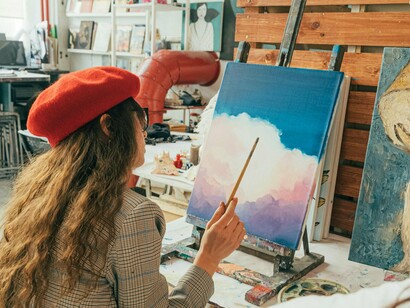
Notice: each domain offers opportunities for flow. The Artist enters that timeless state where the next brushstroke emerges naturally. The Athlete experiences it during a challenging run. The Scientist feels it during deep research. The Philosopher finds it in profound contemplation.
But here's what makes the Renaissance Human ideal powerful: skills developed in one domain can transfer to others. The discipline of athletic training strengthens entrepreneurial persistence. Pattern recognition from scientific research illuminates artistic composition. Empathy cultivated in relationships deepens philosophical understanding. Systems thinking from finance clarifies political analysis.
This cross-pollination isn't just useful, it's psychologically enriching. When we develop capabilities across multiple domains, we increase the situations where we can experience flow. We become less dependent on any single activity for meaning. We become more resilient, more adaptable, more alive.
The AI opportunity
This brings me back to artificial intelligence. The anxiety about AI centers on job displacement: machines taking over our work, leaving us purposeless. This fear makes sense only if we equate "work" with employment, with trading hours for money.
But what if the age of AI doesn't eliminate meaningful work? What if it eliminates the necessity of spending most waking hours on unfulfilling activities? What if, freed from survival imperatives, we could finally pursue work in the deeper sense: the development and application of our capabilities across all domains of human excellence?
We can already see glimpses of this. For example, many early retirees throw themselves into learning languages, mastering instruments, training for marathons, volunteering in communities, and pursuing creative projects. I believe the age of AI could democratize the Renaissance Human ideal, allowing more people than ever to pursue growth and excellence across multiple domains. The question is whether we'll seize this opportunity or drift into passive consumption—the television-watching (or today, social media scrolling) existence makes people feel sad, anxious, dispirited, and/or dull.
Beginning the multidimensional journey
The Renaissance Human ideal might seem daunting. How can one person develop excellence across eight domains? The answer: it's a lifelong journey, and beginning matters more than immediate mastery. Start with inventory. Which domains are already present in your life? Perhaps you're already an Entrepreneur through your career, an Athlete through regular exercise, a Relationship Maker through family. That's three domains engaged. Which are absent?
Then begin small. Spend fifteen minutes daily at the keyboard instead of trying to become a concert pianist overnight. Attend one city council meeting instead of attempting to solve election integrity immediately. The key is consistent engagement, allowing skills to develop gradually until they can meet substantial challenges. Remember: flow occurs when a challenge slightly exceeds your current skill. Too much creates anxiety. Too little creates boredom.
The sweet spot—where flow emerges—lies just beyond your current capabilities. This means that pursuing the Renaissance Human ideal isn't about adding stress through impossible expectations, but finding that engaging edge in multiple domains.
The choice before us
We stand at a unique moment. For most of human existence, survival needs consumed most everyone’s waking hours. The Industrial Revolution brought us to abundance's edge, but in many instances trapped people in narrow roles that engaged only fractions of their capacities.
Now, AI might finally free us from the demands and dull work of survival. What will we do with our freedom? Will we drift into passive consumption, proving Csikszentmihalyi's paradox, lazily choosing dissatisfying leisure over engaging work? Or will we resurrect and democratize the Renaissance Human ideal, allowing more people than ever to pursue growth across the full spectrum of human capabilities?
The Renaissance Human ideal isn't about being superhuman; it’s about being fully human and developing the remarkable range of capabilities that distinguish our species. It's about never completely "growing up", but continuing to grow throughout life, maintaining the childlike wonder Leonardo never lost.
The original Renaissance emerged when material and cultural conditions aligned to allow more people to pursue excellence across domains. We're approaching a similar moment with far greater reach.
The Renaissance Humans of tomorrow will be ordinary people who make an extraordinary choice: to keep growing, to remain curious, to continually chase excellence across multiple domains. They'll understand that in the age of AI, the most important work isn't done by machines. True work is pursued by self-actualizing human beings: those who’ve discovered that the future of work isn't about working less, but about working on becoming more of who we could be.
Notes
1 Psychologist Mihaly Csikszentmihalyi, "the father of flow".
2 Flow: The Psychology of Optimal Experience.
3 A quest to become fully human, at Meer.