English
 Español
 Français
 Deutsch
 Italiano
 Português
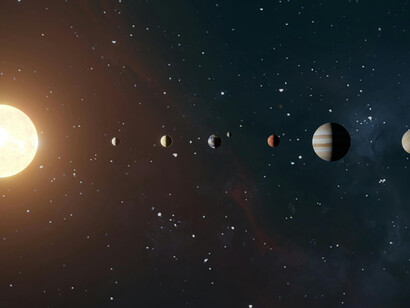
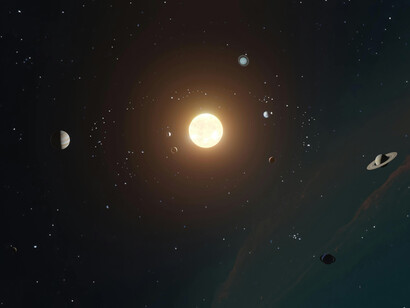
In the last decades, space exploration has been a huge focus in the world of science, and that for good reason. Although the research horizon widens constantly into outer space, the focus of our own solar system, which still has its mysteries, stays put, and that for good reason. There are a lot of things we do not know about it. Not only about the other planets, but about Earth as well. A only partially solved mystery is our neighbor and “twin”, as it is often called, Venus. This planet is home to some eerie planetary occurrences. Their understanding could possibly reveal groundbreaking information about the planet’s condition, in addition to understanding Earth’s past on a much deeper level.
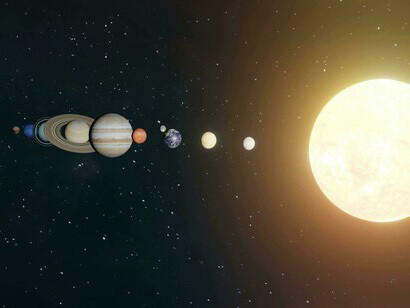
Venus is the second-closest planet to the Sun, orbiting at a distance of about 108 million kilometres (ca. 67 million miles). Despite it not being the closest to the sun, it is still the hottest one of the eight planets in our solar system. The reason for that is that Venus’ thick atmosphere traps heat, creating a runaway greenhouse effect. One might think that the planet’s immense temperatures would be the primary reason for making its surface unbearable, but that is not all; many more occurrences on Venus leave the mind wandering.
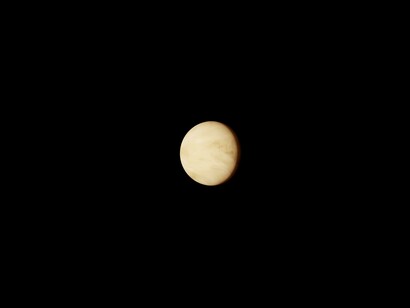
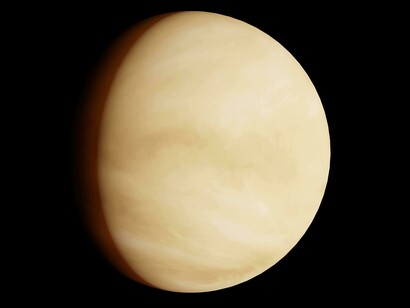
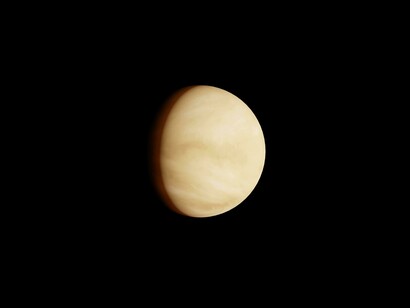
Venus is permanently shrouded in thick, toxic clouds of sulphuric acid that start at an altitude of 45 to 70 kilometres (ca. 28 to 43 miles). This distance is roughly equivalent to Earth’s mesosphere that lies between the stratosphere and the thermosphere. Temperatures in the upper mesosphere can reach as low as -100°C. Although Venus’ surface is incredibly hot, at a distance of 50 kilometers up, its temperature starts to decline to what we would consider a hot summer day here on Earth, to around 30°C. At such temperatures, it is not implausible for extremophile bacteria to exist above Venus’ surface.
Our planets, Earth and Venus, are of a similar size and structure, but they seem to have very different characteristics. Due to its very slow rotation, one day at our neighbor lasts 243 Earth days. The planet, in contrast to Earth, lacks an internally generated magnetic field and instead seems to have an induced magnetic field. The Sun’s magnetic field interacts with Venus’ outer atmosphere to produce this weak field, especially in the ionosphere, where ultraviolet light stimulates molecules to form ions. The result is a teardrop-shaped induced field surrounding Venus as the solar wind passes beyond it.
Past missions and findings
Despite much research, the nature of the constant dark streaks in the clouds caused by fast-moving winds up to 360 km/h (ca. 224 mph) is still unknown. Astrobiologists have speculated that microbial life may be shielded from sulphuric acid and UV light by sulfur atom connections. However, these lines might also be made of iron chloride, ice crystals, or tiny particles. Although particles comparable in size to Earth bacteria have been detected by earlier Russian Venera spacecraft, no conclusive proof of life has been discovered. Venus’ hidden secrets and inconclusive results encourage more research to take place, in the hope that we get to learn more about “Earth’s twin”.
Venus was one of the first planets to be visited by a spacecraft that started off from Earth. Since the 1960s, there have been over 40 missions planned to Venus, of which over 20 were successful, including the Soviet Union’s four-mission Venera Program (1967-1982), the USA’s Mariner 2 (1962) and Pioneer Venus Orbiter (1978), ESA’s Venus Express (2006), and Japan’s Akatsuki mission (2015). All these missions have managed to contribute significantly to our deeper understanding of the solar system. Successful Venus missions are of great importance in the world of space exploration, since the planet’s rough conditions make it quite difficult for spacecraft to come close to it or even enter its atmosphere.
Past missions to planet Venus have managed to put the puzzle pieces together one by one slowly. An image of a hot and dry place with a solid surface covered in dome-like volcanoes, rifts, mountains, and strong geological activity is what we associate today with the planet. As the decades passed and new innovations were introduced to the field of space exploration, Venus’ challenging conditions did not seem so impossible to master anymore. The night-side thermal emissions from deep inside Venus’ atmosphere were recognized to act as a useful instrument for peering past the thick clouds and studying the lower atmospheric layers. This was an important step and a vital discovery for the planning of future Venus missions.
Past missions were able to detect geological phenomena, like volcanic plains, through global radar monitoring. A large amount of the planet’s surface has been mapped using high-resolution radar imagery from the Magellan mission, providing information on volcanic and tectonic activity. A dark, stony terrain with orange-brown regolith and sharp stone was revealed by direct surface observations from the first spacecraft photos. Surface probes were only usable for a specific amount of time that ranged between a few minutes and several hours. This was due to the hostile environmental conditions, since after the set time span the recording devices would be destroyed by heat and corrosion.
The Russian VEGA missions in the 1980s collected data from the middle cloud levels with their well-known balloon experiments. Significant near-surface lapse rates and chemical gradients were revealed by the vertical temperature, pressure, and air composition profiles obtained by descent probes. These data help scientists understand how Venus’ dense, hot atmosphere behaves, how heat and gases circulate, and how its climate differs from Earth’s. This type of information is crucial for modelling planetary atmospheres and exploring why Venus evolved so differently from its terrestrial neighbours.
Measurements of the ionosphere and research on atmospheric escape have revealed intricate relationships with the solar wind. Analysis of orbital and surface data shows atmospheric particles, especially lighter ones like oxygen, escaping into space over time. This leads to theories supporting that Venus may have had more temperate conditions or perhaps liquid water in its early past before changing to its current extreme state.
The latest (recently terminated) mission, exploring Venus, is called ‘Akatsuki’ or sometimes called ‘Planet-C’ and the ‘Venus Climate Orbiter’. It was launched on May 20, 2010, marking the first mission to another planet for the Japan Aerospace Exploration Agency (JAXA). Only months after launch, the spacecraft’s thrusters unexpectedly burnt for less than three minutes instead of the predicted twelve minutes, due to an engine malfunction, posing a serious challenge to the mission. Thus, instead of reaching its intended orbit around Venus in December 2010, Akatsuki stayed in a dormant state in a solar orbit until 2015, when JAXA engineers managed to reignite the engines and the spacecraft entered the planet’s orbit.
Improving knowledge of the dynamics of Venus’ atmosphere was the main goal of the mission. A phenomenon that is still not quite understood is that the planet’s atmosphere rotates more quickly than its surface. Interestingly, this is also true for the sulphuric acid-based dense clouds on the globe and the potential for lightning to develop within them. The Akatsuki mission also aimed to study the “unknown absorber”, an enigmatic atmospheric element that absorbs a sizeable amount of the solar radiation that enters Venus’ atmosphere.
Unfortunately, communication was initially lost with the spacecraft in 2024. Akatsuki continued to travel in an elliptical orbit, getting as near as 402 kilometres (ca. 250 miles) from the surface, with a full orbit taking around nine days. JAXA officially terminated the mission in September 2025 following unsuccessful recovery attempts after the communication loss.
Upcoming missions
These past successful missions to the planet Venus demonstrate the value of research methods like radar remote sensing for investigating Venus’ surface and atmosphere. Future surface explorations will require high-temperature electronics and effective mission designs due to the short life spans of lander operations. Much of what is going on in, on and around the planet Venus is still a complete mystery. Upcoming missions plan to change that and bring home information that not only explains Venus’ conditions but also sheds light on Earth’s past states.
In the coming decade, at least five missions are being planned and prepped to launch and begin their expedition to “Earth’s twin”. In 2020, scientists detected phosphine in the clouds of Venus, a compound associated here on Earth with microbial life found in swamps. This discovery has reignited interest in exploring Venus, leading multiple space agencies to plan missions to the planet.
Venus life finder
As of late 2025, the next upcoming mission is the ‘Venus Life Finder’ mission, partnering Rocket Lab and MIT, which is to be launched around the summer of 2026, after some delays and reschedules. It will examine the molecular makeup of the Venusian atmosphere. A tiny, cone-shaped probe that weighs around 20 kilograms (ca. 44 pounds) and is 41 centimeters (ca. 16 inches) broad will be launched as part of Rocket Lab and MIT’s mission. By using a laser to scatter light off air molecules, the probe, which is outfitted with an autofluorescence nephelometer (AFN), will be able to analyze the concentrations, sizes, and shapes of these molecules. It will also identify any possible organic components that might fluoresce. The probe will provide vital information about the chemical composition of Venus’ clouds by relaying data back to the Photon spacecraft for transmission to Earth.
Shukrayaan-1
The Indian Space Research Organization (ISRO) plans to launch its first mission to Venus in the year 2028. ‘Shukrayaan 1’, otherwise known as ‘Venus Orbiter Mission’, will use a 2500 kg (ca. 5,512 pounds) spacecraft to orbit the planet and study its surface and atmosphere, as well as the underlying geological phenomena that lie beneath its sulphuric acid clouds. High-resolution synthetic aperture radar and ground-penetrating radar are among the scientific instruments that will be deployed by the mission using a GSLV Mk II rocket.
In order to throw light on planetary evolution, Shukrayaan 1 also aims to examine the planet’s geological makeup, which is still poorly understood because of the widespread toxic clouds and the relationship between solar radiation and surface particles. Due to recent discoveries of phosphine in the clouds of Venus, which may indicate habitability in its cooler atmospheric regions, scientists are hoping to investigate the possibility of microbial life as well as learn more about Earth’s previous inhospitality.
Nonetheless, the Venus Orbiter Mission must overcome many significant obstacles if it wants to succeed. The spacecraft’s integrity is at risk, given the extremely high surface temperature and the crushing air pressure, which is 90 times higher than that of Earth, making landing procedures especially challenging. This is only one of the barriers future Venus missions like Shukrayaan 1 have to face, and unfortunately, they pose a problem for other upcoming missions as well.
DaVinci
A few years later (currently planned to launch around 2030), NASA will send its next Venus mission into space. The DaVinci (Deep Atmosphere Venus Investigation of Noble gases, Chemistry, and Imaging) mission will focus on the planet’s surface and search for possible signs that would indicate a prior hospitable surface. Since Venus’ atmosphere was a major contributor to the planet’s heatwave, DaVinci intends to investigate how it formed and changed over 4.6 billion years.
In order to ascertain the amount of water that could once have existed on Venus and the chemical reactions that are still taking place there, the mission will measure the composition of the lower atmosphere. To better understand the genesis of phosphine gas and its possible link to living things, it will also look into whether Venus’ clouds could harbor life.
An orbiter and an atmospheric descent probe make up the DaVinci mission. A camera on the orbiter will take pictures of the landing and Venus in ultraviolet and near-infrared light. The craft’s scientific instruments are shielded from the harsh conditions on the ground and in Venus’ atmosphere by the sphere-shaped probe. It will take measurements as it descends from the orbit to the planet’s surface via parachute.
In an effort to comprehend the significant shifts in Venus’ climate, two of the four mission’s sensors (the Venus Mass Spectrometer (VMS) and Venus Tunable Laser Spectrometer (VTLS)) will perform a compositional analysis of the planet’s atmospheric gases. With ten times the resolution of any previous probe, the Venus Atmospheric Structure Investigation (VASI) will measure temperature, pressure, and winds from 70 kilometers (ca. 43.5 miles) above the surface. Infrared images of the Alpha Regio highlands will be captured by the Venus Descent Imager (VenDI), exposing distinctive topography.
Veritas
NASA has planned another mission for the next decade, which, after a few reschedules, is now planned to launch after 2031. This mission is called Veritas (Venus Emissivity, Radio Science, InSAR, Topography, and Spectroscopy). Together with the Davinci mission, they are the first NASA missions to explore the planet Venus since the 1990s, after the Magellan spacecraft. So what is Veritas’ aim, and why does NASA plan to send two spacecraft to Venus? “Veritas” is the Latin word for truth. NASA is aiming to find out the truth about “Earth’s twin” and its past, alongside that of Earth.
The mission’s spacecraft will capture high-resolution topographic and radar images of Venus, which will be the first of their kind. In contrast to the DaVinci mission, Veritas concentrates primarily on mapping the planet’s surface, with the hope of recording the active surface changes that appear due to various geologic processes. One further important outcome of the mission will be the determination of the core composition and whether or not it is liquid. This is going to be a significant step in the exploration of Venus, since it has not been tested thoroughly before.
Gravity science will use a radio signal link between the spacecraft and NASA’s Deep Space Network antennas to detect variations in the planet’s gravity. Compared to NASA’s previous mapper, Magellan, the radar will map the whole surface of Venus at a resolution of 30 meters per pixel, which is three times higher. VISAR (Venus Interferometric Synthetic Aperture Radar) will obtain these data using an approach called synthetic aperture radar (SAR). In an effort to detect indications of tectonic activity, Veritas will also produce rough 3D maps of Venusian landforms. In view of past missions’ detection of traces of active volcanism, the Vem (Venus Emissivity Mapper) will also map minerals of the surface, which, after further investigation, could reveal the past presence of oceans of water.
EnVision
The study of Venus’ core will be taken, in the same decade, a step further by one more mission. EnVision is a mission that ESA is sending to Venus also in the 2030s to investigate its atmosphere, surface, and subsurface. A high-resolution infrared spectrometer will detect trace amounts of volcanic gases in the atmosphere and help scientists understand its thick atmosphere. The spectrometer will map minerals and rock composition and use a radar to identify buried craters, lava flows, and tesserae, which are believed to be the oldest landforms on Venus.
To ascertain the size and composition of its core and mantle, EnVision will measure the gravity field. To achieve that, the mission will use Precise Orbit Determination (POD). This technique includes Doppler shifts and range measurements from radio signals exchanged with Earth. What does this mean exactly? Tiny changes in the spacecraft’s velocity, due to Venus’ gravity variations, will be detected as shifts in the frequency of the radio signal, allowing scientists to understand gravitational anomalies. With the help of the detection of the spacecraft’s gravity field, the probable size of its core could be determined by using the equipment to monitor its movements. NASA and ESA are working together on this mission, while complementing each other through NASA’s DaVinci and Veritas missions.
The future of Venus exploration certainly looks promising, although some obstacles still have to be overcome. But every mission and every launch, failed or successful, is a sign of humans’ curiosity-driven capabilities and craving for knowledge. The number of future missions all have their own focus, which will provide scientists all around the world with vital information and riddles about our solar system. There are a lot of mysteries still out there in the vastness of the universe. Though we do not know the size of the puzzle yet, one step at a time, the pieces will fall into their place, and our understanding of everything around us will heighten.
References
Carney, S. (2025). Venus Exploration.
European Space Agency (ESA). (2024a). Past missions to Venus.
European Space Agency (ESA). (2024b). We’re heading for Venus: ESA approves Envision.
The Planetary Society. (2023). Every mission to Venus ever.