English
 Español
 Français
 Deutsch
 Italiano
 Português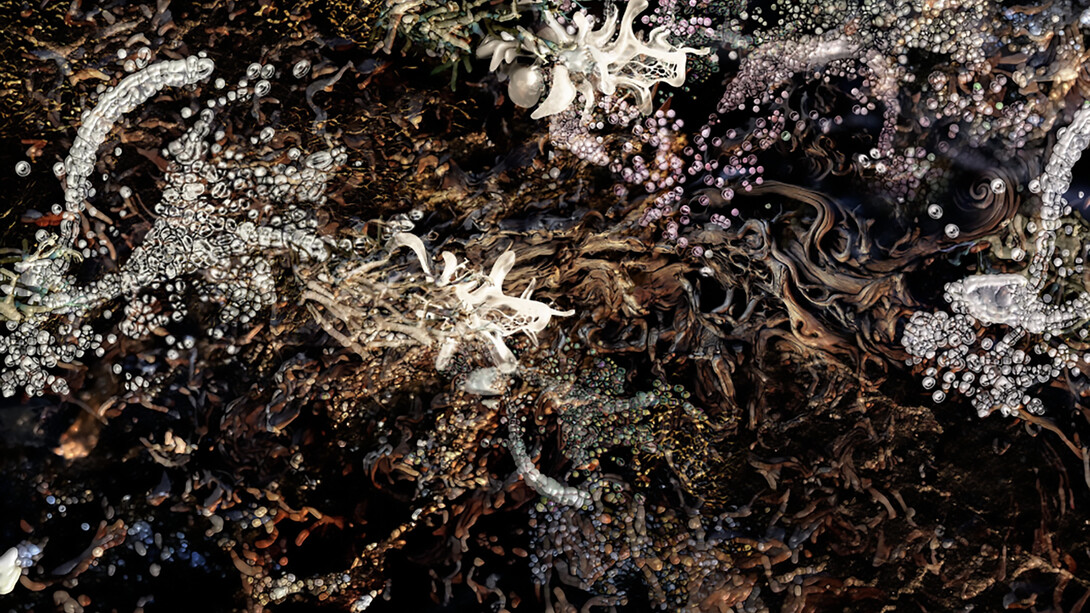
Born in 1990, Ecem Dilan Köse is a new media artist who tackles current conceptual issues through digital technologies. She is a graduate of Bilkent University's Interior Architecture and Environmental Design program, and she uses digital tools as both material and method in a range of disciplinary and generative art contexts. She explores the merging of digital and organic textures in her work, proposing a future in which distinct cognitive divisions vanish. Instead of being in opposition to one another, Köse sees a future in which human nature and digital innovation coexist in mutual formation. Numerous site-specific installations at UNESCO World Heritage sites, as well as museums and festivals in Turkey and abroad, have included her artwork. She uses different mediums such as sculpture, traditional media, audiovisual performances, digital installations, and works based on AI and VR.
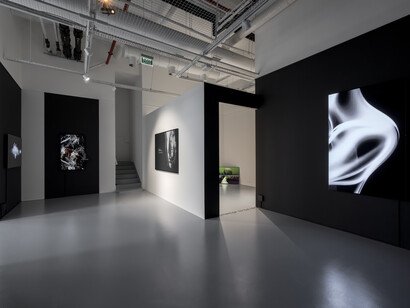
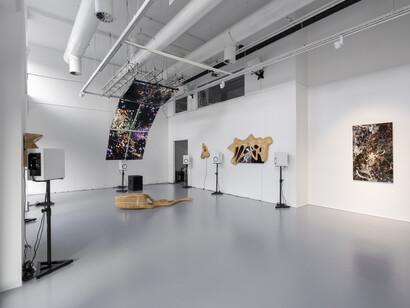
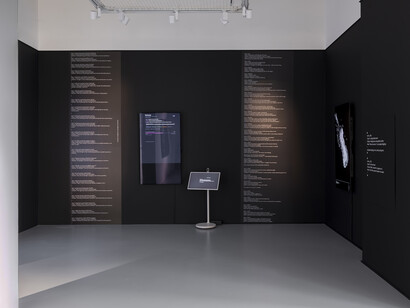
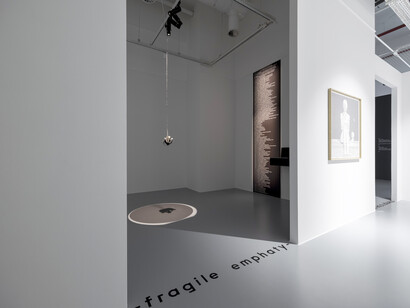
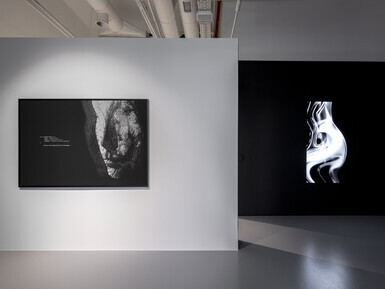
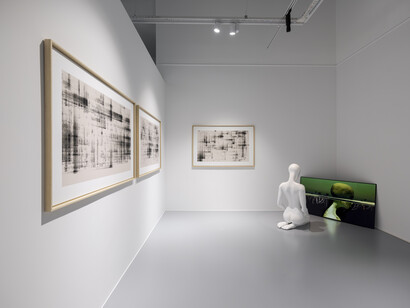
Köse's solo exhibition ID.exe / the human patch, which was presented at Art On Istanbul from October 25 to December 6, 2025, builds an ecosystem that examines nature, technology, and consciousness through the perspective of artificial life. The exhibition's opening part is a definition of a habitat managed by natural algorithms, suggesting an alternative "nature" in which digitally generated forms, sound, and movement evolve organically toward the emergence of an artificial being. After the ecosystem is introduced, a “being” emerges that is shaped by particular literary and philosophical references; its responses and reflective commentary are presented as indications of proto-consciousness rather than system error.
The exhibition gradually blurs boundaries between awareness and subconsciousness, natural and artificial, through layered audiovisual sequences, sculptural elements, and immersive virtual reality experiences. The exhibition invites viewers to reevaluate how consciousness and ethical relations might be recognized across various forms of being by emphasizing perception and empathy as primary modes of engagement rather than interaction as data exchange.
Although there are several printed pieces in ID.exe/the human patch, Habitat No. 6 (2025) has a special place in the exhibition. The piece, which was produced as a Diasec print in three editions with an extra artist's proof, attracts special attention due to its crucial placement in the gallery rather than just the medium's uniqueness. The piece serves as a visual pause, as it is placed at a crucial point in the visitor’s initial encounter with the space. It reappears later at a second moment, positioned at the crossing of the constructed habitat and the possible existence of the “being” slowly given life within the exhibition’s flow just after the visitor has already been immersed in movement, sound, and interaction. Its presence, which provides a brief moment of limitation within an otherwise developing story, is anchoring rather than isolating.
The choice of Diasec as a medium for print is central to the work’s effect. The Diasec process seals the image behind polished acrylic glass, giving it optical depth and a reflective surface that integrates the viewer's presence as well as the surrounding space, in contrast to other prints in the exhibition. The conceptual role of the work is strengthened by this material quality. Instead of serving as documentation, it serves as a preserved state that captures a frozen layer of a living system that is still evolving elsewhere. It hangs between screen-based imagery and physical becoming.
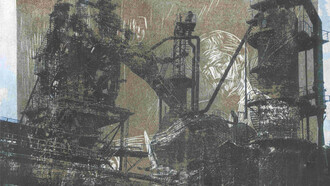
Habitat No. 6 is composed of layered imagery derived from the exhibition’s screen-based works depicting the artist’s point of view of a possible habitat for a “being.” These layers create a dense imprint that suggests a memory of the habitat itself. It is more of a formation than a representation. The piece operates as a single frame where several time frames come together. Environmental factors, biological processes, and algorithmic formations come together. In this way, it symbolizes the point of origin, where the habitat first unites before spreading throughout the exhibition into movement, sound, and interaction.
The environment, created using algorithms that mimic natural processes, offers a baseline of normality that is resistant to anthropocentric evaluation. Plants and animals exist as background presences rather than protagonists, enabling the emphasis to be on emergence. Other audiovisual aspects take viewers on a trip through caverns, filtered light, and biological diffusion, starting with bacteria and ending with a methodically created body. This process is inferred rather than executed in Habitat No. 6, which adds to the work's tranquility and reflection.
In a new media landscape driven by flow, feedback, and acceleration, Habitat No. 6 distinguishes itself for its resistance to advancement. It doesn’t require contact or generate instant meaning. Instead, it encourages length and attention, possibly portraying what happens next as a process rather than an attraction.
From a posthuman point of view, Habitat No. 6 serves as a threshold image that challenges anthropocentric theories of cognition and perception. It emphasizes emergence over function and movement by interruption in a system. Its multilayer Diasec-sealed surface depicts becoming as a common state in both biological and synthetic mediums. Köse’s approach describes artificial life as a parallel manner of existence that is recognized through empathy, duration, and the suspension of hierarchical differences between nature and technology. In her art, she investigates the convergence of organic and digital textures, suggesting a future where concrete cognitive divisions disappear.