English
 Español
 Français
 Deutsch
 Italiano
 Português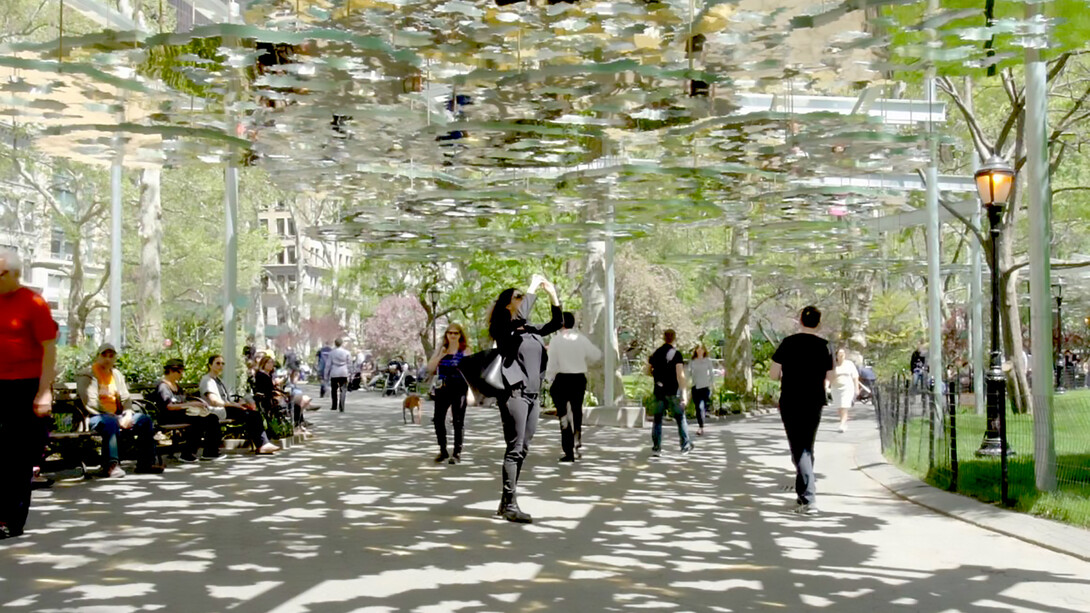
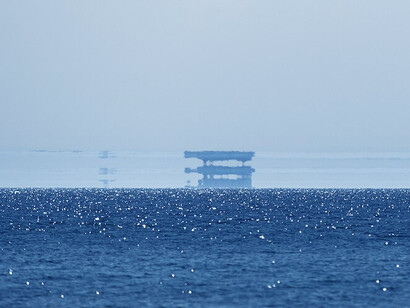
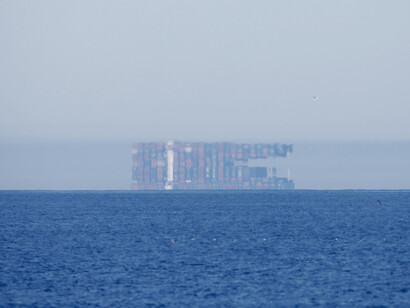
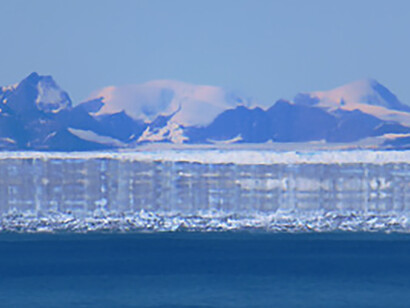
There are some miracles in nature that our brain can’t comprehend, but actually have a perfectly solid explanation behind them. Among the most mysterious of these is the Fata Morgana, a very rare and complex mirage in which distant objects such as ships, islands, or mountains appear to hover, distort, or seem more numerous across the horizon. The Fata Morgana is a natural illusion that has inspired human curiosity for some time as an explainable mystery. For scientists, it is an atmospheric event explained by physics, while for artists, it represents a vast concept of perception that they are not unfamiliar with.
Scientifically, a Fata Morgana occurs when a temperature inversion, in which a layer of warm air rests above cooler air near the surface, causes light rays to bend or refract as they travel through the atmosphere. The bending can be so extreme that light curves along the surface can produce stacked, inverted, and shimmering images of distant objects. These illusions are also called superior mirages because they appear above the true position of the object. The effect is most likely to occur where significant temperature differences exist between layers of air, such as across oceans, glacial expanses, or desert regions.
Long before the science behind it was understood, people sought to explain these miracles through myth and legend. Sailors navigating the Strait of Messina have long reported extraordinary visions on the horizon: castles, towns, and islands appearing to float or shimmer above the sea. This phenomenon, often observed in the Middle Ages and Renaissance, was attributed to the spells of Morgan le Fay, the legendary sorceress of Arthurian myth said to dwell in Sicily. For example, in 1648, Jesuit priest Ignazio Angelucci recorded an “arcane apparition” over the Strait, emphasizing how striking the phenomenon appeared to contemporary observers. Later, in 1756, Count Gaetani documented villagers’ attempts to describe these illusions by noting their mysterious and fleeting qualities. The local combination of sea currents, topography, and atmospheric conditions made the Strait particularly prone to superior mirages, and before the scientific explanation, these visions were interpreted as magical. These spectacular illusions eventually gave rise to the name Fata Morgana, a mirage so magnificent it seemed almost supernatural.
Remarkably, there is a clear scientific explanation for this “magic,” yet understanding it does not diminish its mystery; instead, it enriches it. Knowing that light, temperature, and motion can align to produce visions that defy our expectations reveals something profound about perception. The Fata Morgana reminds us that illusion is not the opposite of reality but an inseparable part of it, a reflection of how the mind interprets and reshapes what it sees. To understand this phenomenon is to recognize that every act of seeing is also an act of creation, where science and imagination slightly meet.
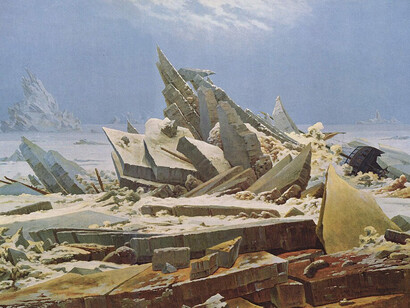
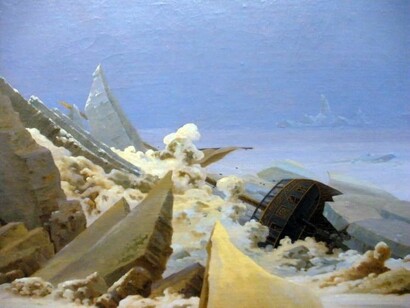
Artists have long been intrigued by Fata Morgana, a phenomenon that exists somewhere between what is seen and what is imagined, transforming reality via light and perception. During the Romantic period, painters such as J.M.W. Turner and Caspar David Friedrich sought to depict nature's volatility, including storms, fogs, and vast panoramas where sea and sky merge. These scenes evoke the same ambiguity that characterizes a Fata Morgana: moments when solid forms dissolve into mist and the observable world becomes inseparable from emotion.
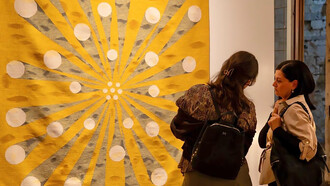
The Symbolist painter Arnold Böcklin explored this even further, adopting the title Fata Morgana (1895) to depict landscapes stuck between dream and reality. In contemporary art, this fascination has evolved into an exploration of light and perception. Olafur Eliasson creates large-scale works resembling mirages, such as shimmering circles, walls of mist, and optical chambers. His Fata Morgana Circle (2004) encourages visitors to witness the rupture of expectations firsthand. Similarly, James Turrell uses light to sculpt space, leaving viewers unsure whether they perceive solid surfaces or pure radiance.
Both scientists and artists begin with the same mystery: how do we see? Physicists study how light bends through air, while artists explore how perception bends within the mind. Science explains the process through density gradients, refractive indices, and temperature shifts, while art reveals the experience, the subtle uncertainty of what appears before the eye. In this sense, the Fata Morgana becomes more than a mirage; it serves as a metaphor for vision itself—unstable, interpretive, and profoundly human. To witness one is to see truth altered by distance, and to create art from it is to turn distortion into insight.
Where science seeks precision, art welcomes ambiguity, yet both strive toward understanding, one through measurement and the other through metaphor. The power of creation lies not in stability but in transformation, in those fleeting moments when the boundary between the possible and the impossible dissolves. To make the transient endure through art is extraordinary, presenting the unreal as real, a truth of feeling rather than of physics. The Fata Morgana thus becomes a mirror of imagination, showing that illusion can hold its own truth and bridge the worlds of vision and experience.