English
 Español
 Français
 Deutsch
 Italiano
 Português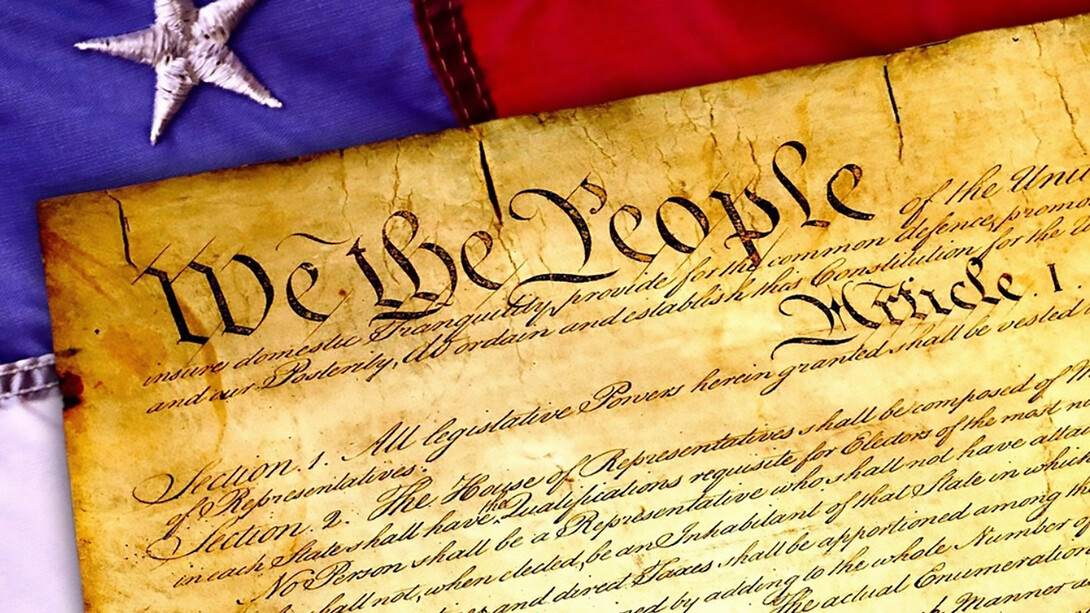
The ink is barely dry on the political transformation brought by the 27th Amendment, and already, the winds of constitutional change are beginning to gather once again.
What began as murmurs in policy circles has now burst into the public square: talk of a 28th Amendment is no longer speculation—it is the next national debate.
But before the nation rushes forward, one question must rise above the noise: Who will this amendment be written for?
Will it be authored in the spirit of We the People, a continuation of the democratic promise embedded in our founding document?
Or will it be sculpted to serve the few—another constitutional instrument sharpened by elites, lobbyists, and power brokers to further consolidate their influence?
This is not a theoretical concern. It is the defining question that will determine whether our democracy continues to breathe, evolve, and expand—or whether it constricts under the weight of managed governance and centralized power.
The legacy of the 27th amendment: a triumph of popular will
The 27th Amendment stands as a testament to what is possible when constitutional reform is driven by the people rather than imposed upon them.
Whether it tackled campaign finance, political accountability, or institutional reform, its greatest legacy was not the content alone but the process—a process rooted in democratic energy. It reminded the nation that the Constitution, often viewed as unchangeable marble, is in fact living stone. It can be reshaped when required. It can evolve when demanded.
Most importantly, the 27th showed that amendments are not just legal texts—they are reflections of society’s values at pivotal moments in history.
It set a standard. And it is one that any forthcoming amendment must meet or exceed.
The rumored 28th amendment: the question behind the curtain
As discussions about the 28th Amendment grow louder, it becomes essential to look beyond rhetoric and intentionally examine motivation. Lofty phrases and patriotic speeches can disguise the true purpose behind constitutional proposals. So we must ask:
Does it expand the voice of the voter—or the reach of the donor?
Does it defend freedoms—or justify new forms of control?
Does it simplify rights for the ordinary citizen—or complicate them in ways only specialists can navigate?
An amendment built for elites will be dense, technical, and cleverly insulated. Its true beneficiaries will hide behind terminology and structural shifts invisible to everyday people.
The common citizen will feel none of its promises but may bear its consequences in silence.
An amendment built for the people, however, will be direct, accessible, and anchored in public need. It will speak in a language that any citizen can read and understand. It will tackle the real constitutional crises that shape modern life—voting rights, privacy, digital freedom, transparency, equal protection, and accountability.
What a people-centered amendment should look like
If the Constitution is to grow again, it must grow in the direction of justice, equality, and public empowerment. The amendment process exists not for convenience, but as a safeguard—a constitutional pressure valve designed to course-correct when the nation slides off track.
A 28th Amendment worthy of its place in history must follow three non-negotiable principles:
Transparent drafting
The process should not unfold in closed rooms where political calculations overshadow democratic duty.
Every citizen must have the chance to contribute, question, critique, and engage.
Our constitution belongs to the nation—not to committees.
Clear language
Legal jargon must not become a shield for hidden agendas.
A constitutional amendment must be readable, understandable, and unambiguous.
A document that binds the people must first be understood by the people.
Equitable outcomes
A true amendment of the people must lift society broadly, not selectively.
Its impacts should reach the working class, the middle class, rural communities, urban centers, and marginalized groups alike.
If it only protects power, it has already failed.
The Constitution as a covenant—not a relic
The Constitution is not scripture nor artifact. It is a contract—a living covenant between government and governed. That covenant demands maintenance, renewal, and, when necessary, renegotiation.
Every amendment is a chapter in the nation’s ongoing story. Some chapters move the country forward. Others are cautionary tales. The 28th will be no different.
The question is simple: Will it expand democracy or encircle it? Will it empower citizens or cushion elites? Will it strengthen accountability or weaken it?
A call to awareness—and action
As the first drafts of the 28th Amendment take shape behind political doors, the public cannot afford to look away.
If history has taught us anything, it is that constitutions do not erode in a single moment—they erode slowly, amendment by amendment, clause by clause, privilege by privilege.
So now—before words are penned, before committees meet, before votes are taken—this must be said loudly and without hesitation:
Let the 28th Amendment be for the streets, not the suites. For the homes, not the boardrooms.
For the families, not the factions. For the public, not the powerful.
The future of our democracy will not be decided in a single day, but it will be shaped by the amendment we choose to write today.
The people must claim their stake. They must raise their voices. They must demand clarity, justice, and fairness.
Because the Constitution is not just a legal document—it is a mirror.
And what the 28th Amendment reflects will show the world what kind of nation we have chosen to become.