English
 Español
 Français
 Deutsch
 Italiano
 Português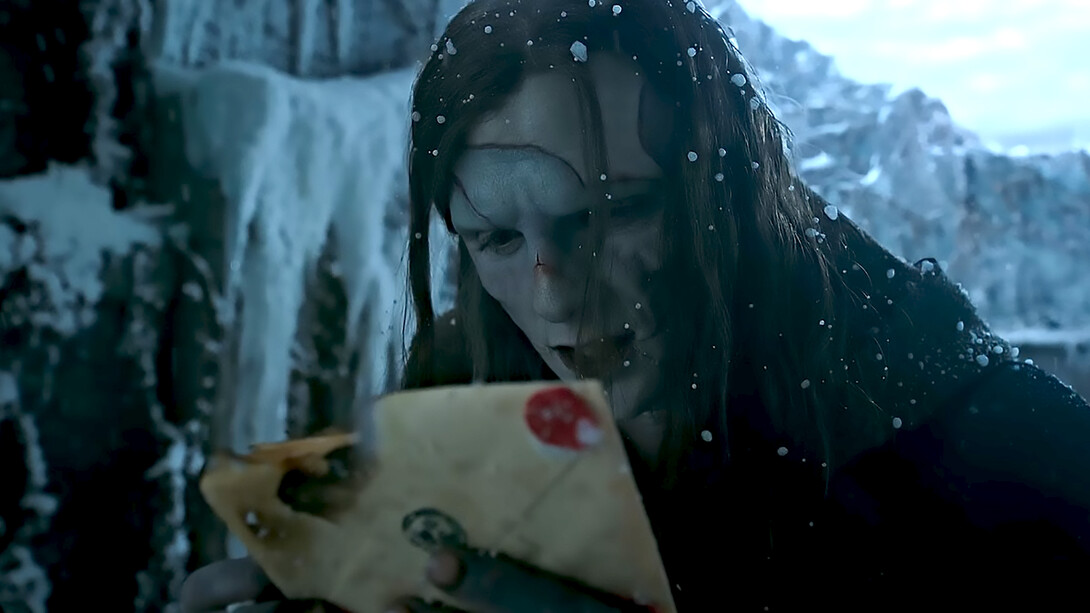
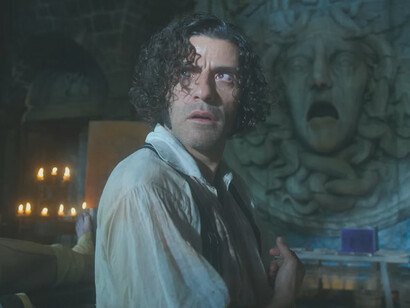
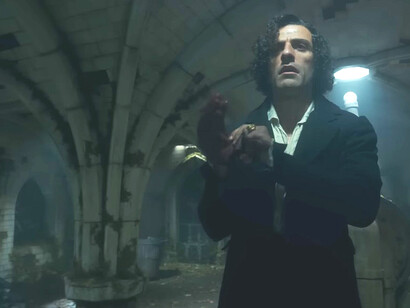
Guillermo del Toro’s Frankenstein arrives at a moment when the world is already questioning the value of mortality. His creature, stitched from the dead, is not a monster of malice but a being trapped in permanence. He learns, slowly and painfully, that he cannot die and realizes that this is not a gift but a curse. Immortality, in del Toro’s retelling, is not power but imprisonment. The creature argues that “Death is a gift that Dr. Frankenstein refused to grant him.”1
It’s fitting that this story resonates today, as we start to challenge the one boundary that has always defined humanity: death. What was once nature’s oldest rule is becoming editable, reversible, or at least technologically negotiable. The boundary between “alive” and “no longer alive” is dissolving into a blur of data, avatars, and neural simulations.
We are approaching the era of self-created beings, patched, enhanced, and extended beyond nature’s design. As we step toward this post-mortal future, a question rises like a warning: What happens to humanity when death is no longer the end of the story? Already, we fantasize about immortality, as technologies once confined to cyberpunk fiction creep into reality.
Recently, startups and labs have begun turning science fiction into reality. In China, companies like Silicon Intelligence create AI avatars of deceased loved ones, reconstructing their voice, face, and mannerisms from photos and recordings, allowing families to 'converse' with digital versions of the dead.2 Simultaneously, Western tech figures are exploring similar tools. Reid Hoffman, for example, created a “deepfake twin,” a synthetic version of himself that can speak, move, and even communicate in languages he doesn’t know, using AI models for text, voice, and video.3
Meanwhile, progress in neuroscience and brain-computer interfacing hints at a deeper frontier. A 2025 study introduced a new kind of implantable device, a lateral-ventricular brain-computer interface (LV-BCI), capable of stable, long-term recordings and decoding of memory-related signals with far greater precision than older surface electrodes. A milestone that potentially brings us closer to reading or “uploading” human memory and decision processes.4
Taken together, these advances suggest the first generation of digital immortality through data, code, and neural recordings is already being built. The boundary between life and death is no longer a line. It’s a transition state.
No matter how thrilling these advances may seem, cyberpunk reminds us of the cost. In a techno-dystopian future, eternal life is unlikely to be universal. It may emerge as a luxury, administered by corporations, regulated by governments, and monopolized by elites. And immortality, in this case paradoxically, may intensify suffering rather than erase it.
In such a world where consciousness can be uploaded, the first danger is that someone must own the servers that keep “you” alive, turning immortality into a rented commodity controlled by corporate or state infrastructures. A resurrected mind could be subject to terms of service, modifications, monetization, or even deletion.
Alongside this, digital immortality eliminates the last refuge humans have from surveillance: death itself. A consciousness preserved in data cannot disappear, cannot unplug, and cannot reclaim privacy; even after biological death, one’s stored memories, behaviors, and likeness can be reactivated, optimized, or exploited indefinitely, creating a self that is permanently visible and permanently vulnerable.
Most unsettling is the existential evolution of identity theft. When AI replicas can speak, think, and behave exactly like a person, stealing a bank account becomes trivial compared to stealing a consciousness. A malicious actor could impersonate your digital self, inhabit your avatar, rewrite your memories, fork you into divergent versions, or erase the “original” entirely. In such a world, the question of what constitutes the real you becomes not just philosophical but terrifyingly literal.
These technological ambitions echo the story of Prometheus in Greek mythology, who defied the gods by stealing fire to give humans the power of creation, knowledge, and transformation. Prometheus’s gift carried immense potential and an enduring burden. Today, the “fire” we pursue is immortality itself: the ability to transcend death and preserve consciousness indefinitely.
Like Prometheus, we may find that the power we covet comes with consequences we are unprepared to bear. Del Toro’s Frankenstein captures this perfectly: the creature’s suffering is not rooted in horror but in endlessness. Death, the natural rhythm of life, guarantees closure, a limit that defines human experience. By removing that limit, we risk living endlessly, yet never truly free, with the power we wanted becoming our burden.
Richard Dawkins, in The Selfish Gene, offers a complementary perspective. He argues that life is essentially information striving to preserve itself. Organisms, including humans, are temporary vehicles, “survival machines… blindly programmed to preserve selfish molecules known as genes.”5 In this view, immortality is not just a technological ambition; it is a radical extension of life’s fundamental drive to survive. But even as we extend ourselves beyond our natural limits, we must ask: which self are we truly preserving? The original, the copy, or some hybrid that blurs the line between memory, consciousness, and identity?
The modern Frankenstein is not a monster. It is a mirror for humanity stepping into self-designed evolution. It reflects a future in which we are bigger, stronger, and longer-lived but patched, incomplete, and searching. The question is not whether we will cross the boundary of death. That seems inevitable. The question is, will we cross it wisely? Will we preserve the parts of humanity worth keeping? Or will immortality become its own curse? the new rock to which we chain ourselves, the new eagle that devours us endlessly?
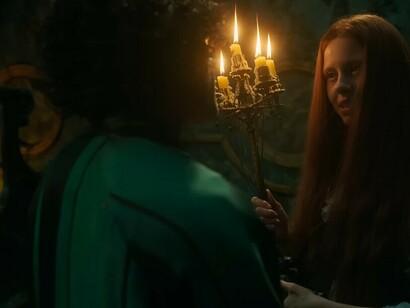
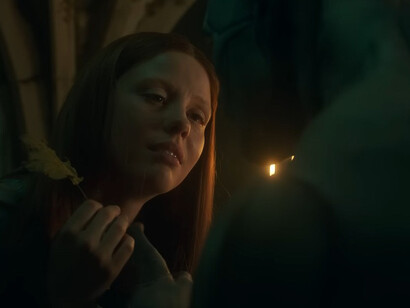
In redefining the limits of life digitally, biologically, and mythologically, we must decide what it means to remain human in a world where humans can live forever. Elizabeth reminds us: “Choice is the seed of the soul.”1 The future should be shaped by wise choices, guided by what is best for humanity. And perhaps the most urgent question remains: when life has no end, what lies beyond?
References
1 “Frankenstein.” IMDb, IMDb.com.
2 Feng, Emily. “Chinese Companies Offer to ‘Resurrect’ Deceased Loved Ones with AI Avatars.” NPR, NPR, 21 July 2024.
3 Spirlet, Thibault. “Reid Hoffman Cloned Himself with AI—Here’s What He Learned from His Deepfake Twin.” Business Insider, Business Insider.
4 Sun, Yike, et al. “Lateral Ventricular Brain-Computer Interface System with Lantern-Inspired Electrode for Stable Performance and Memory Decoding.” arXiv.Org, 25 Oct. 2025.
5 Dawkins, Richard. The Selfish Gene: Richard Dawkins. Oxford University Press, 1989.