English
 Español
 Français
 Deutsch
 Italiano
 Português
In an age where attention spans are said to be decreasing due to the rise of social media, short-form media content, smartphones, streaming services, and 24-hour news cycles, it’s easy to get lost in the sea of information that surrounds our daily lives. If our attention spans continue to decrease, the average run-time of 2 hours for a feature film won’t fit into our daily lives, routines, and forms of entertainment anymore.
The cycles of continuous information overload and the responsibilities of modernity can wipe away the joy you once had for cinema. Or maybe you were not born into a time when people were enthralled by movie trilogies of a crime family, when Westerns drew a crowd to the cinema, and sweeping historical and biblical epics were still a novelty.
But cinema can still be ingested in short spurts thanks to various social media outlets. One of the best ways to do this is by ingesting captivating, devastating, and even hilarious monologues. It can not only recapture your love for the cinema or introduce you to some of cinema's most memorable performances, but it can also be a source of upliftment when your modern life is overwhelming, and you’re in need of a pick-me-up and life introspection.
A world filled with numerous options makes tyrants of us all. But if you know where and what to look for in quality cinematic monologues, and include them as part of your screen time quota for the day, they could revive nostalgia and joy, stir curiosity, and most of all, make your day.
If you’re not sure where to start, here’s a list of stirring monologues categorized according to what you may need on a given day, and add to a working compilation.
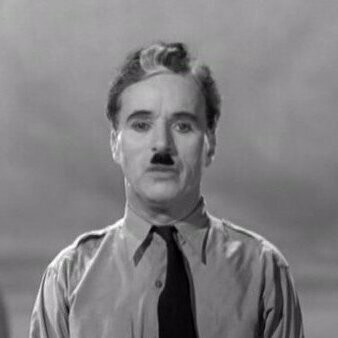
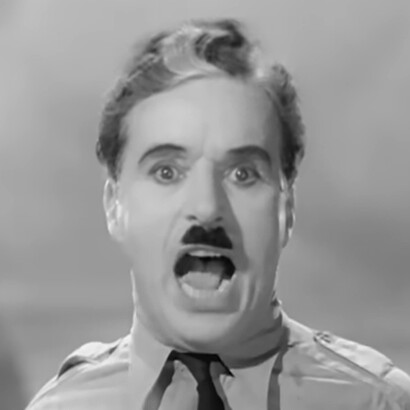
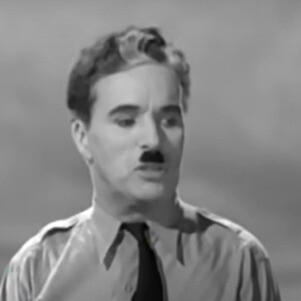
When you need your faith in humanity to be restored: The Great Dictator (1940) final speech, performed by Charlie Chaplin
The Great Dictator is over 80 years old and was Chaplin's attempt to address the discrimination against Jews in 1930s Germany. Today, the themes of this dark political satire remain relevant in a world going through economic and geopolitical upheaval. But the message in Chaplin’s The Dictator’s final speech, calling for unity among the common man, is a moving monologue, which reminds us, “ The Misery that is now upon us is but the passing of greed, the bitterness of men who fear the way of human progress.”
This was Chaplin’s first film dialogue when World War II was just beginning to take shape. Even though he had doubts about whether wartime audiences would take a liking to a comedy about a dictator, the movie was a success, and its memorable monologue has been a treasure during hard times and was even infused into Welsh singer Paolo Nutini’s provocative single “Iron Sky,” which covers similar themes to Chaplin’s monologue.
When you need to believe in integrity again: Scent of A Woman (1992), “I’ll show you out of order” monologue, performed by Al Pacino
Googleing, or YouTube searching “Al Pacino's nonologues,” will yield plenty of iconic performances. But if you’re looking for one to stir your belief in man’s integrity again, look no further than Pacino’s Frank Slade’s “I’ll show you out of order” monologue. The monologue appears toward the end of “Scent Of A Woman,” when Slade, who comes to the defence of preparatory student Charlie Simms, who is his short-term caretaker.
Slade, who is a blind and depressed former army Lieutenant Colonel, was at first highly reluctant to accept Slade’s services, but their character arcs bring them to a public disciplinary meeting at Simm’s school, where he is being persecuted for not telling on his schoolmates who participated in a prank on the school’s headmaster. Both Slade and Simm’s backs are against the wall, but in true Pacino fashion, he delivers a moving case for Simm’s integrity and character.
When you need courage: Sophie’s Choice (1982), “They had courage” monologue, performed by Meryl Streep
Sophie’s Choice is one of Meryl Streep's most memorable performances, but the movie is not an easy watch due to its tragic subject matter. However, Streep delivers a masterclass in stillness, exuding deep regret, repression, loss, and the admiration of courage. She also adds emotional layers to her performance that no words can describe.
The monologue is a reminder not to remain silent in times of repression. This monologue is not as motivational as the other monologues on this list. But Streep’s Sophie Zawistowska reminds us of the pitfalls of staying silent and the harsh realities of post-traumatic stress caused by war and tragic life-changing events. It’s not for the faint of heart, but with a little courage, the watch will be well worth it.
When you need a reminder to live and be yourself: Good Will Hunting (1998), “You’re just a kid” monologue, performed by Robin Williams
Robin Williams is known for playing a slew of uplifting characters from Mork in Mork & Mindy, Patch Adams in Patch Adams, Mrs. Doubtfire in Mrs. Doubtfire, and The Genie in Aladdin. However, the simplicity of Sean Maguire’s delivery in the “You’re just a kid” monologue in Good Will Hunting is a testament to why we need to be grateful to live every minute we have on this earth.
Williams’ Sean Maguire exudes sincerity, and even though there are harsh lessons that he tries to convey to Matt Damon’s Will Hunting, Williams’s sincerity is full of compassion. This monologue is definitely a keeper if you need a reminder to start living and to do it through moment-to-moment experiences.
When you need to come face to face with the harshness of life: Fences (2016), “I ain’t got to like you” monologue, performed by Denzel Washington
Life can hit you when you least expect it. It’s okay to take a break from it and take your time coming back, but sometimes you have to face that harshness head-on and be realistic about your reality. If you need a cinematic example of a character who has accepted his fate and understands the inequality of the world he lives in, look no further than Denzel Washington’s Troy Maxson in Fences.
In the monologue, Maxson explains to his son Cory the best way he knows how that life will not give you everything you want, and you have to make do with what you are given. The monologue is filled with life’s hard truths, but Washington still manages to layer in compassion, and the tough love only a blue-collar father can deliver.
When You need to believe in love again: The Fisher King (1991), “boner size of Florida” monologue, performed by Robin Williams
Robin Williams could do it all, which is why he has two entries on this list. He was capable of making you laugh and cry all at the same time, and in The Fisher King, Williams plays Parry, a homeless man who suffered a psychotic break due to the tragic murder of his wife. He does, however, find love again with Amanda Plummer’s Lydia Sinclair, who is shy and lacks confidence and coordination.
Williams’ “Boner the size of Florida” monologue is delivered to Plummer’s Sinclair after one quirky group date. He walks her back to her place, and as both characters get through their quirks and anxieties, Parry stops Sinclair in her tracks, uplifting her and filling her loneliness with words filled with a yearning to love and be loved. Watching these two lonely characters connect and bare their vulnerabilities is guaranteed to pull on your heartstrings and spark your belief in love again.
When you need hope: The Shawshank Redemption (1994), “I hope” monologue, performed by Morgan Freeman
Morgan Freeman’s voice was built to deliver a cinematic monologue, and arguably one of his best is the “I hope” monologue from the cinematic masterpiece that is 1994’s The Shawshank Redemption. The character arcs of Freeman’s Red Redding and Tim Robbins’ Andy Dufresne, one of cinema’s most endearing friendships on the big screen, which was formed in the harsh realities of the fictional Shawshank State Prison.
And what better way to conclude one of cinema’s most endearing friendships, with the rich and smooth baritone voice of Morgan Freeman? The monologue is a powerful expression of hope and freedom, which embraces the excitement of newfound freedom after years of torment and imprisonment.
When you need to look at your shadow side: The Lighthouse (2019), Thomas Wake’s monologue, performed by Willem Defoe
Famed Swiss psychotherapist Carl Jung encouraged the embracing of our shadow side (the dark and hidden side of our personality) in order to become a whole and integrated person. The Lighthouse is a complex movie with complex themes, and its two main characters, Willem Defoe’s Thomas Wake and Robert Pattinson’s Ephraim Winslow, create a father-son dynamic whose sense of self is stripped in the outpost of a remote lighthouse.
This sense of identity and tussle between these two afflicted characters comes to a stirring breaking point during the Thomas Wake monologue. Defoe masterfully demonstrates the visceral layers of behaviour as the masks of identity strip away to unveil the raw and primal dark side of a man. We should all, of course, take time to confront our dark side, but watching this well-shot monologue could very well be a springboard.
When you are in need of dark laughter: Pulp Fiction (1994), “the gold watch” monologue, performed by Christopher Walken
Dark humor should always be embraced in dark and uncertain times, and “The Gold Watch” monologue in Quentin Tarantino’s magnum opus is definitely a source of dark laughter. Suppose you’re not a fan of violent crime movies. In that case, you don’t have to watch Pulp Fiction to enjoy its phenomenal script writing, because you can treat “The Gold Watch” monologue as a short movie about a soldier who delivers the watch of his fallen comrade to his son.
Christopher plays Vietnam War veteran Captain Koons, who describes in great detail to the boy how he and the boy's father managed to keep the heirloom watch hidden. Walken delivers the monologue in a straight-faced, deadpan focus, adding natural comedy to the scene and making the reveal in the monologue hilarious.