English
 Español
 Français
 Deutsch
 Italiano
 Português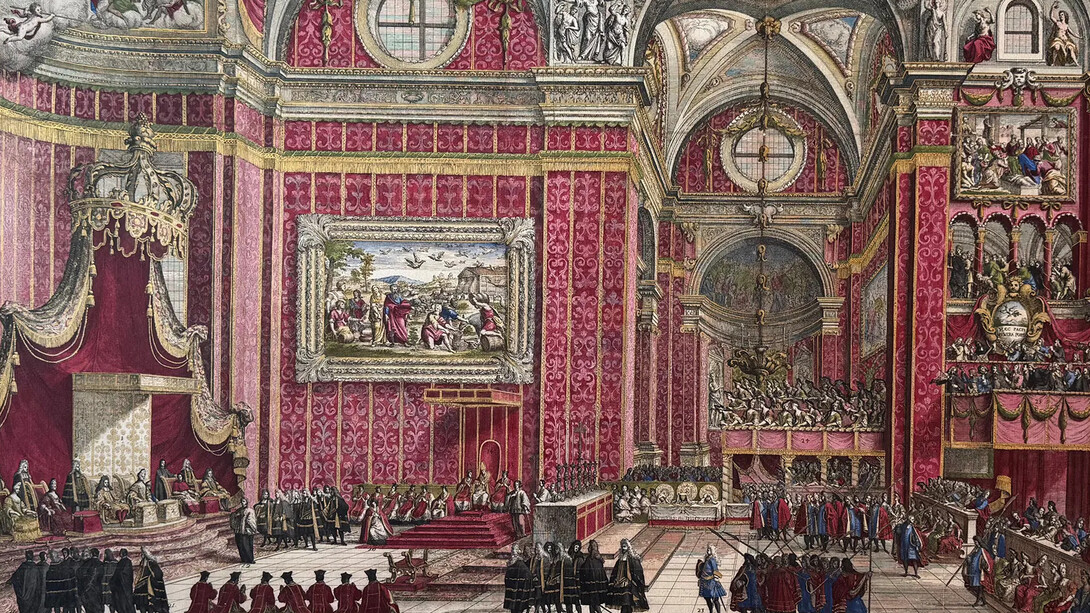
The internatonal exhibiton Regine: weavings of culture and diplomacy between Naples and Europe is dedicated to the sovereignesses who contributed to the politcal and cultural constructon and growth of the Kingdom of Naples and Europe up to the birth of the Italian Republic.
The Palatine Library of the Pilotta Monumental Complex is participating in the exhibition by lending five watercolour engravings taken from Ragguaglio delle nozze delle maestà di Filippo V e di Elisabetta Farnese (Report on the wedding of Their Majesties Philip V and Elizabeth Farnese), printed edition, 1717. inv. e coll. S.II 18434:
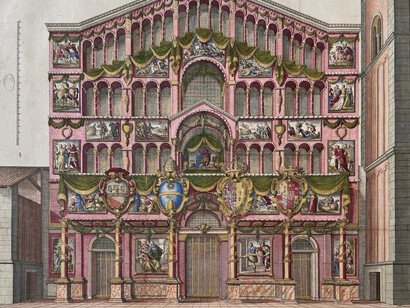
Ilario Mercanti, Lo Spolverino, Facciata del Duomo di Parma parato riccamente in occasione delle nozze di Elisabetta Farnese.
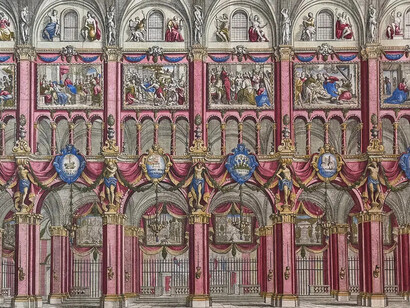
Ilario Mercanti, Lo Spolverino, Lato interiore del Duomo di Parma parato riccamente in occasione delle nozze di Elisabetta Farnese.
Ilario Mercanti, Lo Spolverino, Coro del Duomo di Parma riccamente parato nella Celebrazione delle nozze di Elisabetta Farnese.
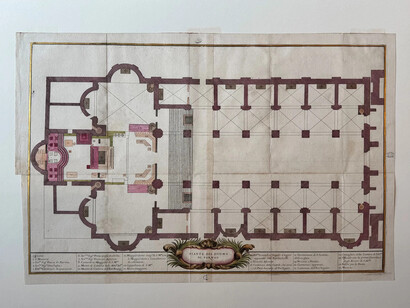
Ilario Mercanti, Lo Spolverino, Pianta del Duomo di Parma.
Ilario Mercanti, Lo Spolverino, Ingresso nella città di Parma del Cardinale Gozzadini.
The exhibiton Regine: weavings of culture and diplomacy between Naples and Europe, organized by the Reggia di Caserta Museum in collaboraton with Opera Laboratori, under the patronage of the Network of European Royal Residences, and curated by Tiziana Maffei and Valeria Di Fratta, includes over two hundred works from prestgious Italian and European museums and instiutions which will be displayed in the Gran Galleria of the Royal Palace.
From Elisabetta Farnese to Maria Amalia of Saxony; from Maria Carolina of Austria Lorraine, through the Napoleonic decade of Julie Clary and Caroline Murat, to the Bourbon Restoration with Maria Isabella; from Maria Cristina of Savoy to Maria Theresa of Austria-Teschen, up to Maria Sophia of Bavaria and the Savoy Queens – Margherita, Elena of Montenegro, and Maria José of Belgium.
Consort queens were marked by destiny. They were considered as “pawns” on the European chessboard, tools of alliances and dynastic continuity, central figures in court ceremonials which often had to extol their reproductive function. These were educated women, trained in duty and commitment, prepared to uphold the fate of the kingdoms they belonged to, but also to shape relationships and cultural identities that still define the profile of Europe today.
A central aspect of the exhibition Regine: weavings of culture and diplomacy between Naples and Europe is the invisible network of relationships they were able to create over time, intertwining history, art, and diplomacy. A legacy that resonates today with renewed relevance, as the women’s decision-making space in European institutions expands and consolidates.
The exhibition narrative will unfold by following the public and private lives of four dynasties – Farnese, Bourbon, Murat, and Savoy – across seven sections: I – Educating for the throne. The Art of becoming sovereignesses; II – Court bonds. Weddings that shape alliances; III – Queen mothers. Guardians of heirs and dynasties; IV – Queens on stage. Role and public image; V – Gestures of power. Ceremonials and etiquette; VI – Time for self. Study, interests, and passions; VII – Royal chambers. The affirmation of taste.