English
 Español
 Français
 Deutsch
 Italiano
 Português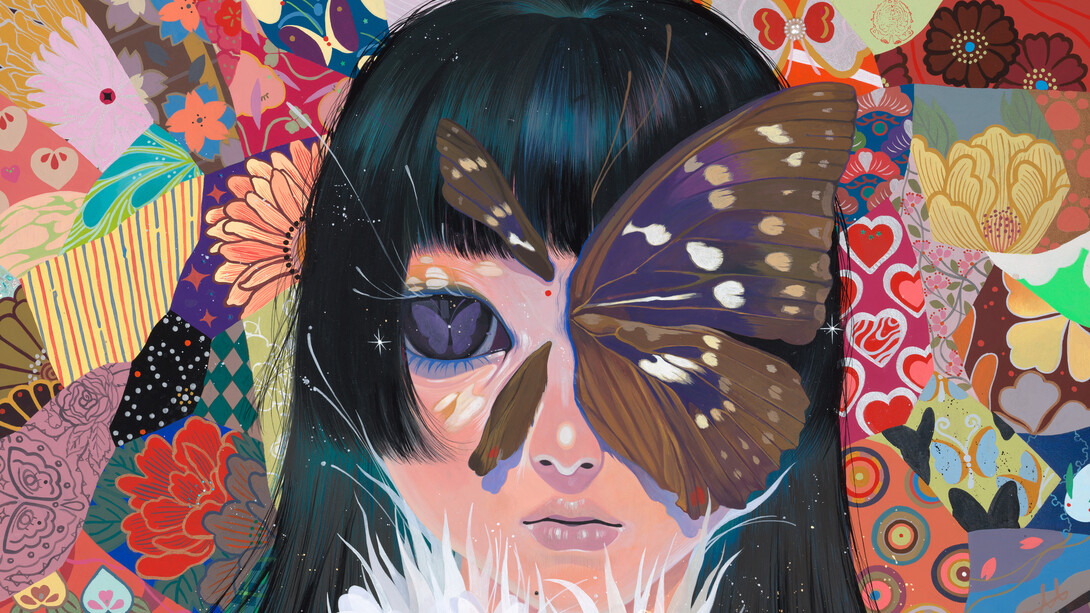
Downtown Los Angeles’ Corey Helford Gallery (CHG) is proud to announce its next solo show Who am I?, featuring new works from talented up-and-coming Japanese artist Junna Maruyama. Premiering Saturday, January 10th in Gallery 3 and on view through February 14th, the show marks Maruyama’s debut solo show in the U.S.
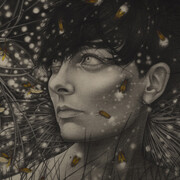
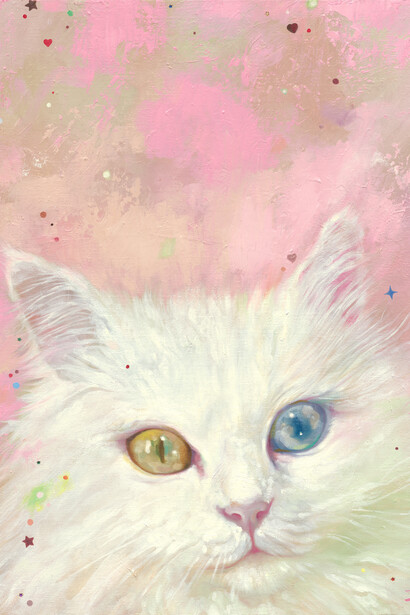
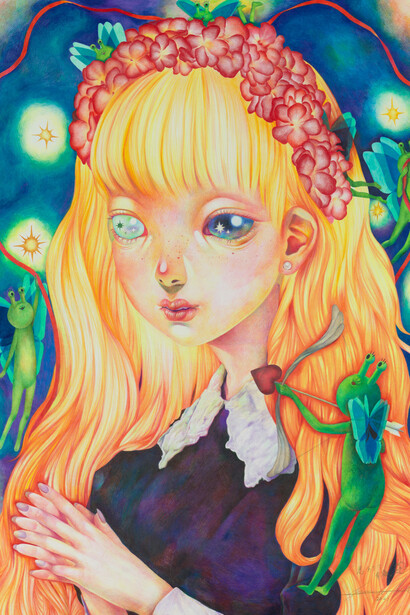
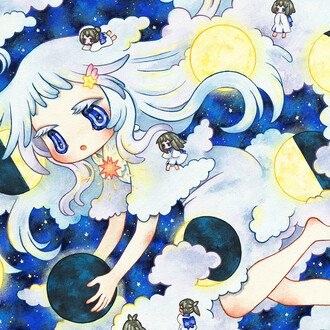
Crafting Pop-Surrealist visions of dreamy, melancholic female figures, amplified by deliberately feminine material, Maruyama works across painting, printmaking, and sculpture. Glitter, heart stickers, and other gender-coded elements push her pieces into a realm of fantasy and play. Her subjects — drawn from fairy tales and folklore and painted in a vivid, shifting palette — carry a doll-like innocence, but their vacant, unreadable stares introduce an unsettling tension beneath the sweetness.
Regarding her new works, Maruyama shares: “Whenever I debut a solo show in a new place, I return to the theme ‘Who am I?’ It’s the root of everything I make — every branch and bloom in my work grows from that question. ‘Who am I?’ isn’t just something I ask the viewer; it’s something I ask myself. I’ve dealt with a lot since I was young, and I’ve always turned inward. Those conversations with myself have fueled both my growth and my art. Because I’ve pushed through fear and pain, my work carries conviction — a confidence that comes from lived experience. A life full of experience leads to art with real weight.”
Adding, “Everyone goes through their own version of hell. That’s why I want to share this: no matter how hard things get, don’t overlook the small moments of joy. Even the worst times become part of what shapes us. This exhibition is built on that belief.”
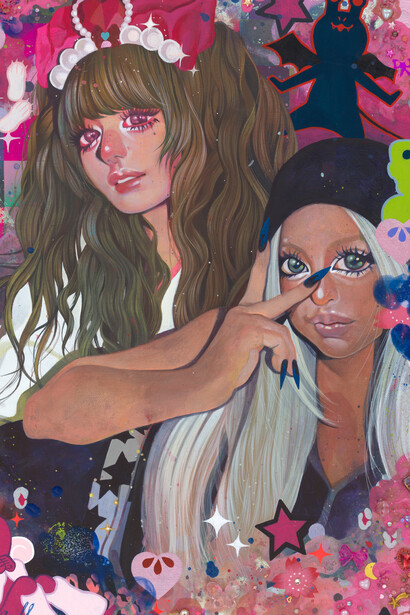
Maruyama’s upcoming show at CHG is set to feature her Gyaru series, as one of multiple series in the exhibit, plus her original character pieces, which are very popular among fans throughout Asian and reflect the deep cultural connection to anime and manga there. Inspired by the gyaru subculture in Japan that peaked in the late 1990s–2010s and is defined by exaggerated, hyper-feminine, high-impact aesthetics, Maruyama’s new Gyaru series began as a way for the artist to reignite a passion that had started to fade. She shares, “This aesthetic traces back to my earliest period, before my work became commercially successful. Returning to it feels like returning to my roots — a reminder to paint freely and purely from the heart, without overthinking.”