English
 Español
 Français
 Deutsch
 Italiano
 Português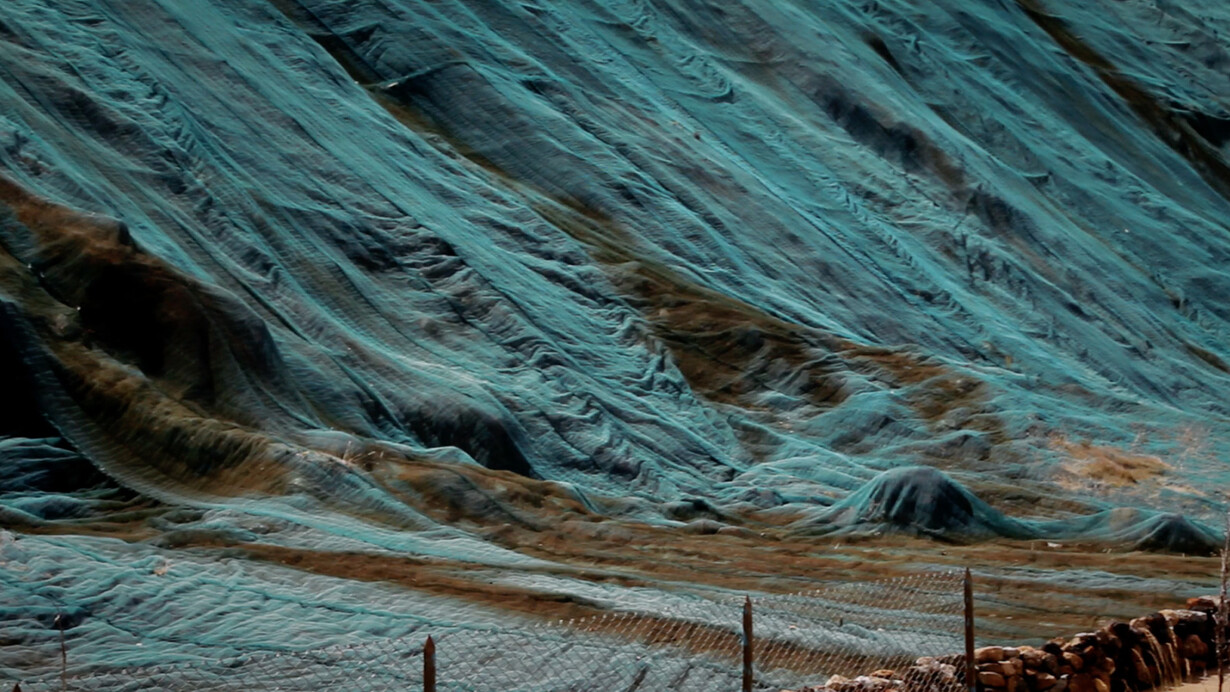
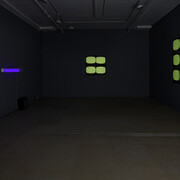
Signal and strata brings together the work of three Peruvian artists—Elena Damiani, Ximena Garrido-Lecca, and Ishmael Randall-Weeks—whose practices examine the complex entanglements of land, history, and extraction through materially rich, architecturally resonant, and often pre-colonial forms. The exhibition marks the first U.S. institutional presentation to bring these artists into direct dialogue, tracing connections across their investigations of geology, capitalism, mythology, and cultural memory.
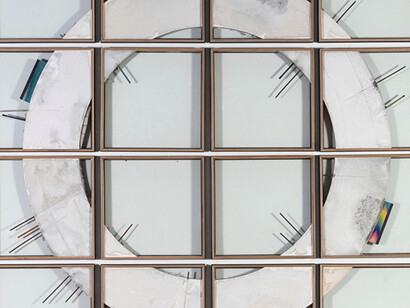
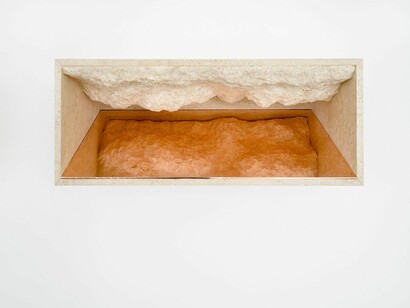
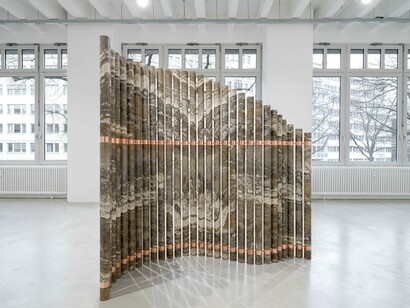
Working across sculpture, installation, and photography, Elena Damiani explores archeological and archival systems as frameworks for understanding time and perception. Her works reconfigure stratigraphic and sedimentary structures, revealing how natural and human processes become mutually and vitally inscribed in the geological layers of land. Ximena Garrido-Lecca examines the social and environmental consequences of colonization and resource extraction in Peru, often employing copper, clay, and other locally sourced materials that carry histories of labor, tradition, craft, exploitation, as well as possibilities of transformation. Ishmael Randall-Weeks reassembles found and recycled debris—copper, cement, brick, rubber, and earth—into hybrid architectural forms through labor-intensive processes. Each embodies cycles of production and decay, while questioning promises of progress, urbanization, and global supply chains and material culture.
Together, their works consider the ways in which extraction—of minerals, data, images, and histories—shapes both the physical and psychic landscapes of the Andean region. Embedded in these practices are echoes of indigenous ritual and folklore, where the land is understood as a living entity and acts of making become gestures of renewal or resistance. While grounded in specific local geographies and histories, Signal and Strata also speaks to global conditions of environmental transformation and cultural displacement, inviting reflection on how systems of power and belief are built, eroded, and reimagined through matter itself.
Funding is provided by the Harvard University Committee on the Arts (HUCA). Generous support for Carpenter Center programming is provided by the Friends of the Carpenter Center. Special thanks to the Wagner Foundation.
Accompanying the exhibition will be a booklet, supported by the Wagner Foundation, with a commissioned essay by Dr. Madeline Murphy Turner.