English
 Español
 Français
 Deutsch
 Italiano
 Português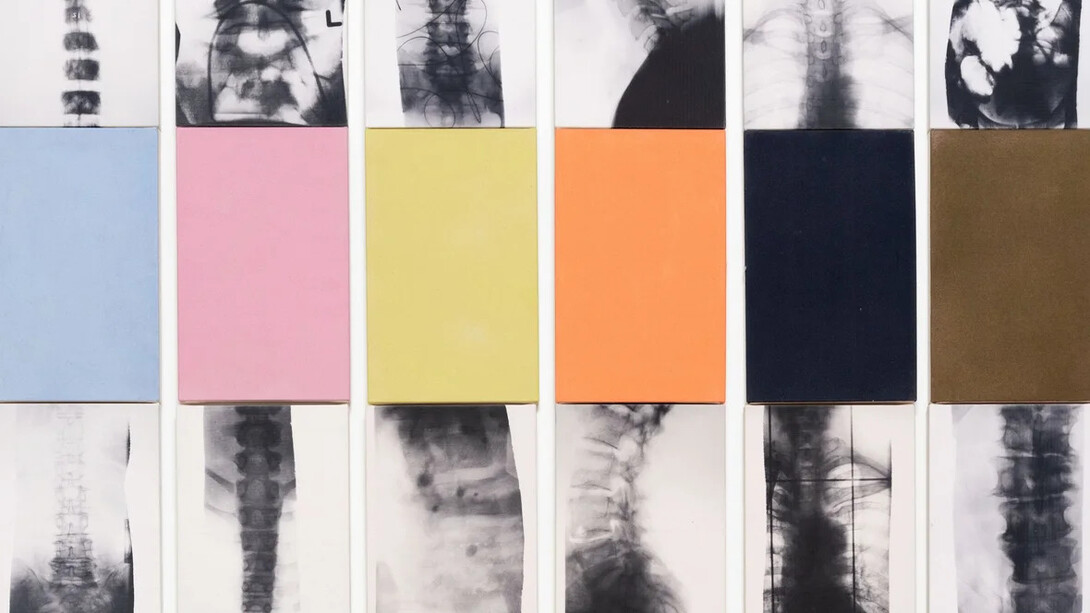
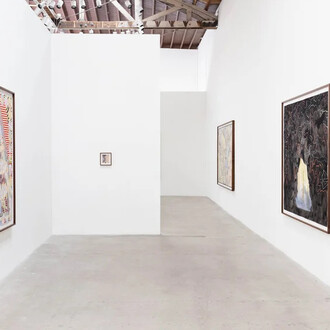
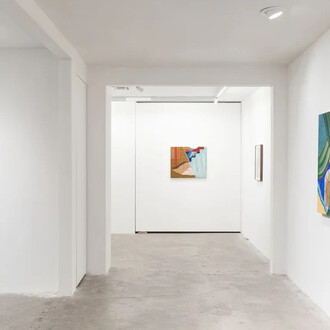
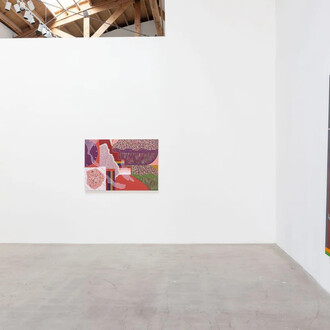
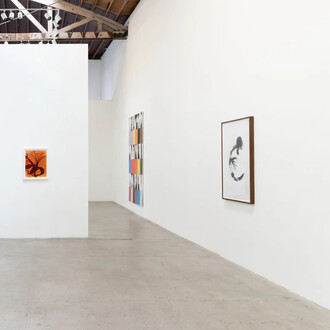
Moskowitz Bayse is pleased to present X-ray island, an exhibition of work by New York-based artist Kunié Sugiura that brings together key moments from her six-decade practice through a sustained tension between surface and interior, radiance and penetration. Moving across photography, painting, photograms, and X-ray works, the exhibition traces Sugiura’s persistent effort to unsettle photography’s assumed transparency and to reframe the image as a material, constructed object.
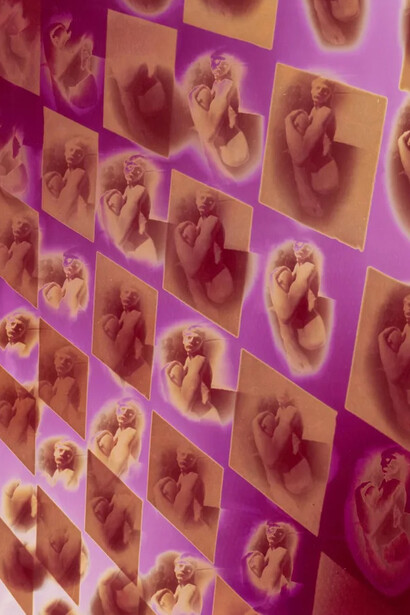
The title stages a deliberate contradiction. “Island” evokes sunlight, leisure, and exposed surfaces, while “X-ray” operates by inversion, rendering bodies and objects interior, fragmented, and strange. This oscillation has animated Sugiura’s work from the outset. Her earliest hand-printed color photographs from the 1960s, produced when color was still dismissed as unsuitable for fine art, are chemically dense, meticulously layered, and resolutely singular. Color functions not descriptively but structurally, producing images that feel bodily, unstable, and psychologically charged.
A pivotal work in the exhibition, Beach 2 (1971), made with photo emulsion and acrylic on canvas, condenses these concerns. Enlarged to the point of near abstraction, the granular expanse of sand reads simultaneously as landscape and surface, place and material. Printed on rough canvas and subtly worked by hand, the image hovers between photography and painting, immersion and distance. What should signal leisure instead becomes estranged and topographic, a sunlit field that resists habitation. Here, the beach operates as an island of perception, bounded, luminous, and disquieting.
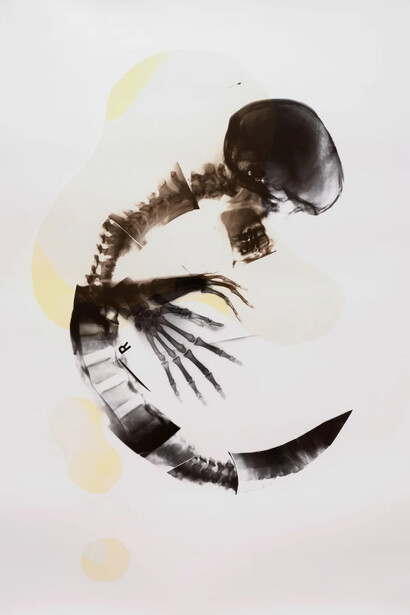
A recent work, Vertebra (2021), offers a resonant counterpoint to Beach 2, functioning as a kind of internal mirror to that earlier sunlit expanse. Where Beach 2 enlarges the surface of sand until it becomes disorienting and topographic, Vertebra turns inward, assembling spinal X-rays into a vertical, rhythmic structure that reads as both anatomy and abstraction. Made using original medical X-ray films, some measuring up to 14 x 17 inches, the work draws directly from the material reality of radiography. Sugiura’s sustained engagement with X-ray imagery began after her recovery from a serious illness, during which repeated visits to the X-ray room transformed the clinical image into something intimate and charged. Paired with painted color fields on canvas, the skeletal forms in Vertebra oscillate between vulnerability and formal clarity. Seen together, Beach 2 and Vertebra frame the arc of Sugiura’s practice, moving from the glare of surface to the architecture beneath it, while holding fast to photography’s capacity to become material, structure, and lived experience.
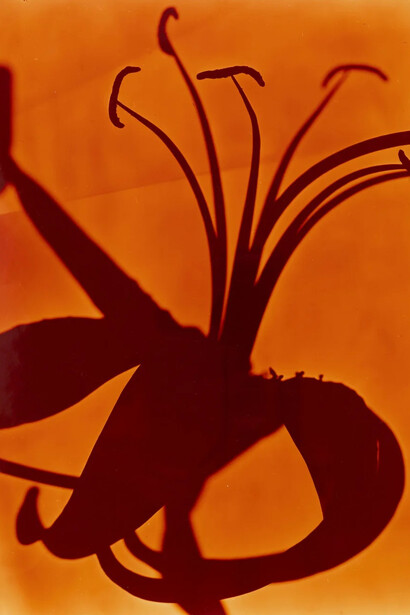
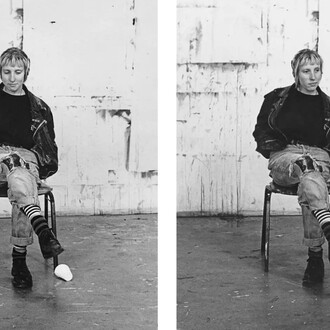
Sugiura’s later photograms and X-ray works extend this logic by bypassing surface altogether. Photograms register objects through contact rather than depiction, while X-rays render anatomy as pattern, rhythm, and structure. In both, photography becomes tactile and indexical, less an image of the world than a physical trace of it.
Across X-ray island, Sugiura’s practice unfolds not as a stylistic progression but as a continuous inquiry into how images are made, handled, and inhabited. From hand-printed color photographs to X-rays, her work insists on photography’s capacity to function as object, surface, and structure, quietly but radically expanding the medium from within.