English
 Español
 Français
 Deutsch
 Italiano
 Português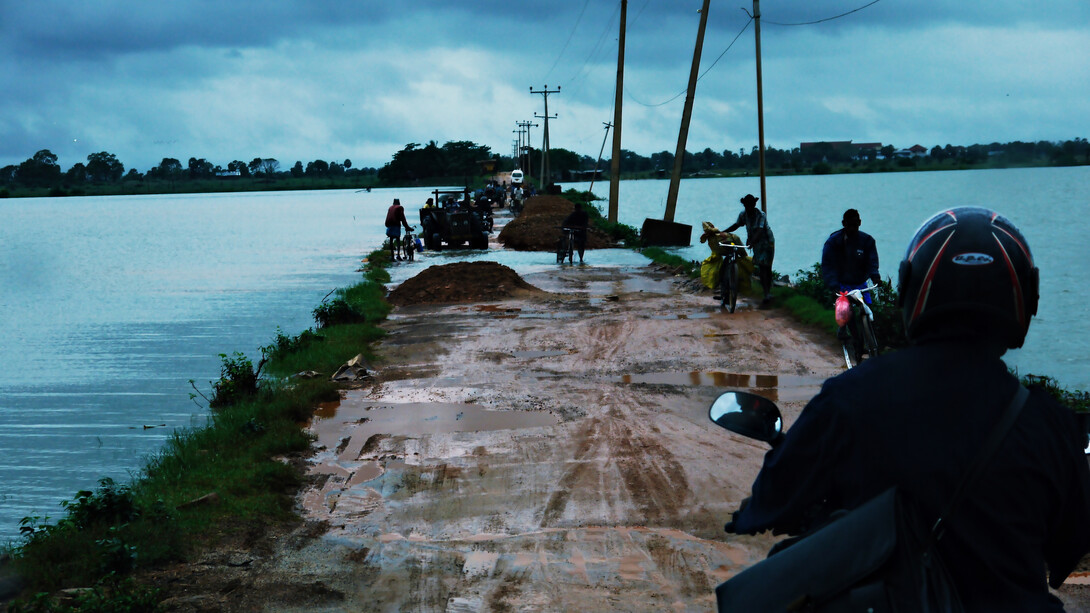
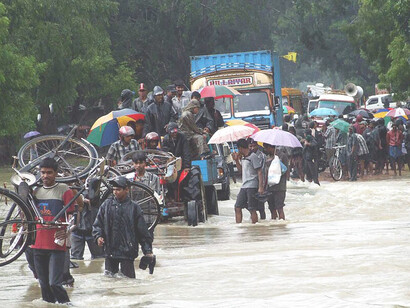
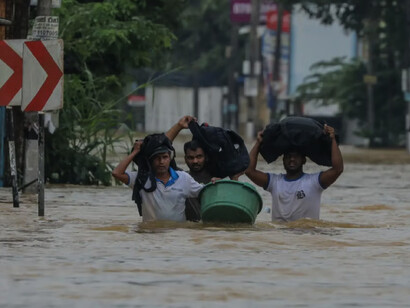
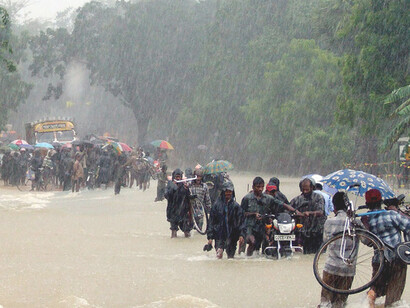
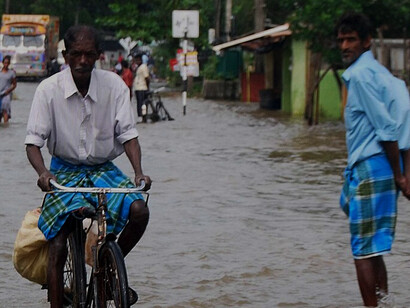
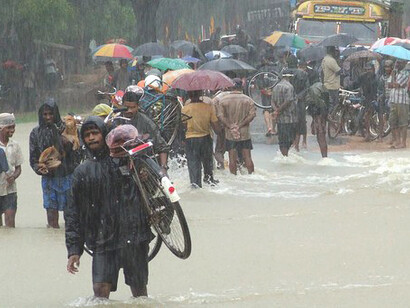
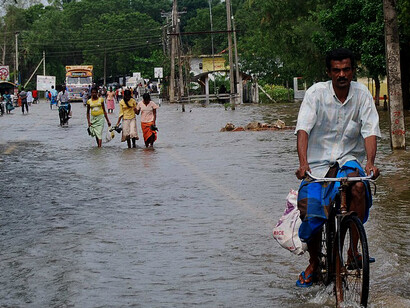
Every time Sri Lanka is hit by heavy rains, the same story unfolds: submerged homes, stranded families, disrupted livelihoods, and politicians offering sympathy from well-lit press conferences. The recent floods were no exception. They were yet another painful reminder that Sri Lanka’s climate adaptation plans—ambitious, well-crafted, and celebrated in policy circles—remain far removed from the messy reality on the ground.
The uncomfortable truth is this: we do not have a climate planning problem. We have a climate implementation problem.
Policy perfection, practical failure
On paper, Sri Lanka is a model climate-vulnerable country that “gets it.” We have the National Adaptation Plan, sector-specific strategies, disaster risk reduction frameworks, and international commitments under the Paris Agreement. We have experts, committees, climate cells, and glossy reports.
Yet when the rain falls, those documents do not prevent rivers from bursting their banks or gutters from overflowing. They cannot stop families from losing their homes or farmers from losing their crops.
The real question is not whether Sri Lanka has climate adaptation plans. It is whether those plans make any difference when nature tests us. And too often, the answer feels like a resounding no.
A country that reacts instead of prepares
Sri Lanka responds brilliantly during a crisis. Our rescue teams are brave. Our communities are resilient. Volunteers, religious groups, youth networks—they all step in when it matters most.
But we are far less impressive at preventing these disasters in the first place.
Why is Colombo still flooding after every intense shower? Why do the same low-lying areas experience the same devastation year after year? Why do we keep rebuilding houses in places that the government itself identifies as high-risk?
The answer is simple: Sri Lanka is stuck in a cycle of disaster response, not disaster prevention.
Politicians visit flood zones with media crews but rarely return to ensure long-term solutions. Funding flows easily for relief distribution but slowly—almost reluctantly—for drainage improvements, wetland conservation, or riverbank reinforcement.
Environmental mismanagement is catching up with us
Let us be honest: many of today’s floods are not “natural disasters.” They are policy-made disasters.
We filled wetlands to build shopping complexes and luxury apartments. We allowed construction in flood plains. We carved into hillsides with little oversight. We polluted waterways and blocked drains with waste. We prioritized short-term profit over long-term resilience.
Climate change did not destroy Muthurajawela.
Human decisions did.
Climate change did not choke Colombo’s drainage network.
Unregulated urbanization did.
And every time we ignore environmental science, nature responds with force.
Sri Lanka’s climate policies strongly emphasize ecosystem protection, but enforcement is half-hearted at best. When regulations are treated as suggestions rather than rules, adaptation plans lose their meaning.
Fragmented governance: too many plans, too little action
Another reason our adaptation plans fail is that they are everybody’s responsibility and therefore nobody’s priority. Ministries overlap, agencies clash, and local councils complain they lack funding or authority.
Climate adaptation requires coordination, but Sri Lanka’s governance system functions like a collection of islands, each doing its own thing, sometimes contradicting one another. It is difficult to implement a 10-year strategy when political leadership changes every few years and priorities shift with election cycles.
Climate adaptation is long-term by nature. Sri Lankan politics is not.
This mismatch leaves us with strong frameworks and weak follow-through.
Success stories exist, but they’re too small to matter nationally
Sri Lanka does have bright spots: improved early warning systems, community-based projects, small-scale irrigation schemes, and successful mangrove restoration programs. These initiatives save lives and build resilience.
But they remain localized, often supported by foreign donors or driven by passionate local leaders. They are not the result of a coherent nationwide push. Without scaling, these small victories cannot counter large, systemic failures.
What needs to change: a shift in mindset
If Sri Lanka truly wants to adapt to climate change, it must stop treating climate impacts as isolated disasters and start recognizing them as symptoms of deeper governance and environmental problems.
Here is what we need, urgently:
A zero-tolerance approach to environmental degradation: every wetland we save is a flood prevented. Every illegal construction stopped is a community protected.
Investment in infrastructure that actually matches future climate realities: not upgrades based on rain patterns from 30 years ago, but systems built for the storms of the next 30 years.
Local empowerment: climate adaptation is not something decided in Colombo offices; it is something implemented in villages, towns, and districts.
Depoliticizing disaster management: science—not political convenience—must guide decisions about land use, development, and risk planning.
The bottom line
Sri Lanka has all the plans it needs. What it lacks is the political will, the institutional discipline, and the environmental responsibility to turn those plans into action. The recent floods exposed a painful truth: climate policy means little if it does not protect people when the rain begins to fall.
Until Sri Lanka shifts its mindset from reacting to disasters to preventing them—until climate plans move from documents to daily practice—the country will continue to drown in its own unlearned lessons.
Climate change is accelerating. The storms are getting stronger.
The question is, are we willing to act before the next flood arrives?