English
 Español
 Français
 Deutsch
 Italiano
 Português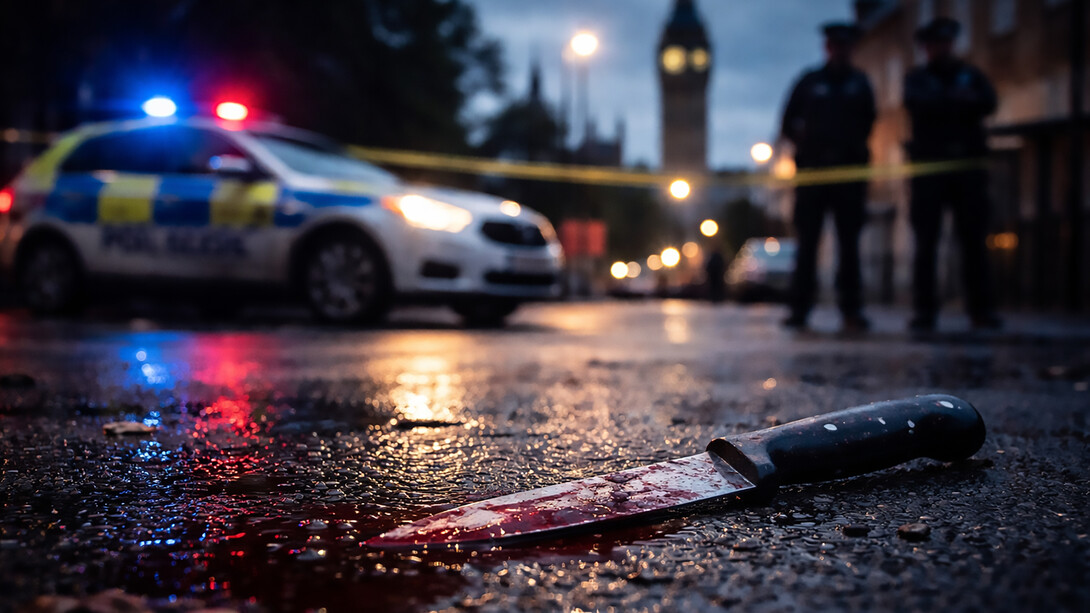
It took the death of three innocent children at the hands of an unhinged teenager in Southport for the government to recognise the crisis they have on their hands. For their first few weeks of government, Labour have been eager to hurl insults at the Tories at every opportunity. But if they want to prove to the public they’re not just playing party-political games, they need to prioritise tackling knife crime before more innocent people lose their lives.
Labour has attempted to rebrand itself as the party of law and order. They have come to power on a pledge1 to “get knives off our streets”, arguing that it “is a national crisis, requiring urgent action”. On the surface, it seems as though criminals will soon face the wrath of a Starmer-led government, with a revamped police force at its disposal.
But within days of its establishment, the new government announced2 that more than 5,000 violent prisoners would be released early in an effort to stop overcrowding. While there are legitimate arguments to be made surrounding this decision, the image it portrays is one of weakness. The government needs to get a grip on law and order, and this comes through prioritising necessary reforms.
It’s no secret Britain is facing a knife crime epidemic. Between3 2010 and 2011, there were 36,000 recorded cases of offences involving a knife or sharp instrument. Between 2018 and 2019, this had risen to 52,400. This rise has been met with an overall reduction in police officers within the same time period, with a study from the University of Warwick concluding that between 2010 and 2019, the overall number of police officers in the UK had fallen by 14.3%4.
This vacuum of law enforcement has allowed violent gangs to prosper. Criminals are running riot on our streets while law-abiding citizens feel scared to leave their own homes. The priority of any government is to protect the health and well-being of its people, yet Labour seems to have forgotten this after 14 years in opposition.
One way of prioritising this would be to change sentencing laws such that those who are found to be carrying bladed articles face a higher minimum custodial sentence than the current six months, which is not enough time to rehabilitate a person who wanders the streets wielding a knife. This would send a strong message to violent gangs and criminals and provide a crucial first step in reclaiming our streets.
Labour have said1 they will “not shrug their shoulders” when individuals are caught in possession of a knife, yet when asked what these tougher sentences may look like, they have done just that – shrugged their shoulders. Their only commitment so far has been for tougher sentences. Whilst undeniably necessary, the vagueness surrounding this reform is not putting the British public’s mind at ease. The government needs to take a stronger stance and remove any doubt from the equation.
Another solution, famously championed by Tony Blair, is to be tough on the causes of crime. It’s common knowledge that individuals from poorer backgrounds or broken homes are more likely to turn to crime. One study5 from King’s College London, for instance, highlights that students who are excluded from school are 200 times more likely to become involved with a gang.
Rebuilding a sense of community for young people is a legitimate solution to this problem, and one Labour themselves have promised, with the creation of a “new network of Young Futures hubs”. The previous government failed at this, cutting nearly 1,0006 Police Community Support Officers (PCSOs) between 2022 and 2023. In cutting the number of PCSOs, the government was cutting a much-needed line of support for vulnerable children across the UK.
One of the first steps Labour should take is to restore these cuts. With a former Bank of England official predicting up to £25 billion7 could be raised in tax hikes, it’s not unreasonable to ask for some of that money to be spent protecting the people of our country. However, with the chancellor’s statement to the House of Commons on the state of public finances, this seems unlikely.
With the government claiming a £22 billion black hole which needs plugging, the nation is braced for spending cuts which will only worsen the crisis. Labour can portray itself as the party of sound economics as much as it wants, but when people are being stabbed in broad daylight, the nature of the conversation must change.
Labour has five years to take the fight to criminals up and down the country. If they are serious about governing and committed to their promise of making our streets safer, they must enact these reforms immediately. The safety and well-being of the British public depend on decisive and effective action against knife crime.
It's time for Labour to prove their pledges are more than just words and to deliver the strong, protective measures our communities desperately need.
This article was written by Oliver Dean. Oliver is a British writer and student at the London School of Economics and Political Science, where he works with the Hayek Society.
References
1 The Labour Party. (n.d.). Take back our streets. Labour.
2 The Telegraph. (2024, July 18). Labour to release more than 5,000 prisoners early within months. The Telegraph.
3 House of Commons Library. (2025, October 28). Knife crime statistics: England and Wales (Research Briefing SN04304). UK Parliament.
4 Draca, M., & Langella, M. (2020). Law, order and austerity: Police numbers and crime in the 2010s. Advantage Magazine: Austerity 10th Anniversary Special, Centre for Competitive Advantage in the Global Economy (CAGE), University of Warwick.
5 Casey, L. (2019, March 11). We can tackle knife crime by tackling poverty. King’s College London.
6 The Liberal Democrats. (2023, July 31). Police community support officers cut by over 10% (Press release).
7 Bloomberg L.P. (2024, July 24). Ex-BOE official predicts Labour tax hikes up to £25 billion. Bloomberg.