English
 Español
 Français
 Deutsch
 Italiano
 Português
![Sailors from the USS Iwo Jima (LHD 7) attend a ceremony commemorating the arrival of three ships from China's People's Liberation Army-Navy [PLA(N)] at Naval Station Mayport as part of a routine goodwill port visit](/attachments/c3d0f06bce36cd80ab4330bbd0ffc6c54556a7b5/store/fill/1090/613/b05183824c63557a0c15a190fa4c23b5c1e9dd4b3b114ec3434a708d1815/Sailors-from-the-USS-Iwo-Jima-LHD-7-attend-a-ceremony-commemorating-the-arrival-of-three-ships.jpg)
The Caribbean isn’t calm water anymore. American ships are cruising uncomfortably close to Venezuela’s shoreline, while Nicolás Maduro is dialing Moscow1, Beijing, and Tehran like a man building a guest list for the worst kind of party. This isn’t one of those routine Latin American disputes diplomats can ignore. If I see it in a bigger picture. It feels less like a geopolitical hit that could knock the whole region off balance.
The spark
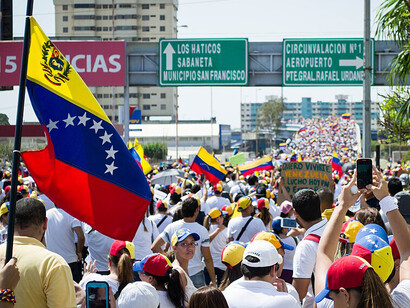
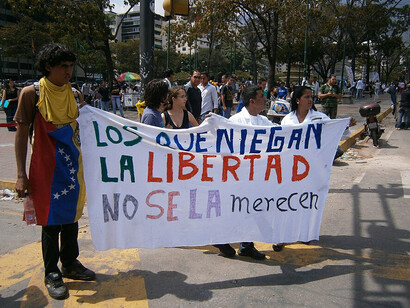
Venezuela’s July 2024 election was supposed to be routine. Instead, it became an international spectacle. Caracas announced that Maduro won with 51.2%. Meanwhile, the opposition gathered raw data from most polling stations, around four-fifths of them, showing their candidate, Edmundo González. Actually held a landslide lead: roughly 67% to 30%.
Political scientist Steven Levitsky called it “one of the most outrageous frauds in modern Latin American history.” Even the Carter Center, which tends to choose its words carefully, concluded the vote simply didn’t meet democratic standards.
This wasn’t a disputed outcome; it was a hijacked one. And Washington took note. Democracy matters, yes, but U.S. frustration goes far beyond ballot boxes.
Why the United States is actually furious
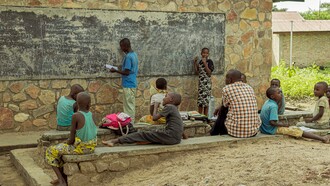
8 million approxmately.2 Venezuelans have escaped their country since 2014. One of the largest displacements on Earth. Colombia absorbed millions. Hundreds of thousands ended up at the U.S. border. In 2025, almost a third of Venezuela’s entire population will need humanitarian help.
When the U.S. relaxed oil restrictions back in 2023–24, Venezuela’s economy steadied a bit. Oil production climbed. Inflation cooled. Migration dropped sharply.
Then came the fraudulent election, new sanctions, and returned migration pressure. For a U.S. administration obsessed with border security, this crisis isn’t abstract. It walks right up to the border fence.
The drug route through the Caribbean
Venezuela has become a major trafficking corridor. Since September 2025, U.S. forces have carried out around 20 lethal strikes on boats and vessels involved in what they call “narcoterrorist operations3.” Trump even doubled the bounty on Maduro, accusing him of complicity in smuggling networks.
Whether Maduro personally profits is murky, but the state around him has clearly collapsed. Criminal groups like Tren de Aragua now spread across the region. And in late 2025, Trump authorized CIA covert actions inside Venezuela itself, citing drugs and migration as the justification.
Oil, rivals, and the global chessboard
Venezuela sits on a treasure trove of oil—so much that the world can’t ignore it. After a bitterly contested election, Maduro didn’t just twiddle his thumbs. He purchased heavy weapons like a man fortifying a castle under siege. Some Russian missile systems4, Chinese surveillance radar, and Iranian drones plus jammers.
He has Russia, China, Iran, and Cuba as old friends with deep pockets and long memories. On the other, the opposition leans on the U.S. and much of Europe. It’s a high-stakes chessboard where every move could tip the balance.
From Washington’s point of view, a hostile, well-armed regime just 1,500 miles from Florida isn’t a theory—it’s a threat, a direct challenge to two centuries of the Monroe Doctrine. And right now tempers are smoldering.
A country falling apart
No one is suffering more than Venezuelan citizens. They are paying the price of this clash. Inflation is projected to hit more like nearly 550%. GDP continues to shrink. Over 73% of the population lives in poverty by national metrics. More than half fall into multidimensional poverty.
Sanctions have cost the country staggering sums, with oil revenue losses equivalent to over double its GDP between 2017 and 2024. Critics argue U.S. pressure is destroying society faster than it weakens the regime. Supporters say corruption ruined the economy long before sanctions hit. Both arguments have truth in them.
What comes next? Three possible roads
A military clash
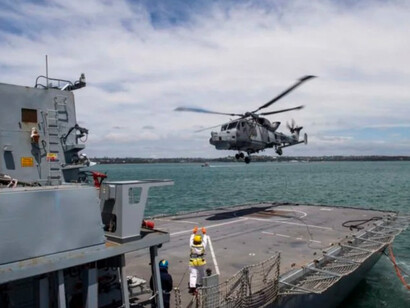
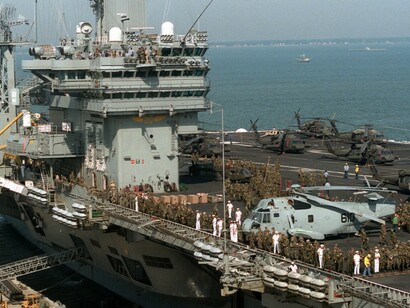
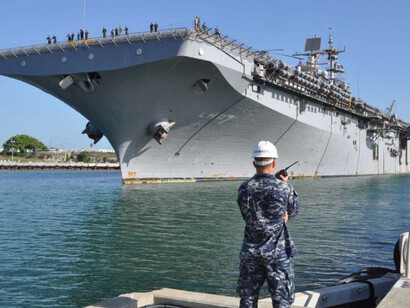
The U.S. has shoved the Iwo Jima Amphibious Ready Group5—yeah, thousands of Marines, a bunch of destroyers, submarines, and even spy planes—right into Venezuela’s backyard. And it’s a warning that bites.
A straight-up fight? Venezuela would get crushed, no doubt. But then what? You think it ends there? Guerrilla fighters popping up everywhere, millions of people running for their lives, oil prices flipping out like a disaster, and somewhere, Russia or China probably scheming their next move. War isn’t tidy. It’s messy. Brutal. And no one really walks away clean.
Economic suffocation
The U.S. forced Chevron to scale back by May 2025. Ironically, trade numbers went up last year—but oil income still remains Maduro’s oxygen.
Cranking sanctions tighter could topple the economy further without necessarily toppling the regime. Authoritarians often survive by letting their populations absorb the pain.
Negotiated exit
Brazil, Mexico, or Colombia could try to mediate. Maybe a deal letting Maduro keep his safety in exchange for a real transition is possible. But the gap between the sides is huge. Still, it’s the only way to prevent violence, famine, and regional chaos.
The impact
Washington isn’t reacting to only one thing. It’s reacting to everything—rigged elections, mass migration, drug flows, and foreign adversaries planting hardware in its backyard.
But righteous anger doesn’t automatically produce smart policy.
Military action could spiral.
Sanctions are strangling ordinary people.
The real challenge is figuring out how to pressure Maduro without destroying what’s left of Venezuela’s society.
In the coming months, we’ll see whether Washington goes for force, negotiation, or some messy combination of both. Either way, millions of Venezuelans will feel the consequences long before any politician or general does.
References
1 As U.S. ramps up pressure, Venezuela pleads with Moscow and Beijing for help.
2 Venezuela Crisis Explained.
3 US strikes another vessel off Venezuela coast, killing six.
4 Maduro says Venezuela has 5,000 Russian anti-aircraft missiles to counter US.
5 Iwo Jima Amphibious Ready Group and 22nd Marine Expeditionary Unit (SOC) Complete Rigorous COMPTUEX, Declared Ready for Global Missions.