English
 Español
 Français
 Deutsch
 Italiano
 Português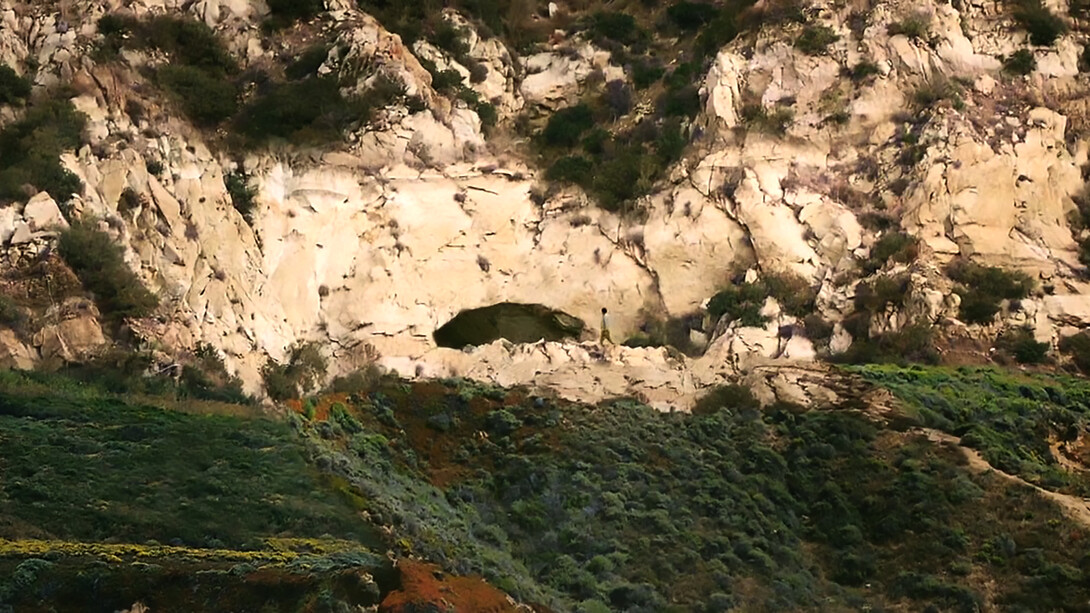
There are moments in history that are not just discoveries; they are mirrors. They show us not who we are, but when we first began to become.
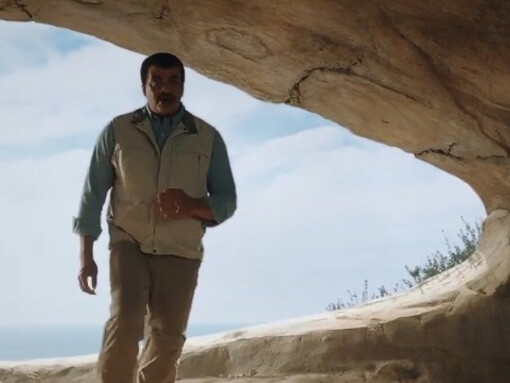
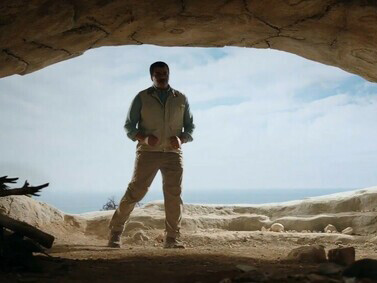
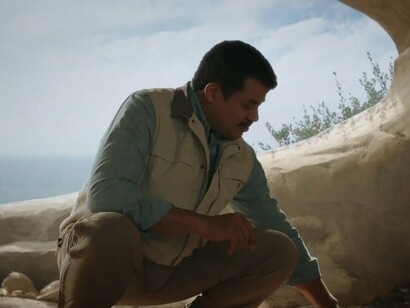
Deep within the cliffs of South Africa’s southern coast lies Blombos Cave, an ancient chamber overlooking the vast Indian Ocean. On its walls and within its soil, archaeologists found fragments that whisper the story of humankind’s awakening, not through words, but through symbols.
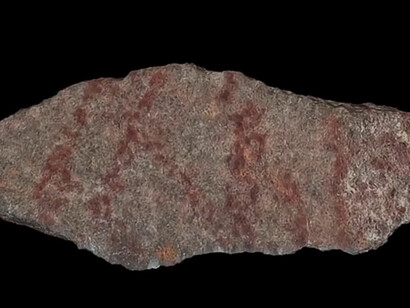
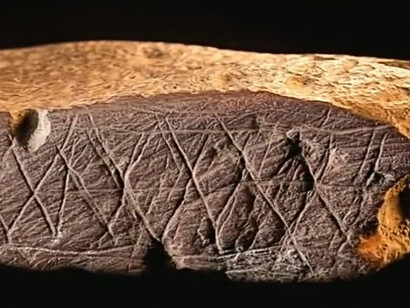
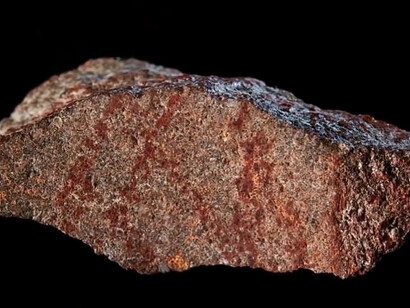
These fragments—small pieces of ochre, delicately engraved with geometric patterns—date back to nearly 75,000 years ago. Alongside them lay shell beads, pierced and polished, their surfaces stained with red pigment.
For me, this was not merely an archaeological discovery. It was a spiritual echo. Because in those marks, those deliberate, rhythmic lines are etched by a human hand. I see the first flicker of imagination. The first evidence that we no longer lived only to survive but to express.
The birth of abstract thought
When I first read about Blombos Cave, it felt like finding the doorway to the human mind. Until this point in our journey, art had been instinctual… fingerprints in ash, accidental smears of ochre on stone, perhaps even ritualistic gestures of color. But here, for the first time, the lines themselves had meaning.
The engravings, crosshatched, organized, and symmetrical, were not images of animals or people. They were ideas. They existed for the sake of representation itself. And that changed everything.
For the first time, a human being didn’t just see the world; they interpreted it. The mind behind that ochre stone wasn’t only reacting to its surroundings; it was reflecting. This was consciousness taking form. This was humanity saying, I see beyond what is visible.
The red of remembering
What fascinates me most is the use of red ochre. Across continents, this pigment reappears in burials, on cave walls, and on bodies, like a universal heartbeat of our species. Red, the color of blood, of life, of the earth itself.
At Blombos, pieces of ochre were ground and stored in abalone shells, an early kind of paint palette. It tells us that these people weren’t merely discovering color; they were preparing it with intention.
That act—to grind, to mix, to store—was art as ritual. It was patience, anticipation, and reverence. I often think that red was the color of remembrance, a way of saying, I was here. I existed. I mattered.
It may have been used to paint bodies or stones or to mark belonging within a group. But whatever its purpose, it spoke a universal language, the beginning of identity.
A language before words
The Blombos engravings remind us that symbols came before language. Long before we spoke, we drew. Long before we wrote, we marked. That small piece of ochre with its crosshatched pattern might have carried meaning we’ll never fully decode, a sign of community, a tally, or something sacred. But it was communication, nonetheless.
It meant that thought could be shared. It meant that one mind could reach another through form and rhythm. And that is art’s eternal purpose—connection beyond explanation.
As an artist today, I often feel the same impulse: to leave a trace of something unseen, to translate feeling into form.
The artist in Blombos may not have known me, yet their gesture feels familiar, a whisper from one creator to another, across seventy-five thousand years of silence.
Humanity in the making
The Blombos discovery also transforms our understanding of evolution. It proves that symbolic thinking, once thought to have emerged in Europe’s caves, had already blossomed in Africa, the cradle of our species.
It reminds us that art is not European, Asian, or African by origin. It is human. The moment that ochre was carved, humanity changed forever. The brain, already capable of tool-making and hunting, took on something new: intention without necessity. We were no longer creating to survive; we were creating to understand.
This was the dawn of introspection, the first evidence that we had begun to wonder why.
The artist of Blombos
Sometimes I close my eyes and imagine the artist … perhaps sitting near the cave entrance, light filtering in through the rock. They hold the ochre gently, turning it in their hand, carving one line, then another. Maybe they didn’t call it art. Maybe it was a feeling, an impulse they couldn’t name. But in that moment, they bridged the inner world and the outer one.
They gave the invisible a shape. That single act—carving meaning into stone—is what every artist has done ever since.
It is what I do when I stand before a blank canvas, trying to make sense of emotion, memory, or truth. It’s what connects us, not by blood or culture, but by consciousness itself.
From ochre to oil paint
Every painting in the history of humanity traces back to that gesture in Blombos Cave. From the ochre of our ancestors to the oils of the Renaissance, from prehistoric shells to modern pigments, the intention remains the same: to express what cannot be said.
When I paint my Soulscapes, I often feel as though I am reaching into that same red earth, pulling from the same well of awareness.
It is the same desire: to understand the self, to reconcile the seen and unseen, and to make peace between matter and meaning.
Art, in every era, is the bridge.
And Blombos was where we first began to build it.
The echo of awareness
What the Blombos Cave gave us is more than archaeology; it is evidence of awakening. It marks the threshold where evolution met consciousness, where survival gave birth to imagination. We may never know why those lines were drawn or what they meant. But perhaps meaning was not the point. Perhaps, for the first time, making became enough.
It was art for the soul … not for function, not for worship, but for the quiet joy of creation itself. In that sense, every artist who has ever existed, from the cave dwellers of Blombos to the sculptors of Varna, has been trying to answer the same silent question: What does it mean to be alive and aware of it? And every mark, every brushstroke, every symbol since then has been our attempt to respond.
The continuum of creation
I often think of Blombos not as a beginning, but as a continuum. That ochre line didn’t end there. It travelled through hands, through time, across the walls of Chauvet, through the figurines of Dolní Věstonice, the carvings of Göbekli Tepe, and into the canvases we paint today. We carry that same spark, that same longing to express the invisible.
In every human life, there comes a moment when survival is no longer enough, when we crave meaning, beauty, and reflection.
That, to me, is the true legacy of Blombos Cave. It was not just the birth of art but the birth of soul-consciousness.
Epilogue
Seventy-five thousand years ago, in the dim light of a cave, a human hand carved lines into red stone. They were simple, deliberate, and quiet. But they changed everything.
In those lines, we see the first map of the human mind, a record of the moment we began to look inward. And perhaps that is all art has ever been: a mirror, a memory, a message from the ancient within us, still trying to be understood.