English
 Español
 Français
 Deutsch
 Italiano
 Português
How can one bring the essence of all life, love, the glue that connects us, the force that makes the world go round, into one of the most conflicted, ego-driven corners of human endeavor, politics, where it is often considered a “bad” word?
Perhaps this is where much of the root of the problem lies.
The game I propose in this series is “to play President”. It’s an exercise in bringing a sense of heart and humanity to governance instead of politicking and self-interest. Using the word love in a conversation most people in power seek to avoid or trivialize, glibly tossing the word around with phrases like, “I love Xi, I love Putin, and I love McDonald’s cheeseburgers.”
Yet it is the conversation that could elevate humanity to a new level — an evolutionary leap and paradigm shift in governance.
Part 1 in “The Game”: A brief recap.
In Part 1, I addressed pressing concerns of the current Administration, focusing on immigration, drugs, the private prison complex, and ethnic hierarchies tied to historical power structures.
To understand immigration, one must consider the economics of prisons and detention centers. Large companies hold government contracts and make billions to house undocumented immigrants. Billions of tax dollars are spent to oppress, shackle, torture, and, in some cases, enslave our neighbors and those who harvest the food on our tables.
Immigrants perform essential work that many Americans seek to avoid. Yet the current policies deport them even though they provide the backbone of the agricultural labor force and so much more. If immigrants went on strike across all sectors in which they’re employed, the country would come to a standstill. Why the current Administration doesn’t understand this—or doesn’t care—is beyond me because it is thoroughly ridiculous and irrational, but such seems, no pun intended, ‘par for the course’.
In my Administration, the private prison system would be abolished. Detention facilities would be government-operated, civil, clean, legal, just, and allow brief, dignified stays. No incarceration-for-profit or inhumane treatment would be tolerated.
Another key point from Part 1 is formally apologizing to ethnicities harmed by the U.S. government, followed by a request for forgiveness. This is essential for rebuilding community, restoring dignity, and neutralizing centuries of negative karma.
I would seek counsel from the indigenous elders of Turtle Island at the Cabinet level. If accepted, their wisdom would guide national and environmental policy.
On drugs, demand drives supply. Reducing physical and emotional suffering, combined with education, socialization, and community support — along with certain technologies — could dramatically reduce addiction.
Dr. Andrew Tatarsky’s work provides a humane, dignified framework for understanding addiction, with global success. Dr. Martin Polanco’s use of Ibogaine through his organization The Mission Within has helped with addictions, brain injuries, and PTSD in veterans.
For a fraction of the cost of current policies, my Administration would restore dignity to immigrants and those struggling with addiction. Communities would be happier, more stable, with reduced substance use, fatalities, and crime.
Next steps in The Game
The next priority is “healthcare.” What is it really? Let’s deconstruct it.
The term “healthcare” in our country is a misnomer. It should be called “disease-maintenance.” Recognizing this distinction allows us to focus on “real healthcare.”
Real healthcare begins by empowering our immune system, spirit, hearts, and minds. Then, as needed, we turn to Nature’s remedies — from food to herbs to movement — and traditional medicine cultivated across cultures for millennia.
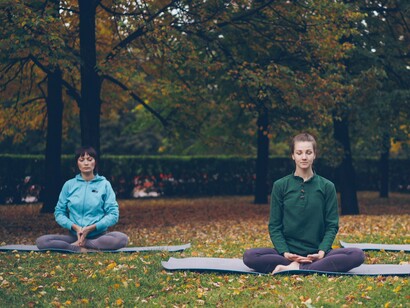
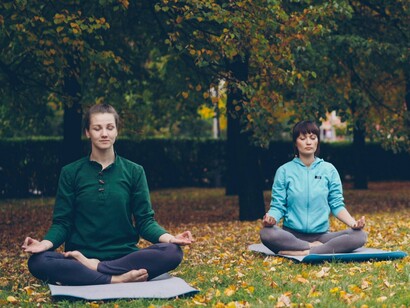
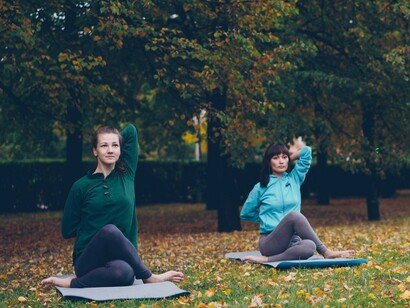
Deep healing arises from our relationship with Nature: plant wisdom, food-as-medicine, clean water, and breath. Movement, from sport to dance, and self-knowledge through meditation and reflection, all play vital roles and have been healing our species from the beginning.
High-quality healthcare has always been largely self-care. Families and individuals are historically the first-line healers. Healing knowledge is passed through generations.
Today if more serious care is required, allopathic medicine remains available, but it is only one approach. Society has been conditioned to rely excessively on doctors even for minor ailments, which is costly in time and money, unnecessarily. We’ve been medicalized, programmed to rely on doctors and drugs. At the end of the day, unless truly needed, typically for emergencies or extreme cases, it’s very disempowering.
Knowing and understanding the etymology of the word “heal” is sine qua non
“Heal” originates from words meaning “to make whole” and “holy,” harkening back to both the ancient Greek and Indo-European. It connotes “the sacred”. There is nothing in modern medicine that connotes anything of the sort.
Treating the body merely as a machine misses the full meaning of healing. Mechanical function is present, sure, but it is only one aspect: body, mind, and spirit must all be addressed for full restoration.
The exciting use of the earliest and latest technologies for healing
Sound, light (e.g., red light therapy), pulsed electromagnetic fields, magnets, touch, chiropractic, osteopathy, naturopathy, homeopathy, Ayurvedic medicine, traditional Chinese medicine, music, deep-tissue massage, biofeedback, shamanic medicine — all have proven healing effects.
Healing can be joyful, and grief can also be curative. Modern science now explains many of these effects. Technological breakthroughs and greater scientific understanding of the mechanisms of the mind and body continue to multiply exponentially, which only goes to help more people in wonderfully dynamic and effective ways.
Holistic and systems thinking, understanding the connectedness of all things, is at base as Einstein and quantum physics, reiterating what wisdom teachings East and West have been telling us for millennia.
An ounce of prevention is worth a pound of cure.
Preventive care keeps people healthy into their 80s, 90s, or even 100s. My Administration would shift medicine from disease-based to preventative and optimal health-based, at a fraction of current costs.
Iatrogenic illness and fatalities
Today’s healthcare involves excessive procedures and prescriptions driven by profit. Insurance companies often determine care, wasting billions and compromising lives. Many treatments address symptoms, not causes, and not infrequently worsen health.[Iatrogenic illness is the third leading cause of death in the U.S. Private equity-owned hospitals often prioritize maintaining illness over curing patients.
Allopathic medicine offers the best in emergency medicine
Emergency-trained doctors save lives through surgery, bleeding control, and limb preservation. Their skill and compassion deserve the highest respect.
Beyond emergencies, conventional medicine seems to have trouble coming up with real solutions to chronic illness. Long-term healing benefits from herbs, traditional energy medicines, movement, play, laughter, love, breath, and mental focus are common.
The structure and design of universal, real healthcare
Europe provides us with time-tested, successful models. Scandinavian countries, France, Germany, and the U.K. maintain systems that benefit their people far better and more cost-effectively than the U.S. We have much to learn.
I propose an “Optimum Health System” that empowers health, well-being, and immunity through lifestyle and community, rather than focusing on disease with costly drugs, often with more side effects than therapeutic value.
A healthy lifestyle has always been essential. 2,400 years ago, Hippocrates was said to have said, “Let food be thy medicine and medicine thy food.”
Upgrading the quality of food and water
A large part of healthcare is enjoying and eating real food, drinking real, structured, energized water, and breathing clean air.
U.S. food is overly processed, stripped of nutrients, and engineered for addiction through sugar, salt, and fat. Big Pharma profits by keeping people dependent on medications.
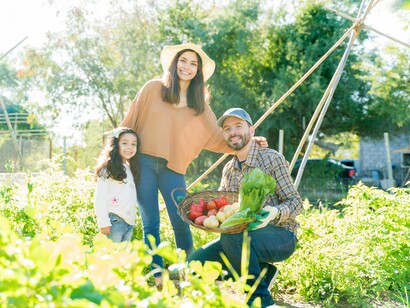
Regenerative farming is returning. Additives of all sorts are being removed, and food is being made real again. Perhaps we should have a slogan placed on baseball caps: “Make food real again!”
Blue zones
Blue zones are often rural and low-income. People eat simple, homegrown food, rarely recognize processed products, and thrive using traditional medicine.
Simplicity, not billions spent on interventions, promotes longevity. Hospitals and drugs are important only when necessary.
Blue Zone lifestyle provides us with a template on how to live simply, affordably, close to Nature, and very healthily. All of this impacts the bottom line of a healthcare system.
The cost of real healthcare
Implementing apps and preventative regimens nationwide could reduce costs by 75–80% over five years. Communities would thrive as people become healthier, more vital, and energized.
Building relationships, bonding, and community builds health
Many like to think that we just have to go to a doctor and we will be given “a pill for every ill”, and the problem will go away.
Love, belonging, purpose, and gratitude are crucial for health and longevity.
In fact, many illnesses arise from unsettled emotional issues and conflicts that have not been successfully resolved. A pill won’t do the trick. But looking at, examining patterns in one’s own life and that of one’s family, the work of Total Biology and other psychotherapeutic approaches has worked wonders in helping people resolve the stress-based, emotional issues in their lives, and this resolution has led to bodily healing. Traditional, extended family life all over the world, indigenous ways of community offer us models and examples of how community provides healing through love, compassion, care as well as different natural ways and techniques.
How does it work and how will we pay for it?
Healthcare would focus on wellness and self-care. Practitioners operate in local clinics. Services are paid through local taxes, supplemented federally. Specialized elective procedures are individually funded. As fewer people need intensive care, savings can fund a Health Security program.
Summary
We will build a robust, healthy, energized nation. Learning, attention, and well-being improve. Small, local clinics replace many large hospitals, lowering costs.
The cost will be a fraction of the current, broken system. And many illnesses from which people suffer are due to toxic food, water, soil, and air. When these are removed, illnesses and allergies will drop dramatically.
Traditional prevention, natural healing, social engagement, healthy food, clean air and water, and exercise restore long, healthy, and blessed lives.
We will bring love and compassion back into our society, governance, and healthcare system.
References
1 White House posts video of immigrants in shackles, calls deportation footage ‘ASMR’ on CNBC.
2 "Shackled Aliens": Trump's ICE Flexes Deportation Video of Migrants on YouTube.
3 Americans will feel impact of immigration enforcement on farms, union president warns on npr.
4 Andrew Tatarsky, PhD.
5 Mission Withing Foundation.
6 Waste in the US Health Care System: Estimated Costs and Potential for Savings on NIH.
7 Iatrogenesis: A review on nature, extent, and distribution of healthcare hazards on NIH.
8 Goldman Sachs asks in biotech research report: ‘Is curing patients a sustainable business model?’ on Broken Science.
9 Is our healthcare system broken? on Harvard Health Publishing.
10 Why so many doctors and nurses are walking away from health care jobs on Straight Arrow News.
11 RFK Jr.: I’m fighting chronic disease, slashing unhealthy fat at HHS on U.S. Department of Health and Human Services.