English
 Español
 Français
 Deutsch
 Italiano
 Português
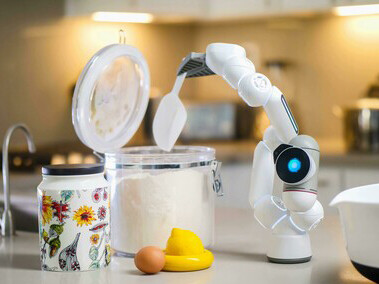
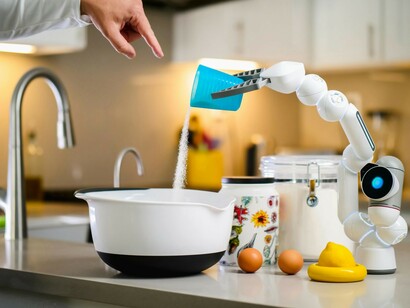
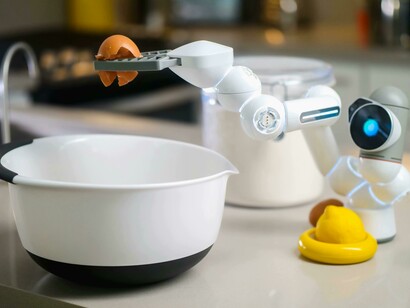
When you imagine a chef creating a new recipe, you might picture intuition, tasting spoons, and creative flair — not algorithms or neural networks. Yet in Europe’s food laboratories, something quietly revolutionary is happening: artificial intelligence is becoming a co-chef. From designing healthier snacks to forecasting flavor trends, AI is now one of the most promising tools in the food industry’s transition toward a more sustainable and personalized future.
But how does this digital intelligence actually shape what we eat? And can it really make our food healthier and more environmentally friendly—or is this just another tech buzzword?
From data to dough: how AI enters the kitchen
Food formulation has always been part science, part art. Traditionally, researchers and product developers spent months testing ingredient combinations to find the right texture, taste, and shelf life. With AI, this process is being reimagined.
At its simplest, artificial intelligence in food formulation means using algorithms to analyze massive datasets — from chemical properties of ingredients to consumer feedback — and predict the best possible recipe outcomes.
Machine learning models can simulate how ingredients interact, suggesting replacements for sugar or saturated fats without compromising flavor.
Predictive algorithms forecast trends before they appear on supermarket shelves, helping companies adapt recipes to evolving consumer demands for “clean label”, “plant-based”, or “low-impact” products.
And with digital twins, researchers can now create virtual models of food matrices—digital replicas that predict how a formulation behaves under different conditions, such as baking temperature or packaging atmosphere.
In other words, where traditional R&D relied on experiments and tasting panels, AI allows thousands of virtual recipes to be tested in seconds, reducing waste, time, and cost.
A European taste for AI innovation
Europe may not shout the loudest about tech revolutions, but it’s quietly building one of the most dynamic ecosystems for AI-driven food innovation. Unlike in the U.S., where the focus often leans toward scale and speed, Europe’s approach tends to blend scientific rigor, ethical reflection, and sustainability.
Let’s explore some of the frontrunners shaping this change.
NotCo and Unilever: AI meets ice cream in Europe
Originally from Chile, NotCo made global headlines for its AI system Giuseppe, capable of replicating the structure of animal-based foods using only plants. Now, NotCo has established strong partnerships in Europe — including one with Unilever, whose research hub in the Netherlands is using AI to reformulate Magnum ice creams. The goal? Reduce sugar, replace dairy ingredients more sustainably, and maintain the signature indulgent flavor.
The collaboration shows a shift in mindset: even large European food corporations are embracing AI not as a gimmick, but as a strategic ally in sustainability and nutrition.
Cradle bio: designing proteins, the European way
In the heart of Europe’s biotech corridor — the Netherlands and Switzerland — Cradle Bio is revolutionizing protein design. Its AI platform helps scientists engineer novel proteins with specific functions, such as enhanced stability or emulsifying ability. These proteins could replace resource-intensive animal ingredients in food production, paving the way for next-generation plant- or fermentation-based alternatives.
Plant Jammer: AI for the home chef
From Copenhagen, Plant Jammer brings AI straight to consumers. Its app suggests personalized recipes based on what’s in your fridge — reducing food waste and helping people rediscover creativity in cooking. The system learns from each user’s preferences and dietary goals, proving that AI can enhance not just industrial R&D but also everyday sustainability.
Tastewise and Spoonshot: data-driven taste trends
European brands increasingly rely on platforms like Tastewise (Tel Aviv, with European branches) and Spoonshot (UK) to forecast flavor and ingredient trends. By analyzing millions of online recipes, restaurant menus, and social media posts, these AI tools detect early signals — like the rise of adaptogens, fermented drinks, or the return of nostalgic flavors. For product developers, these insights can mean the difference between following a trend and leading it.
AI and academia: from labs to markets
Across Europe, research institutes are integrating AI into food innovation projects.
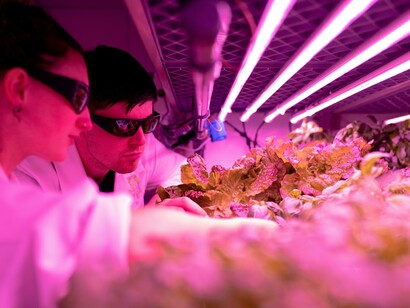
At Wageningen University (Netherlands), scientists use AI models to study flavor interactions and sensory perception, reducing the need for extensive consumer testing.
In Denmark, the Technical University of Denmark (DTU) collaborates with food companies to build AI-powered digital twins that simulate dairy fermentation or plant-based emulsions.
In Italy, startups connected to agritech hubs in Emilia-Romagna are exploring how AI can optimize recipes using local ingredients, maintaining tradition while reducing resource use.
This European mosaic of innovation reflects a shared goal: making food smarter but also more sustainable and culturally grounded.
How AI changes the recipe: from sugar to sustainability
One of AI’s most powerful contributions lies in reformulation — the process of improving existing products to make them healthier or more sustainable.
Sugar reduction: machine learning helps predict how alternative sweeteners or fiber-based bulking agents affect taste and texture, minimizing trial and error.
Plant-based transitions: AI identifies combinations of plant proteins, oils, and fibers that best mimic animal products. It can also assess how new plant ingredients interact in different cooking or processing conditions.
Sustainability optimization: some AI tools calculate the carbon footprint or water use of each ingredient and propose substitutions that lower the environmental impact.
For instance, when Unilever tested AI-assisted ice cream formulations, the system didn’t just suggest new ingredients — it also calculated how switching to oat or almond protein could reduce greenhouse gas emissions without compromising texture.
AI thus transforms food development into a multidimensional puzzle, balancing flavor, nutrition, cost, and sustainability all at once.
The human factor: can machines understand taste?
Of course, food is not just chemistry and data. It’s emotion, memory, and culture. Can a machine really grasp that?
So far, the answer is: not entirely — and that’s precisely where human expertise remains irreplaceable. AI can identify patterns, but chefs, sensory scientists, and consumers still provide the context. A neural network might predict that basil pairs well with strawberry based on molecular data, but a chef knows whether that works in an Italian gelato or a Nordic dessert.
In Europe, this human–machine collaboration is viewed as the ideal model. Rather than replacing creativity, AI becomes an assistant — a curious, data-driven partner that accelerates discovery while leaving room for craft and culture.
Opportunities and ethical challenges
While AI promises enormous benefits, it also raises critical questions.
Data and transparency: AI models rely on vast datasets, yet not all food companies disclose how their algorithms are trained or what assumptions they use. Transparency is essential — especially when decisions affect nutrition, allergens, or sourcing ethics. The European Union’s AI Act, expected to take full effect in the coming years, will set stricter rules to ensure explainability and consumer safety.
Cultural bias and diversity: if most training data comes from Western recipes or flavor profiles, AI might overlook non-European culinary traditions or regional diversity. Initiatives like EIT Food’s Data-Driven AgriFood project aim to build more inclusive datasets representing different European cuisines and ingredient systems.
Environmental responsibility: ironically, training large AI models consumes energy. Some European startups, such as CleverFood AI in Belgium, are developing low-energy AI systems tailored for SMEs — smaller, local companies that want to innovate sustainably without massive computational costs.
Human skills and employment: the shift to AI-based R&D might reduce manual testing roles, but it’s also creating new interdisciplinary careers: food data analysts, sensory data scientists, and AI ethicists. Europe’s challenge will be ensuring training and accessibility so that smaller producers can benefit too.
AI and personalization: toward the food of one
Imagine walking into a supermarket where your favorite yogurt or plant-based burger has been reformulated based on real-time consumer feedback. Or buying snacks that match your personal health goals and local ingredient availability.
This is the next step — personalized nutrition powered by AI. European companies like Spoon Guru (UK) and NutriLeads (Netherlands) are already working toward this model. By combining data from wearables, dietary preferences, and microbiome research, AI could help design foods tailored to individual needs — potentially revolutionizing public health.
Still, personalization must remain voluntary and ethical. Europeans tend to value privacy and data control more than other regions, meaning the food tech industry must earn consumer trust through transparency and data protection.
When tradition meets technology
One of the most inspiring aspects of Europe’s AI-driven food movement is how it connects with traditional food values.
In Italy, researchers are exploring how AI can help small dairies and bakeries reduce waste and improve consistency without losing their artisanal touch. In Spain, AI tools are used to monitor olive oil quality and fermentation parameters, helping producers maintain Protected Designation of Origin (PDO) standards.
Rather than erasing culinary heritage, AI here acts like a digital apprentice — learning from centuries of expertise to ensure local products remain viable in a changing climate and market.
Looking ahead: the future table
The future of food formulation in Europe won’t be led by algorithms alone, but by collaboration — between data scientists, nutritionists, farmers, chefs, and consumers.
AI is already shortening innovation cycles, enabling cleaner labels, and opening possibilities for sustainable, health-driven food systems. Yet its success depends on how responsibly it’s implemented.
If used wisely, artificial intelligence can help us cook smarter, eat healthier, and waste less — not by replacing the human palate, but by amplifying it. As one Danish researcher put it, “AI doesn’t tell us what food should be; it helps us rediscover what food can become.”
So next time you enjoy a plant-based burger, a reformulated yogurt, or even your morning espresso, you might unknowingly be tasting the result of a human–AI collaboration — one that’s quietly reshaping Europe’s food future, bite by bite.