English
 Español
 Français
 Deutsch
 Italiano
 Português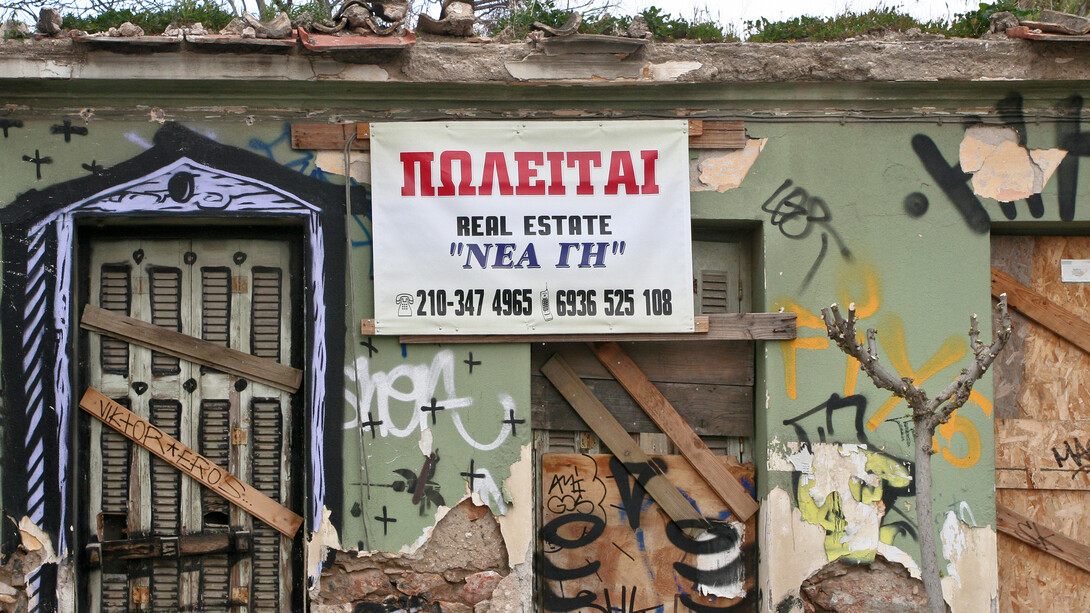
In the shadows of Greece’s economic recovery, a quieter crisis has been unfolding—one that strikes at the heart of home, stability, and citizenship. Beneath the surface of impressive macroeconomic metrics lies a complex web of financial engineering, offshore dealings, and state-backed initiatives that have led to the mass dispossession of Greek families from their homes.
An investigation into the machinery of non-performing loans (NPLs) and property auctions reveals a disturbing trend: many homes lost by citizens during foreclosure end up in the hands of financial entities tied—directly or indirectly—to the very banks that issued the original loans. These transfers are not accidental; they are engineered through securitisation structures, shell companies, and legal loopholes that form a modern-day financial labyrinth.
A global puzzle with local victims
At the center of this puzzle is a €2 billion mortgage portfolio, once managed by a leading Greek bank. These loans—bundled and sold under securitisation schemes—were designed to reduce the bank’s risk exposure. But instead of being merely financial instruments, they became tools in a systemic dispossession.
The loans were transferred through multi-jurisdictional corporate vehicles headquartered in Luxembourg, Ireland, Jersey, and other known tax havens. These firms are managed by private equity groups and servicing companies that operate with minimal public accountability.
Through this setup, the identities of the true owners of foreclosed properties are masked. Often, auctions are won by companies within the same network as the original bank or its servicing arm. As a result, the properties don’t change hands to private individuals or local investors, but instead remain within a closed loop of financial entities.
State-backed transfers: the Hercules scheme
The Greek state has played a pivotal role in enabling this transfer of property. In 2019, the government launched the “Hercules Asset Protection Scheme” (HAPS), presenting it as a solution to the NPL crisis that crippled the banking sector following the 2009 debt crisis.
Hercules allowed banks to bundle their bad loans and sell them to investors, with the state guaranteeing a portion of the portfolio's senior tranches to reduce investor risk. While this helped Greek banks clean up their balance sheets, the risk did not disappear—it shifted to taxpayers.
By 2024, more than €23 billion in public guarantees had been issued under this scheme. These guarantees essentially allowed private investors to acquire distressed debt portfolios with a safety net funded by the public. If the underlying assets failed to generate returns, the Greek state—and by extension, its citizens—would bear the loss.
Changing laws, weakened protections
Legal frameworks also evolved to accommodate the new financial order. The dismantling of the Katselis Law, which previously protected primary residences from foreclosure, and the introduction of the 2020 Bankruptcy Code gave servicers and investors unprecedented powers.
Where once there were courts and negotiations to determine whether a family could stay in their home, now there are algorithmic decisions, automated notices, and swift auctions—with little room for appeal. These new laws prioritized efficiency over equity and positioned financial firms as beneficiaries of state-facilitated asset stripping.
The real cost: human dispossession
Behind every data point in Greece’s financial recovery lies a human story of loss. Between 2008 and 2013, Greece’s GDP contracted by 25%, unemployment reached historic highs, and household incomes collapsed. During this period, tens of thousands of families fell behind on their mortgages—not because of reckless spending, but because their economic foundation was shattered.
These same families are now losing their homes—not to neighbors or buyers with intentions of residency—but to hedge funds, servicing firms, and shell companies operating with state guarantees and minimal transparency. The loss is not just of property, but of dignity, stability, and generational security.
A philosophical reckoning: what is a home?
This unfolding crisis forces a deeper societal reflection. In classical Greece, property was tied to one’s role in the community. Aristotle emphasized that wealth should serve the good of the polis, not private gain. Plato warned that societies ruled by wealth over virtue would ultimately dissolve.
In today’s Greece, homes are no longer sacred spaces. They’ve become data points in securitised spreadsheets, assets to be flipped, or liabilities to be offloaded. The very concept of ownership is being hollowed out by systems that reward speculation and punish vulnerability.
Conclusion: the new Greek tragedy
While banks and governments celebrate the dramatic reduction in NPL ratios—from over 40% in 2019 to under 5% in 2024—the cost of this success has been quietly absorbed by the middle and working classes.
What began as a crisis of sovereign debt has evolved into a crisis of sovereignty over one’s own home. Through a combination of global finance, legal reform, and state complicity, thousands of Greek families have become casualties of a recovery model that prioritizes balance sheets over human lives.
As financial engineering continues to shape the housing landscape, one truth becomes clear: the battle is not only over brick and mortar but over the very meaning of citizenship, accountability, and justice in a globalized economy.