English
 Español
 Français
 Deutsch
 Italiano
 Português
The Black Sea region, which was once ruled by the Ottoman and Russian Empires, witnessed the geopolitical conflicts between the German and British forces during World Wars I and II until the mid-20th century. At the moment, it serves as a hub for major geopolitical players like the Russian Federation, NATO, and the European Union to aspire to domination and influence. This region has had changing nomenclatures throughout history, which are indicative of larger changes in the global system. It was referred to as a "transitional zone" before the Cold War era, and it became the "periphery" during that period.
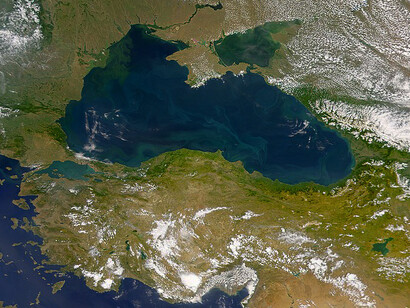
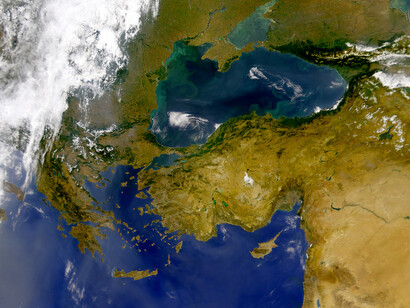
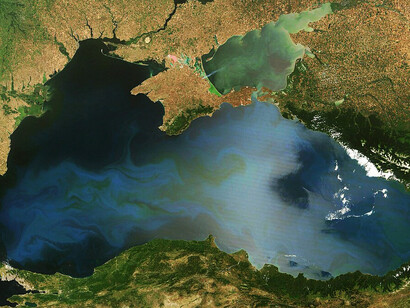
However, modern demands, including energy security concerns, counterterrorism measures, and the need to counterbalance the Russian Federation's influence, have forced a reevaluation, leading to its categorization as a crucial "center" in the geopolitical landscape. Situated in the southeastern extremity of the European continent, the Black Sea assumes a paramount position within the framework of Eurasian geopolitics. It is well-connected by water, with the Volga-Don Canal providing access to the Caspian Sea, the İstanbul and Çanakkale Straits connecting it to the Mediterranean Sea, and the Kerch Strait providing access to the Sea of Azov.
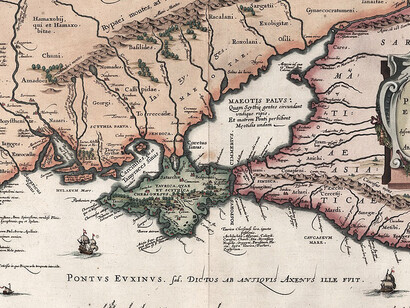
These connections, together with its relationship to the Turkish Straits, allow the Black Sea region to be connected to the larger Atlantic Ocean through the Aegean and Mediterranean Seas. The Black Sea region, with six coastal states (Türkiye, the Russian Federation, Ukraine, Romania, Bulgaria, and Georgia), represents a convergence of varied geopolitical interests. A cursory examination of its historical trajectory reveals a story that is dotted with instances of hegemonic influence from powerful nations throughout history. From the eighth century BCE until the first century CE, the Hellenic civilizations first controlled the Black Sea region. The area was then ruled by the Romans and the Byzantine Empire until the conquest of Constantinople in 1453 CE.
The Ottoman Empire established long-term dominance over the region following the conquest, maintaining control over the Black Sea well into the mid-19th century. After the Ottoman Empire began to lose power following the Congress of Vienna in 1815, the Russian Empire started to encroach on the interior of the region. The Crimean War (1853–1856) led to the creation of an expeditionary commission with representatives from France, Britain, Austria, Russia, Prussia, Sardinia, and Türkiye, whose job it was to conduct excursions on the Danube River below its lower levels. The Black Sea and the Turkish Straits gained international recognition with the signing of the Lausanne Treaty, and Türkiye's dominance over these waterways was guaranteed by the 1936 Treaty of Montreux.
The Black Sea became a location where the Eastern and Western Blocs could immediately build military and political ties during the Cold War era. After the Second World War, the Black Sea region became firmly under the control of the Soviet Union when Bulgaria and Romania joined the Eastern Bloc. However, the Soviet Union's aspirations to gain complete control over the Black Sea were prevented by Türkiye's NATO membership. NATO essentially expanded its boundary via Türkiye and into the Black Sea region when Türkiye joined the organization. Through the Western Bloc's NATO member Türkiye and the Eastern Bloc's leader USSR, the Black Sea recognized each other's borders and sovereignty.
The northern, eastern, and western coastlines of the Black Sea were ruled by Warsaw Pact members via the USSR, while the southern shores were governed by NATO via Türkiye. As a result, the ideological boundaries of the two poles were used to define the boundaries of the Black Sea. During the Cold War era, the Black Sea region saw little political, economic, or cultural interaction since it was fiercely split along clear ideological lines. Secluded from outside influences, it was confined to the tense environment of the Cold War. As I previously stated, during the Cold War era, the Black Sea region accepted the boundaries and sovereignties of both blocs and experienced relatively low-key communication. However, two incidents occurred that raised serious concerns for the international system and exacerbated tensions between the two blocs.
These were the crises involving the U-2 aircraft and the Jupiter missile. The leaders of the Western and Eastern Blocs, the United States and the Soviet Union, respectively, emerged as nations witnessing fast technical gains with the start of the Cold War. They specifically created missiles that could travel across continents and aircraft that could travel great distances. The nuclear warheads carried by missiles that could cross continents produced a balance of terror, while long-range aircraft enabled both poles to step up their espionage operations. Long-range planes in particular became essential for locating enemy nuclear weapons and installations.
In this sense, the U-2 aircraft was created by the United States, and because of its extended flight range, it was given a major role in gathering intelligence. U-2 aircraft were stationed in Türkiye in 1956 and started conducting missions there. Turkish authorities were aware that U-2 aircraft stationed at the Incirlik NATO base in Türkiye were involved in scientific operations, but the actions of the aircraft were kept secret from the public. Over Soviet territory in the Black Sea, on May 1, 1960, a U-2 aircraft engaged in an intelligence-collecting mission was shot down. Premier Nikita Khrushchev of the Soviet Union revealed the incident to the world on May 5, 1960, while giving a speech in parliament. Hostilities between the US and the USSR increased as a result of this incident, which heightened hostilities between the two blocs. When Turkish officials found out about the incident in this way, they too were uneasy.
As a result, the episode exacerbated hostilities between Türkiye and the USSR. The Jupiter missile crisis was another that happened, especially in the Black Sea region. Türkiye and the United States came to an agreement on October 28, 1957, to station fifteen Jupiter missiles—a total of fifteen nuclear warheads—on Turkish soil. The missiles were first deployed to Türkiye in 1957, and by mid-1962, the placing operation was finished. The Soviet Union chose to send nuclear weapons to Cuba in retaliation for the missiles being stationed in Türkiye in May 1962. On October 14, 1962, it was discovered that the Soviet Union was deploying nuclear missiles to Cuba, that intelligence aircraft were operating there, and that Soviet ships were stationed nearby.
Following this, the U.S. Navy placed Soviet ships in the region of Cuba under a naval blockade. When the US announced it would not lift the embargo and the USSR said it would not remove its ships, the situation spiraled out of control and threatened nuclear war. Both parties finally retreated through efforts toward resolution that were started by letters between the leaders of their respective nations. While the United States decommissioned the Jupiter missiles stationed in Türkiye, the Soviet Union removed its nuclear weapons from Cuba. As a result, a nuclear conflict that might have destroyed the entire globe was avoided.
Post-cold war dynamics: energy, security, and Western influence in the Black Sea
The political geography of the Black Sea has changed significantly in the post-Cold War era. The region's importance has grown over time from a geopolitical and geostrategic standpoint, resulting in the formation of new balances. With the conclusion of the Cold War, a power vacuum allowed non-Black Sea littoral nations to become more involved in the region and gave them a chance to solve its security concerns. Ethnic conflicts in the Black Sea region have intensified since the end of the Cold War, surpassing the Balkans in intensity.
The states around the Black Sea and Caspian Sea have turned away from the Russian Federation (RF) and toward the West as a result of the collapse of the USSR and the Warsaw Pact. The dominant countries in the area have determined that joining Western-oriented organizations such as NATO and the EU is essential to their security in order to stay out of the RF's sphere of influence. A policy of turning towards the West in the face of the RF could potentially transform the Black Sea into a region dominated by Western nations that are not littoral to it. These nations, which are still figuring out who they are, are a reflection of historical conflict between the East and the West along a geopolitical belt that runs from East to West. In this particular setting, the future of the region may be significantly influenced by the possible resurgence of bipolarity.
As their interests in the region grow, the EU and the USA have started to create different strategies in recognition of the region's geopolitical significance in the post-Cold War era. There have been multiple phases to the littoral countries' construction of a new political geography and the region's growing geopolitical relevance since the early 1990s. The dissolution of the Warsaw Pact, the end of the Cold War, and the fall of the Soviet Union were the primary causes of the Black Sea's early rise in geopolitical significance on the world stage. These revolutionary developments have made it easier for the West to expand from the west to the east, under the protection of NATO and the EU, with the goal of reaching the Black Sea and the Southern Caucasus region.
Due to the historical placement of the Black Sea republics inside the borders of Tsarist Russia and the Soviet Union, another issue is the possible desire of the Russian Federation (RF) to reassert its dominance in the upcoming years. Because of this prospect, which has persisted over the past 200 years, these states now see membership in NATO and the EU as necessary safeguards for their future political, military, and economic security. Furthermore, the consequences of the EU's expansion—particularly with regard to the admission of Romania and Bulgaria—also serve to emphasize the significance of the Black Sea. It is worth considering if this has increased EU influence in the Black Sea region. Thirdly, because of its close proximity to the Middle East, the Black Sea's geopolitical location is regarded as strategically significant.
The United States' presence and influence in the Black Sea were considered crucial for surrounding Afghanistan and Iraq, two countries that were identified as dangers in the country's war against terrorist organizations, especially in the wake of the September 11 attacks. The terrorist incidents that occurred on March 11, 2004, in Spain and July 7, 2005, in the United Kingdom have brought attention to the seriousness of the threat that North America and Europe face and the need for counterterrorism measures. Under this framework, the Black Sea's geopolitical significance grows in relation to U.S. policies pertaining to the Middle East.
Through the centuries, the Black Sea has acted as a doorway to the Middle East, giving Western powers more leverage over the region they dominate by administering Black Sea territories. The United States' unwillingness to see a new Russian supremacy in the region, in the wake of Belarus's and the Russian Federation's (RF) military operations, is the fourth reason augmenting the Black Sea's geopolitical significance. In order to conduct possible military operations against Iran, the United States sees the Black Sea region as a key location for military outposts, radar stations, and monitoring centers outfitted with spy planes.
The abundance of energy resources found in the Caspian Sea and Black Sea is the fifth important reason. With 40% of the world's natural gas reserves and 65% of the world's oil reserves, this region offers energy options that could potentially replace the increasingly erratic Middle Eastern oil stocks. Furthermore, the Black Sea serves as a conduit for U.S. access to the Middle East and Central Asia because of its strategic location. The Black Sea basin's semi-enclosed condition increases its strategic significance. The Russian Federation endeavors to uphold dominance over the Black Sea region by the fabrication and exploitation of circumstances of "frozen instability" in nations beyond its borders.
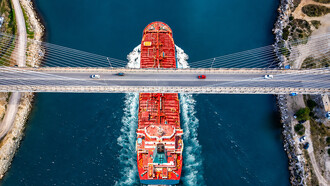
In this framework, Russia asserts its power against sovereign states in the region by supporting entities in Georgia (South Ossetia and Abkhazia), Moldova (Transnistria), and the Nagorno-Karabakh dispute between Armenia and Azerbaijan. Lastly, a crucial component that has emerged in the post-Cold War era is the growing significance of energy supply security. The Black Sea has gained more attention, especially in the wake of the natural gas crisis between the Russian Federation (RF) and Ukraine. The Black Sea's development as an energy corridor between the East and West is mostly due to tanker shipping and pipeline infrastructure. As a result, the Black Sea region is now well-known for guaranteeing the energy security of Europe. This geopolitical relevance is further enhanced by the vital position that the region plays in the dynamics of global energy.
As the Black Sea continues to serve as a nexus of historical legacies and modern strategic interests, its future remains uncertain. The interplay of energy security, military alliances, and regional conflicts ensures that this region will persist as a critical flashpoint in global geopolitics, where past tensions inform present dynamics and shape the trajectory of international relations.