English
 Español
 Français
 Deutsch
 Italiano
 Português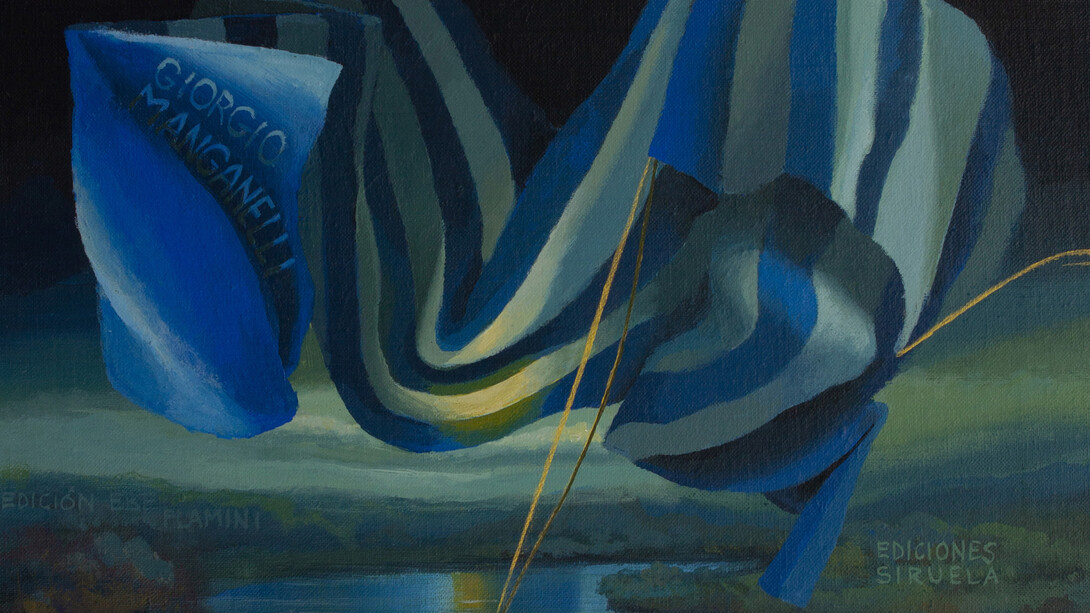
Yusto/Giner presents Asta, paño y driza, a solo exhibition by Joël Mestre, at its Marbella space.
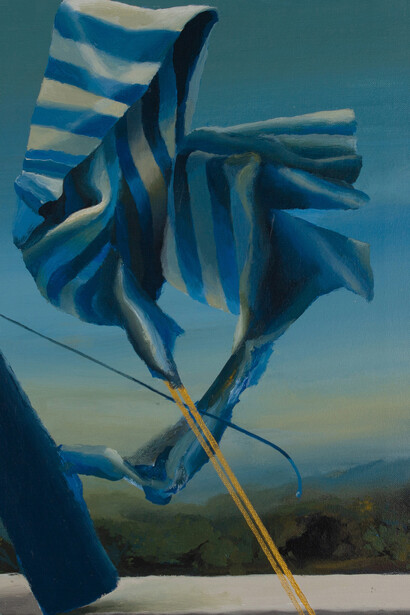
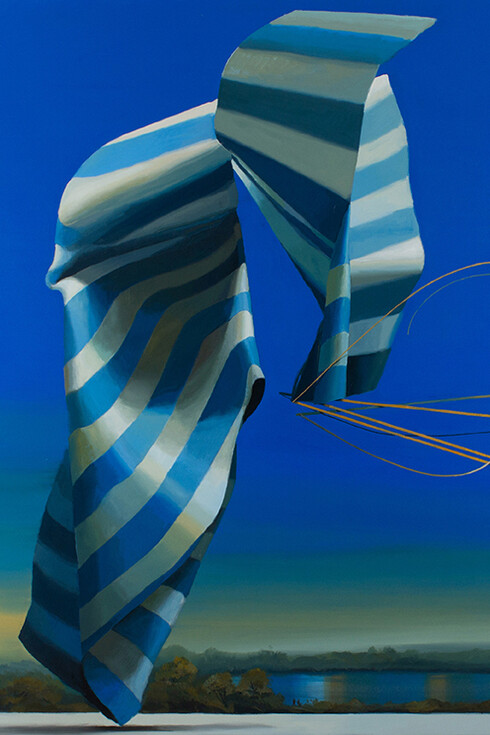
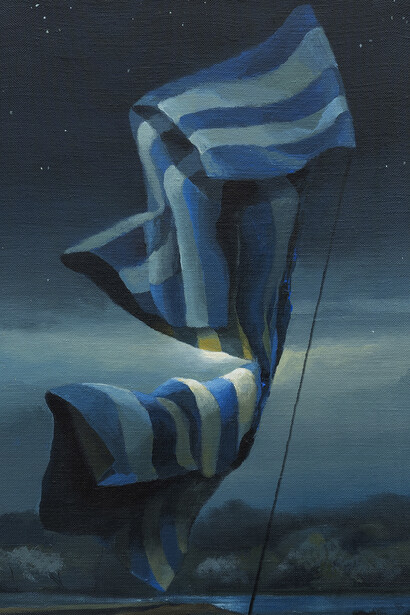
The project began with a painting Mestre made in 2017 and returned to this year. The solution he had found back then no longer convinced him, so he decided to keep working on it. The title breaks a flag down into its three parts: the pole, the cloth and the halyard. Named separately, they lose the political and identity charge we tend to attach to a flag, and opens up to other readings.
While painting, the artist kept a set of notes that accompany the exhibition. In them, three characters, A, P and D, buy a discounted awning to spend the day by a reservoir. The instructions promise it's easy to put up, but the wind picks up, the cloth slips out of their hands and ends up taking over the whole landscape. The awning becomes the main character of the story, and the three of them end up strolling unhurriedly as evening falls. In the paintings, Mestre pays particular attention to the shadows in the folds, which, as he explains, appear almost by themselves as he works. The wind changes direction and twists the fabric in ways no one can predict. It is barely visible, but it leaves its mark in every fold.
The notes also record the books and works the painter came across along the way, often after a painting was already finished. He cites Friedrich Theodor Vischer's novel Auch Einer, in which objects rebel against their owner; Giorgio Manganelli's La palude definitiva, which Mestre reads as a treatise on painting even though the book never mentions it; Michelangelo Antonioni's last short film, in which the director runs his fingers over the folds of Michelangelo's Moses; and The Dream of Ossian, the painting Ingres went back to thirty years later. John Ruskin, Joan Didion, Norman Mailer, Pascal Quignard and Juan Mayorga also appear.
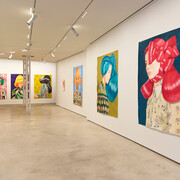
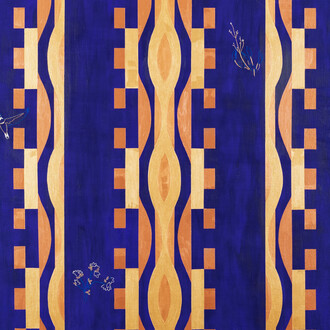
The exhibition brings together small-format works and three large canvases measuring 250 x 180 cm, all in vinyl tempera on canvas. Many of the smaller pieces sit in frames Mestre designed and built himself: six models in ebonised wood, with lobed and tabernacle shapes that recall the Baroque and work almost like stage sets around each scene.