English
 Español
 Français
 Deutsch
 Italiano
 Português
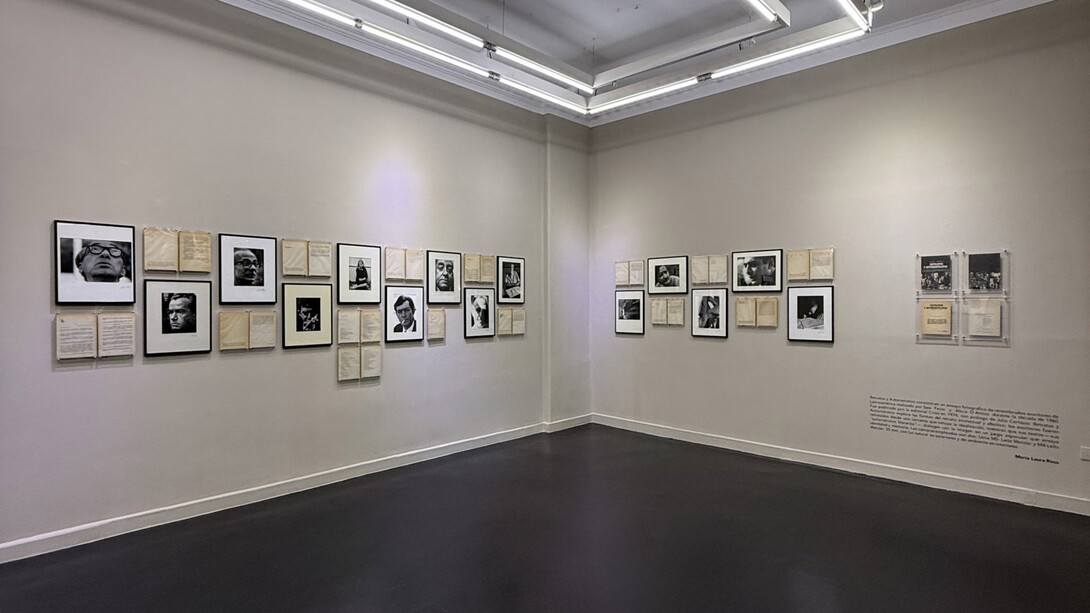
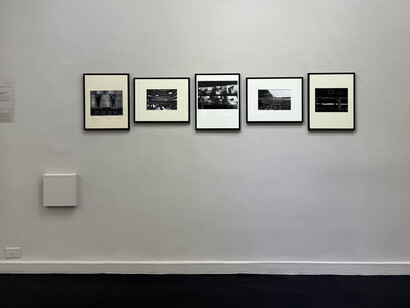
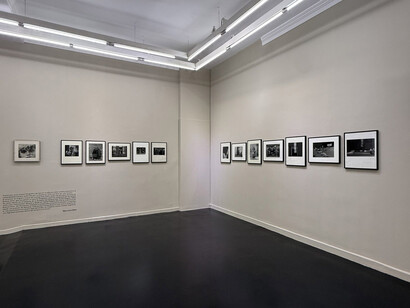
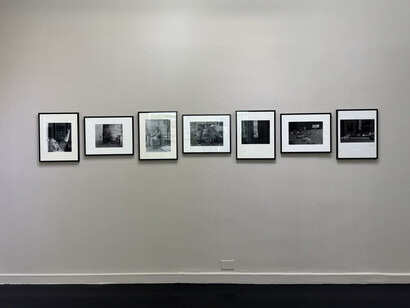
Rolf Art is pleased to announce, as part of the bicentennial celebrations of photography, the opening of Dafa, a tribute to two pioneers of Argentine and Latin American photography : Sara Facio (b. 1932–2024) and Alicia D'Amico (b. 1933–2001). The exhibition reunites these two artists for the first time in Buenos Aires, revisiting their trilogy of historic photographic essays produced in collaboration: Humanario (1976), Retratos y autorretratos (1974), and Buenos Aires. Buenos Aires (1968), in collaboration with the writer Julio Cortázar.
Titled in honor of the stamp they used as their signature in the early 1960s, the exhibition focuses on reviewing and bringing together a legacy conceived by both artists. Two archives that, only together, allow us to fully understand the artistic output of that era. Their shared vision made possible the creation of three emblematic bodies of work, which gave rise to the first Argentine photobooks.
Buenos Aires. Buenos Aires (1968) captures, in a lyrical and documentary style, the daily life of a city in transformation, weaving an urban narrative through anonymous scenes and minimal gestures. The city's identity is constructed from moments that go unnoticed; moments not meant to be portrayed, yet which in themselves carry the weight of Argentine identity. Portraits and self-portraits (1974) explores the forms of intellectual and affective portraiture: writers, artists, and cultural figures are portrayed with an intimacy that avoids idealization, while their texts—the “literary self-portraits”—engage in dialogue with the image in a mirroring game that explores identity and memory. Humanario (1976) is a moving and disruptive visual essay, created at the Borda Hospital (Buenos Aires) commissioned by the Buenos Aires Ministry of Health, which challenges our perspective on madness, exclusion, and dignity from a position of denunciation. Each person photographed in this series is evidence of the most perfectly human; far from morbid, the images reveal loneliness, fragility, and a violated dignity within confinement and silence.
Each of these series offers a distinct yet profoundly connected approach to the human experience. Their collaborative work—forged in artistic and emotional complicity—not only paved the way for subsequent generations but also solidified a pioneering, deeply humanist, and critical perspective. Through their lenses, Facio and D'Amico captured the pulse of an era, sensitively and lucidly crafting intimate and social portraits that marked a turning point in the visual history of Argentina. Their legacy transcends the images themselves: it is inscribed in the history of Latin American photography as a foundational gesture, transforming the personal into a means of narrating the political.