English
 Español
 Français
 Deutsch
 Italiano
 Português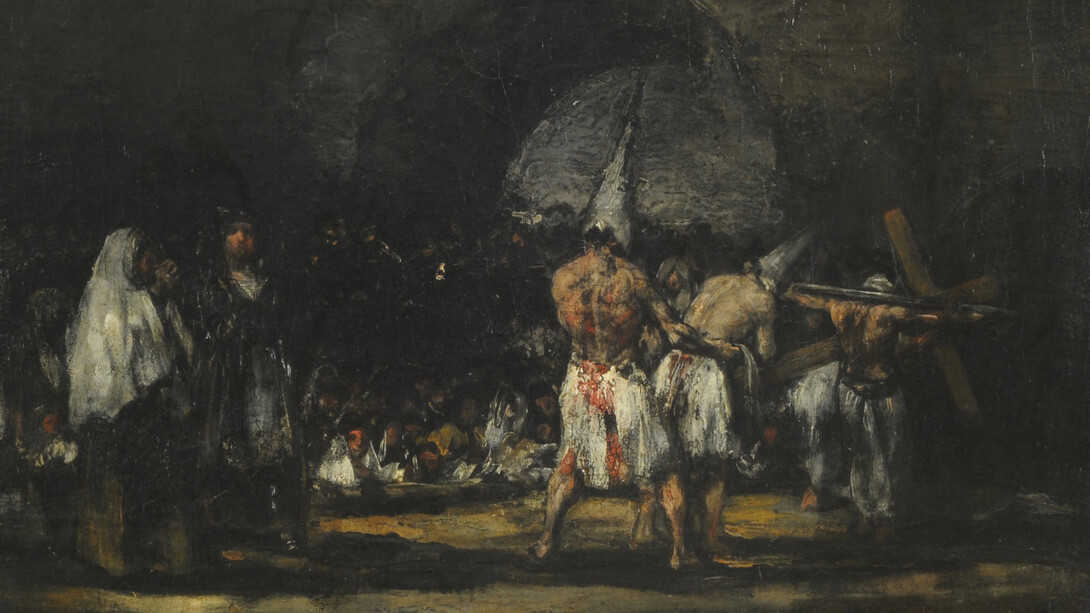
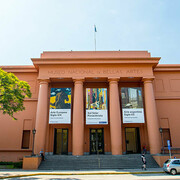
The National Museum of Fine Arts will open to the public on Tuesday, September 22, the exhibition Goya in Buenos Aires. Tapestries from the royal collections of Spain, presenting two large-scale pieces designed by the celebrated Aragonese painter and woven at the Royal Tapestry Factory at the end of the 18th century.
The works that Francisco de Goya y Lucientes (Fuendetodos, Spain, 1746–Bordeaux, France, 1828) designed between 1776 and 1788 come directly from the Gallery of the Royal Collections of Spain and will remain on display at the Bellas Artes until January 17, 2027, thanks to an agreement between the two institutions, with the support of the Callia Foundation, the International Council of Patrons of the Royal Collections, and the Embassy of Spain in Argentina.
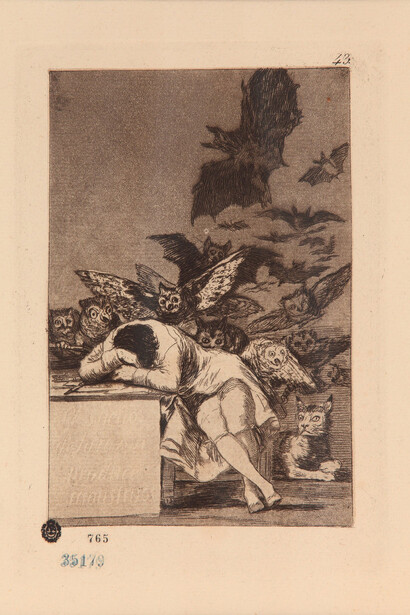
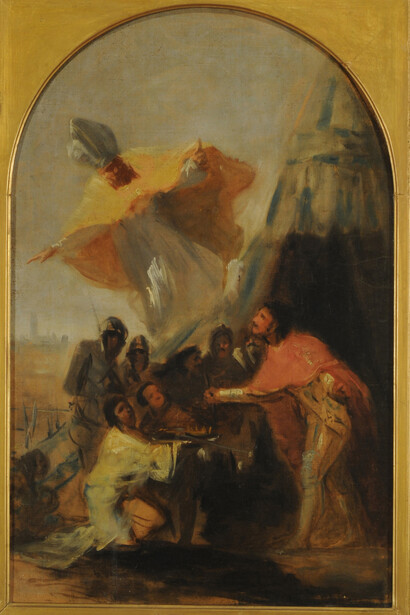
“The presentation of Goya’s tapestries is the result of the exchange between the National Museum of Fine Arts and the Gallery of the Royal Collections of Spain,” explains Andrés Duprat, director of the Bellas Artes. “The exhibition of these works expands the repertoire of the Spanish master and engages in dialogue with the pieces that make up the heritage collection, which began to take shape in 1906, when Eduardo Schiaffino acquired an initial group of four prints in Europe. Over time, this core was expanded with other paintings and complete series of etchings,” he adds.
“For this reason, we decided to place the tapestries in a room adjacent to the one that houses Goya’s works included in the permanent display. In this way, visitors can explore, in continuity, different facets of the Spanish artist’s production,” the director concludes.
The works on loan are part of seven series of designs for decorative tapestries, intended for the palaces of El Pardo and El Escorial, which Goya designed between 1775 and 1792 as part of an official commission. This collaboration marked the beginning of a close relationship between the artist and the court, which deepened in 1786, when he was appointed painter to King Charles III.
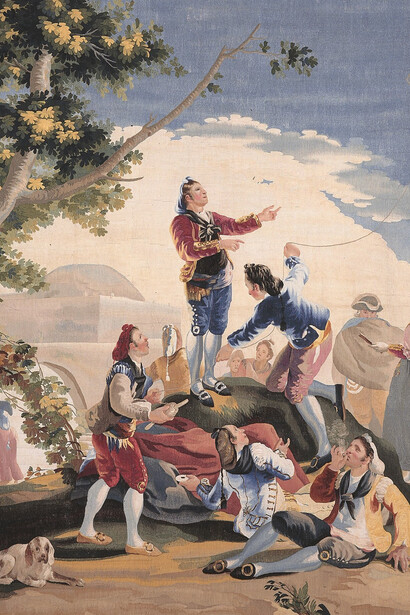
The first tapestry on display is titled The kite and was made by Goya between 1776 and 1778 to decorate the dining room of the Prince and Princess of Asturias at El Pardo. The second piece, The blind man’s bluff, is a design from 1788 intended for the bedroom of the infantes at the same royal palace. Both works depict scenes inspired by everyday life, popular games, walks, and typical rural and suburban pastimes around Madrid. Formally, these designs bring together, in an original way, features of the Rococo style, visible in the treatment of the textures of garments, foliage, and skies, with compositional structures that would characterize the later work of the Aragonese painter and printmaker.
“This loan represents a milestone for our young museum, inaugurated in 2023 next to the Royal Palace of Madrid, as it is the first time that a work from the Gallery has been presented in the Americas,” says Víctor Cageao, director of the Gallery of the Royal Collections. “For us, it is especially significant that these tapestries are inaugurating its presence on the continent, as they reflect an essential period in Goya’s career and his close relationship with the Royal Household, and because they form part of one of the ensembles of greatest historical and artistic significance in the Royal Collections.”
For her part, Carmen Reviriego, president of the International Council of Patrons of the Royal Collections and of the Callia Foundation, states: “It is a privilege that our first initiative in Latin America is taking place in Argentina and in collaboration with the National Museum of Fine Arts. It is also proof of how far public-private collaboration can go when institutions and civil society share the same commitment: preserving our heritage, bringing it closer to new audiences, and strengthening, through culture, the ties between Spain and Latin America.”

![Various artists, La memoria de la colección. El Moderno en el parque [The collection remembers: the Museo Moderno at Parque de la Memoria], exhibition view. Courtesy of Museo de Arte Moderno de Buenos Aires](/attachments/d292b175cb675e87e5e0bc4f1db740c9e6fcfbe7/store/fill/330/330/5bd19cc5226872f7bb4139c896d817d255dad63113d554be1b333dde96bb/Various-artists-La-memoria-de-la-coleccion-El-Moderno-en-el-parque-The-collection-remembers-the.jpg)