English
 Español
 Français
 Deutsch
 Italiano
 Português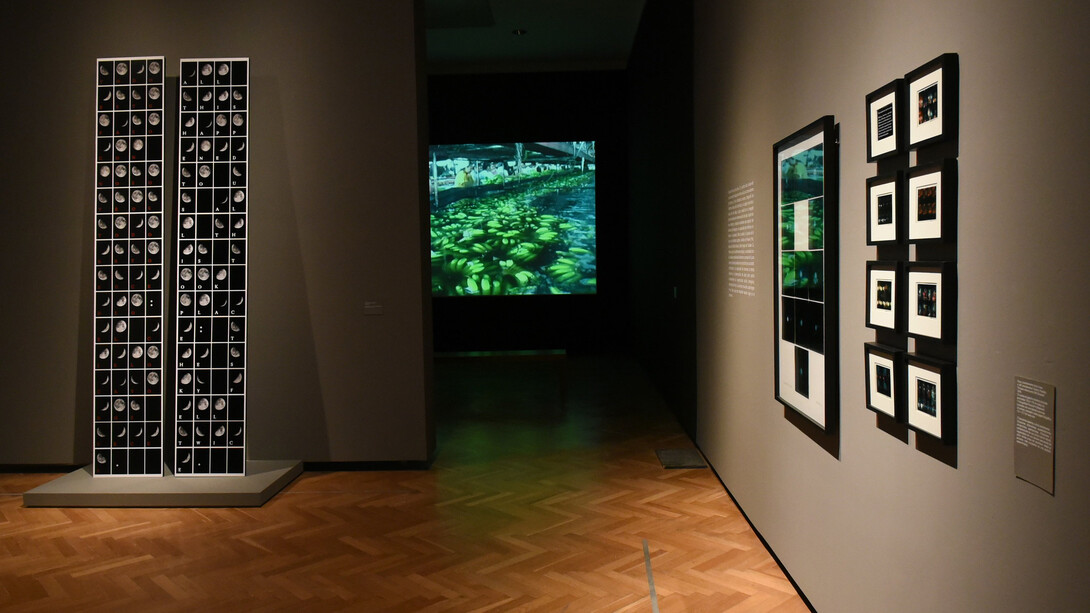
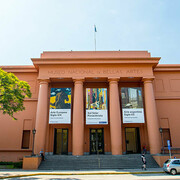
The National Museum of Fine Arts will inaugurate on Tuesday, September 8 at 7 p.m. the anthological exhibition Leandro Katz. The night and the words, dedicated to the Argentine visual artist, filmmaker, and writer, curated by Francisco Lemus and Mariana Marchesi.
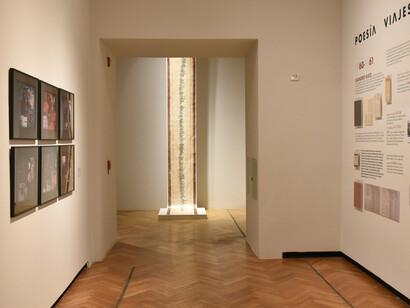
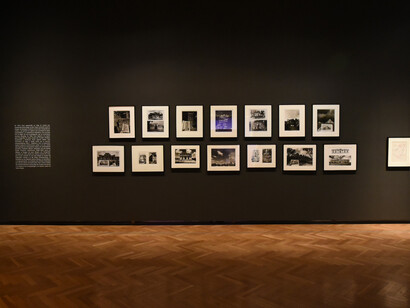
In the Museum’s first-floor galleries, the exhibition traces Katz’s (Buenos Aires, 1938) career through installations, photographs, films, prints, and artistic research from various series produced since the 1960s and brought together for the first time.
“We are honored to present the first anthological exhibition of Leandro Katz (Buenos Aires, 1938) in an Argentine museum. Katz is an artist of great originality and international reach who lived in New York between 1965 and 2006,” says Andrés Duprat, director of the Bellas Artes. “Throughout his career, he developed a body of work connected both to the American scene of counterculture and conceptual art and to various Latin American traditions and issues,” he adds.
“An important part of Katz’s thinking was consolidated during the journeys he undertook in the 1960s through Argentina and Central America. During these travels, he became acquainted with the worldviews and systems of representation of ancient American peoples, knowledge that he incorporated into aesthetic explorations aimed at recording visual and linguistic phenomena,” the director notes.
“Built upon the—masterful—overlapping of historical times and events and the search for poetic ways of capturing reality, Katz’s production can be read as an attempt to recover what is lost when Latin American history is viewed from the outside,” Duprat concludes.
“Since the 1960s, Katz has constructed his work as a poetic exercise at the intersection of image and writing,” the curators point out. “Unlike other Argentine artists of his generation, his starting point was the continent itself, its cities and archaeological sites, particularly the Mayan regions of Guatemala. Through his research into the ancestral, Katz anticipated debates that would take decades to become urgent: questioning Eurocentric modernity, valuing cultural diversity, and denouncing the extractivist logics imposed by colonialism.”
“For the artist, nature was always a field of knowledge. The observation of lunar phases, the cycles of the sky, and the rhythms of the natural world became material for his work, a language that preceded all human writing,” Marchesi and Lemus state.
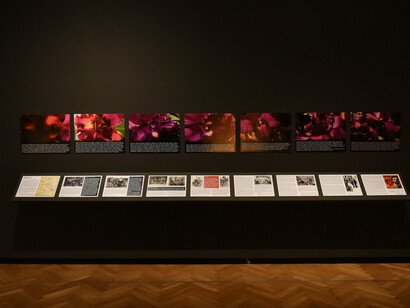
Alongside documents and publications from different stages of his literary production, the galleries will feature works by Katz from emblematic series such as The Catherwood project, Lunar alphabets, and Columns of language. Photographic compositions from the 1970s will also be exhibited, including A journey by canoe, Twenty seconds in the life of a palm tree, and The fall, as well as the films Los Angeles station (1970), the artist’s debut, Lunar notes (1980), Judas’s window (1982), and Paradox (2001).
The film The day you’ll love me will also be presented, an artistic research project dedicated to Bolivian photographer Freddy Alborta, author of the image of Ernesto “Che” Guevara’s body, as well as the installation Project for ‘The day you’ll love me’ – Version I with feathered camera (1990), which Katz donated to the Bellas Artes collection upon receiving the National Award for Artistic Career in 2020/2021.
In addition, the installation Achatinella alphabet (1982), created with snails and chromogenic prints mounted on steel, will be displayed in the central hall on the ground floor.
![Various artists, La memoria de la colección. El Moderno en el parque [The collection remembers: the Museo Moderno at Parque de la Memoria], exhibition view. Courtesy of Museo de Arte Moderno de Buenos Aires](/attachments/d292b175cb675e87e5e0bc4f1db740c9e6fcfbe7/store/fill/330/330/5bd19cc5226872f7bb4139c896d817d255dad63113d554be1b333dde96bb/Various-artists-La-memoria-de-la-coleccion-El-Moderno-en-el-parque-The-collection-remembers-the.jpg)