English
 Español
 Français
 Deutsch
 Italiano
 Português
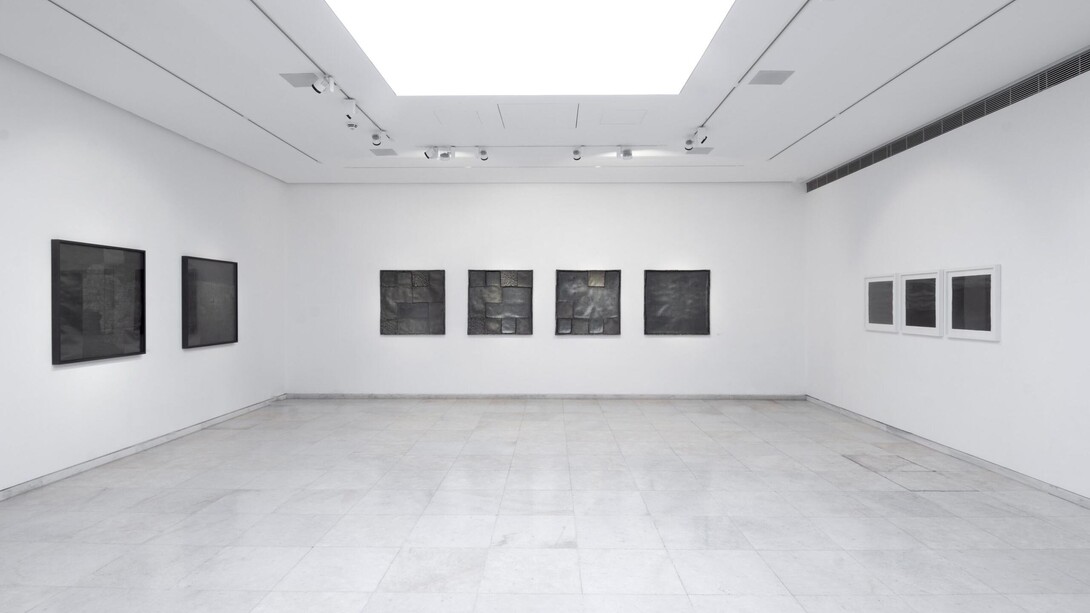
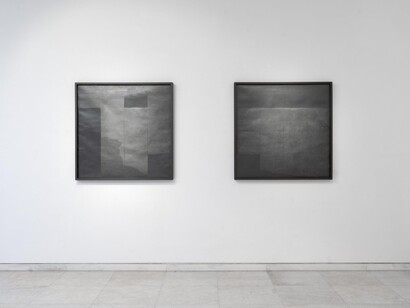
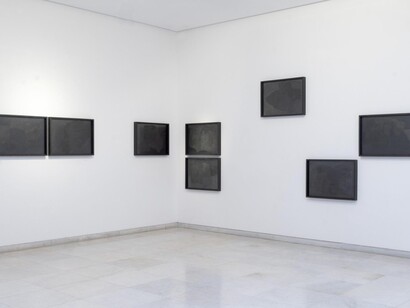
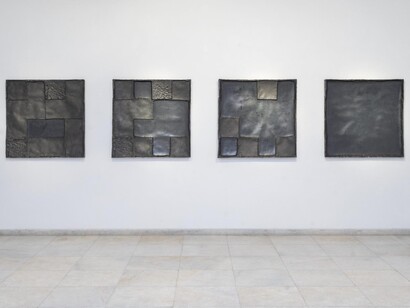
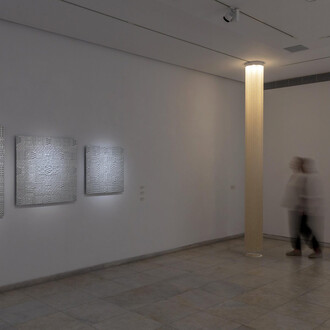
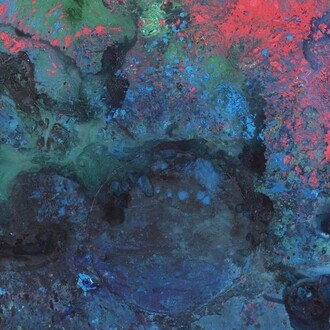
Zoumboulakis Galleries presents Edge along below, Nikos Topalidis’s second solo exhibition at the gallery. The exhibition features a new body of works in graphite on paper.
Art historian and curator Christoforos Marinos writes in the accompanying exhibition text: “Nikos Topalidis’s edge along below at Zoumboulakis Galleries focuses on an archaeological approach to the landscape and on the excavatory process of painting itself. Whilst in his first solo exhibition, in 2023, he invited us on a ‘walk along the shore’ in his new exhibition Topalidis urges us to move cautiously towards an unseen, unknown and uncharted ‘below’, which is revealed gradually and very slowly.
The English word “along,” present in both titles, suggests continuity and the cohesive relationship between the two exhibitions. More precisely, the current exhibition constitutes the second part of a trilogy. Over the past decade, the artist has been developing an extensive body of work organised into three parts, beginning, middle and end—which are worked on concurrently. The first part, centered on landscape, was presented in his 2023 solo exhibition; the second concerns archaeology within this imaginary or mnemonic landscape; and the third will encompass the findings of this particular excavation. We therefore find ourselves in the middle of an evolving body of work that unfolds over time and is defined as much by the past as by the future.
The body of work Topalidis presents in the current exhibition occupies an in-between space, somewhere between landscape and archaeological find. What the works explore is inseparable from the process through which they are made. Here, too, we encounter certain landscapes, connecting threads with the previous exhibition; yet the angle of vision has changed, and with it, the experience. In the works of edge along below, the horizon is absent.
Even when a raised horizontal line seems to suggest it, the gaze is directed towards the ground. It is the lowered gaze of the Saturnine man, who ‘digs into the ground with his eyes’ —a gaze that, in Walter Benjamin’s terms, carries something of the melancholic’s bearing. bears something of the melancholic disposition: rather than losing itself in a distant view, it becomes fixed on what lies close to his feet, on stones and fragments. The landscape acquires depth, and contemplation is replaced by a view from above, by a vertical movement—a descent—into the interior of the ground”.