English
 Español
 Français
 Deutsch
 Italiano
 Português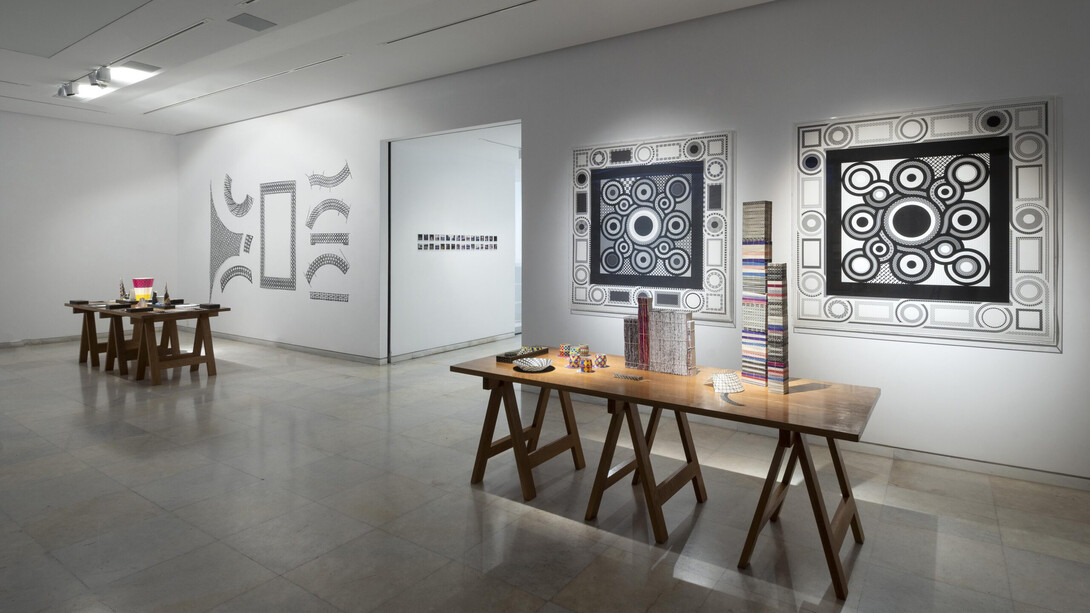
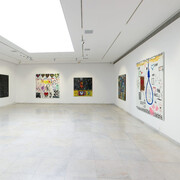
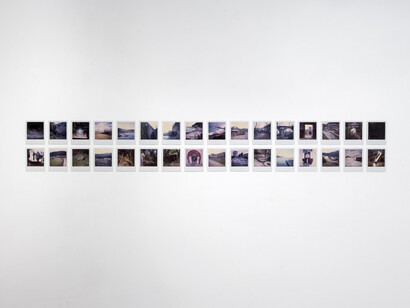
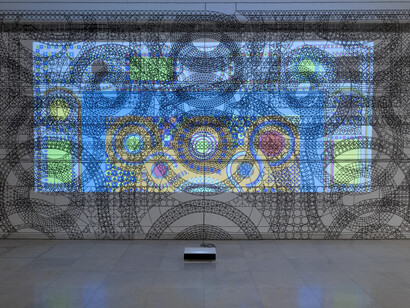
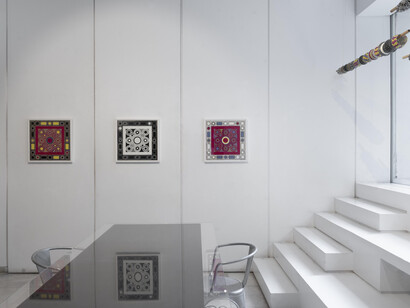
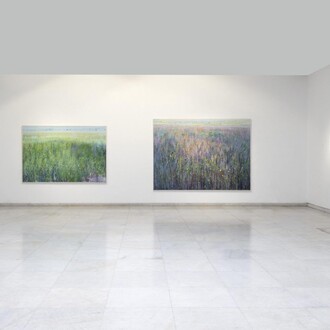
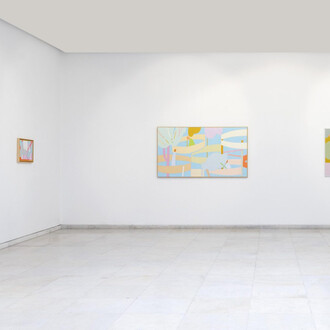
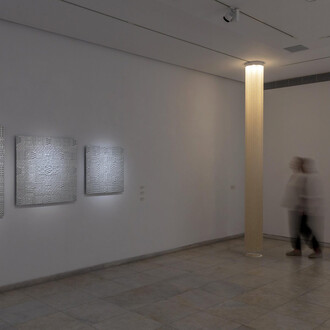
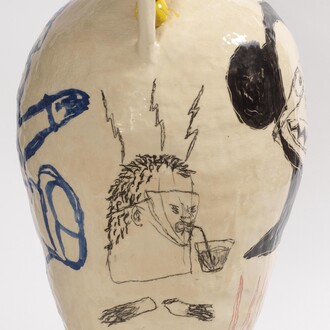
Zoumboulakis Gallery presents Nikos Alexiou’s exhibition The end. A study on the infinite, curated by Christoforos Marinos. On the occasion of fifteen years since the artist’s death, the gallery brings back a part of his iconic work The end, which represented Greece in the Venice Biennale in 2007, highlighting its timeless relevance despite the distance that separates us from those days. The central installation and projection are framed by a selected series of Alexiou’s works.
The art historian and curator Christoforos Marinos notes: “The re-exhibition of The end, almost 20 years later and in a new version, cannot be separated from the absence of Nikos Alexiou himself, who passed away prematurely in February 2011. Today, his work – in which he poetically and fairly enigmatically illustrated the end – is called upon to exist without the presence of the one who continually activated it with his gesture and his thought. That absence, however, does not turn The end into a memorial relic; on the contrary, it makes its fundamental property, as a manual practice functioning in time, even more visible. Nothing closes permanently; anything that reappears lives only through its reframing. To Alexiou, the experience of a work of art is based on an “oblique” relationship, on a journey where the gaze doesn’t dominate but meanders and returns. Even in the 2007 interview, Alexiou already spoke of the end not as closure but as a moment of concentration: approaching the end, what has come to pass before becomes clearer, since it is the end that reveals the journey rather than the inverse. Today, that thought gains a different gravity, The end, without its creator present, develops now around memory, absence and void, shifting the weight from gesture to trace.
The new version of The end at Zoumboulakis Gallery is a reframing more than a retrospective gesture. The work’s reappearance boldly brings back the question of the relationship between the end and the infinite. What is displayed has been designed, all along, to transform, to adapt to new spaces and to function in a different chronological framework, without losing its core. In an age where the end is often experienced as rift or exhaustion, the work of Alexiou advocates a different perception: the end as a ritualistic point of contact with the living form – with what Henri Focillon described as “the life of forms”. Seeing it again today, in an age of acceleration and constant consumption of images, means to approach it as a proposal for another temporality. It is a work that’s open, in a state of constant presence; forever here, as an artistic vision that survives, transforms, and returns.”