English
 Español
 Français
 Deutsch
 Italiano
 Português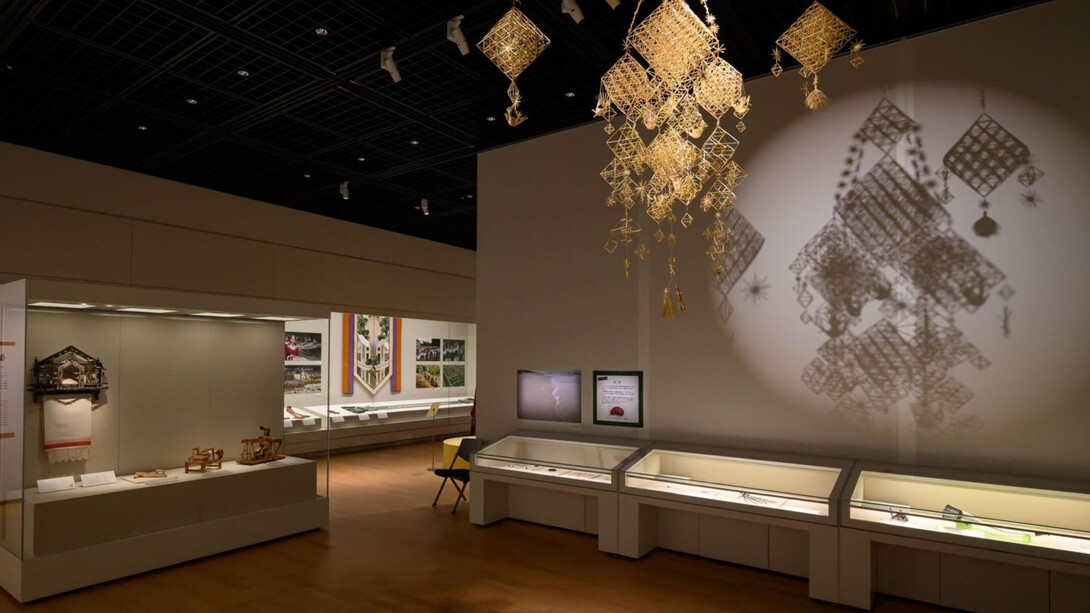
The forest and the song – two images that have stayed alive in Lithuanian culture and historical memory for centuries. Both had their part in the pursuit of freedom, from the partisan resistance to the Singing Revolution.
These two threads carry the first exhibition of this scale devoted to Lithuanian history and culture in Japan. It was prepared for an audience that so far knows little about Lithuania and whose historical experience is a different one: Japan was shielded from outside invasion for centuries by the geography of its islands, while Lithuania, caught between the interests of larger powers, has repeatedly had to fight for its political and cultural survival. The conversation therefore begins with what the two cultures share – closeness to nature and loyalty to tradition.
The story unfolds in three layers: everyday life, celebration, and the fight for freedom.
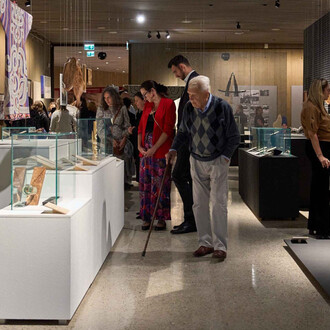
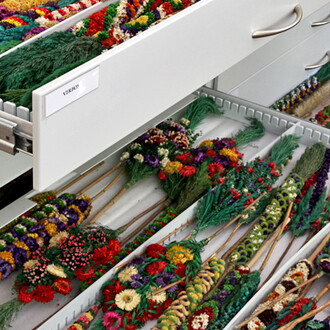
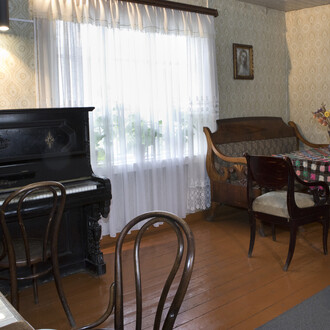
Forests, which cover a large part of the country, shaped the Lithuanian way of life, its traditions and its art. The exhibition presents archaeological finds, wooden household objects and folk carvings: towel holders and furniture decorated with plants and birds, spinning tools, wooden toys carved for children. In the patterns of linen textiles are diamonds, crosses and stars, which stood for cosmic order, protection and continuity.
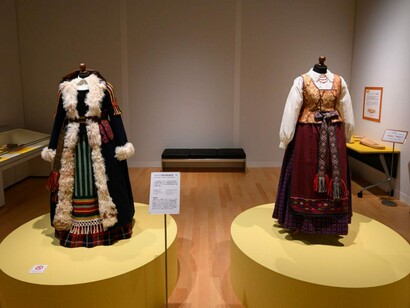
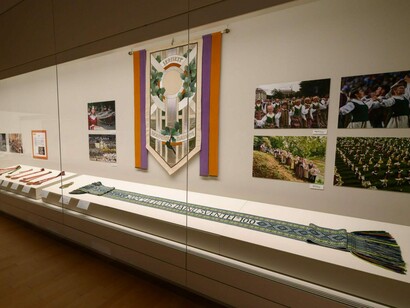
The second thread is the culture of singing. Visitors will encounter the Lithuanian Song Celebration, inscribed on the UNESCO list of intangible cultural heritage and still bringing thousands of participants together. Colourful folk costumes, musical instruments and archival recordings show how singing together gave form to a sense of community, and what it came to mean in the struggle for independence.
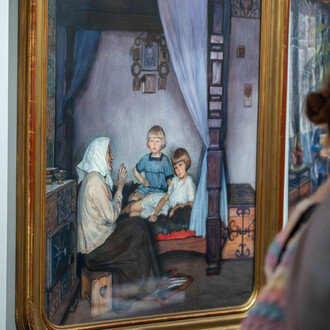
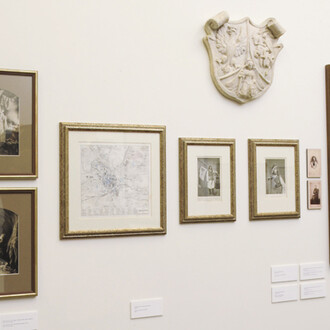
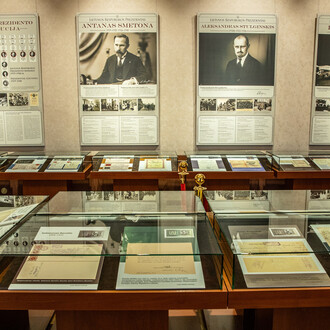
The historical section runs from the Grand Duchy of Lithuania, which in the Middle Ages stretched from the Baltic to the Black Sea and held together different peoples and religions, through the 1569 union with Poland to the partitions at the end of the 18th century. Japanese visitors will learn about the ban on Lithuanian printing in the Latin alphabet, and about how former citizens of the Polish–Lithuanian Commonwealth resisted both by arms and by culture – book smuggling and the preservation of the language proved no less important to statehood than the uprisings.
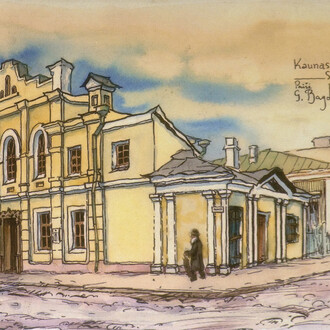
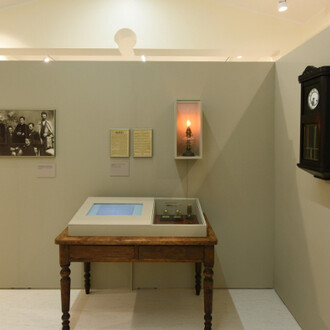
A separate part of the exhibition is devoted to Chiune Sugihara’s work in Kaunas. Serving as Japanese vice-consul there in 1939–1940, and at risk to his career and his life, he issued transit visas to Jews and helped them escape Nazi persecution. The exhibition is shown in the city where he spent his childhood and school years.
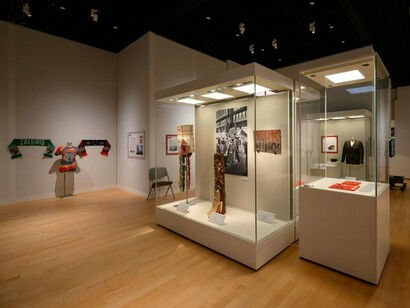
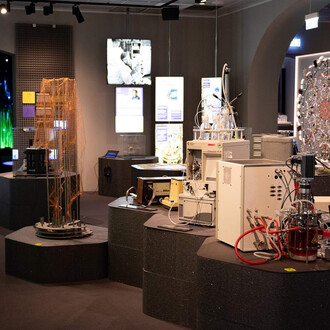
It closes with Lithuania today – its leading position in laser technology, its food culture, its achievements in basketball.
The exhibition was prepared from the outset by curators of the Nagoya City Museum and the National Museum of Lithuania; the objects on display come from the National Museum’s collections.