English
 Español
 Français
 Deutsch
 Italiano
 Português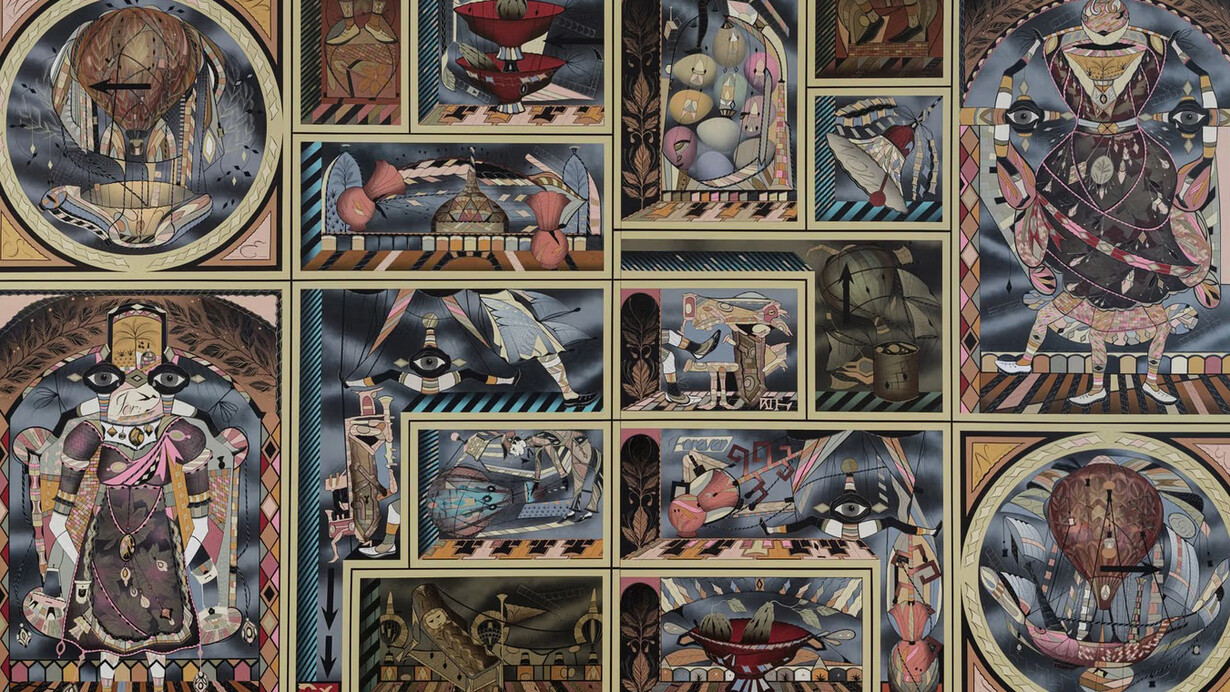
Lehmann Maupin is pleased to present Lari Pittman’s solo exhibition The remedy of analog space and time, unveiling a new body of work by the Los Angeles-based painter featuring twelve new paintings and ten works on paper. Few living artists have shaped the language of contemporary painting as profoundly as Pittman. These paintings show Pittman further refining his distinctive visual language, which draws on a wide spectrum of historical and pop culture sources to create works that continue to offer new aesthetic and narrative possibilities. At a moment when questions of identity, craft, decoration, and the politics of image-making are once again at the forefront of cultural discourse, Pittman’s work feels especially resonant and timeless.
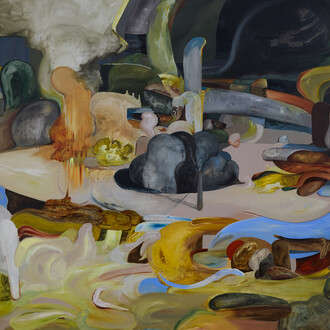
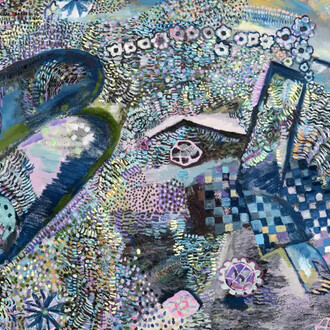
Pittman is known for his dense, exuberant works that mine the rich tableaux of fine and applied arts, decoration, design, and architecture. He has lived in Los Angeles for five decades, but spent much of his childhood in Colombia, his mother’s home country, and his work has consistently reveled in and reflected the vibrant multiplicity of both Los Angeles and Latin America. He builds his often-delirious compositions from disparate elements: streets signs, textiles, storybook illustrations, cityscapes, dream imagery, and bits of text in several languages that directly address the viewer.
In his early work, Pittman directly addressed specific issues such as LGBTQ+ and civil rights struggles, the AIDS epidemic, and gun violence. A frequent refrain is the legacy of colonialism, both the violence, horror, and rupture, as well as the syncretic cultural expressions that have emerged in its wake. Over the past couple of decades, his work has taken on a more philosophical tone, exploring themes of perception and identity, though it is no less insightful and profound in its confrontation with our contemporary moment. He has been the subject of several prominent solo museum exhibitions including at the Jeonnam Museum of Art, Gwangyang, South Korea (2025); Long Museum, Shanghai, China (2024); Museo Jumex, Mexico City, Mexico (2022); and Hammer Museum, Los Angeles, CA (2019).
Studying at California Institute of the Arts in the mid-1970s, he drew inspiration from the feminist art program there, which celebrated historically underrecognized artforms traditionally associated with women artists. While Pittman challenges canonical hierarchies in his own work, his process remains rather traditional. He works alone, as he always has, mixing colors and applying paints by hand, either with a brush, roller, or spray can, without the aid of computers or assistants. Despite his solitary practice, he is a longtime educator, having mentored countless younger artists over his decades-long career teaching at UCLA.
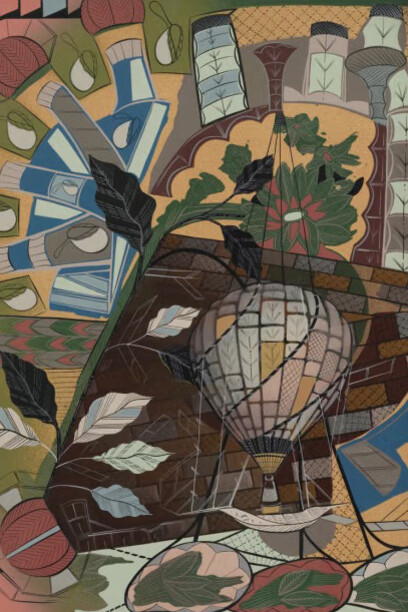
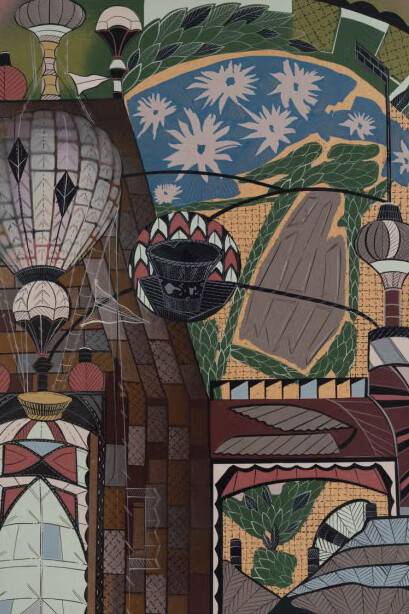
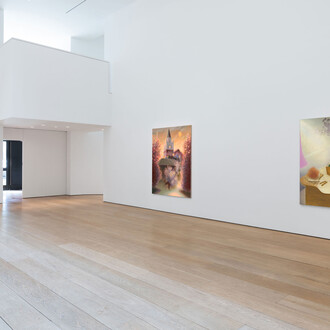
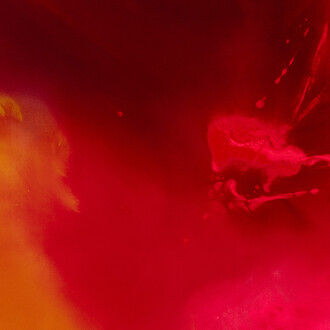
In The remedy of analog space and time, Pittman envisions a world in free drift, like hot air balloons cut loose from the ground. The new works propose expansive alternatives to the increasingly proscriptive and repressive structures that shape our lives, suggesting possibilities for genesis, creation, and renewal. Their enchanting, hand-painted surfaces force us to slow down, as we wander through the dense visual fields, getting lost in tangents and cul-de-sacs, before emerging on new paths. Eschewing a singular, linear reading, they encourage us to consider, as Pittman says, the “philosophical complexities of irresolvability.” The central motifs in these works are travel and escape, asserting the liberatory potential of geographic and chronological wanderings. The hot-air balloon is a recurring protagonist, a solitary figure striking out on its own amidst an undefined, spray-painted miasma.
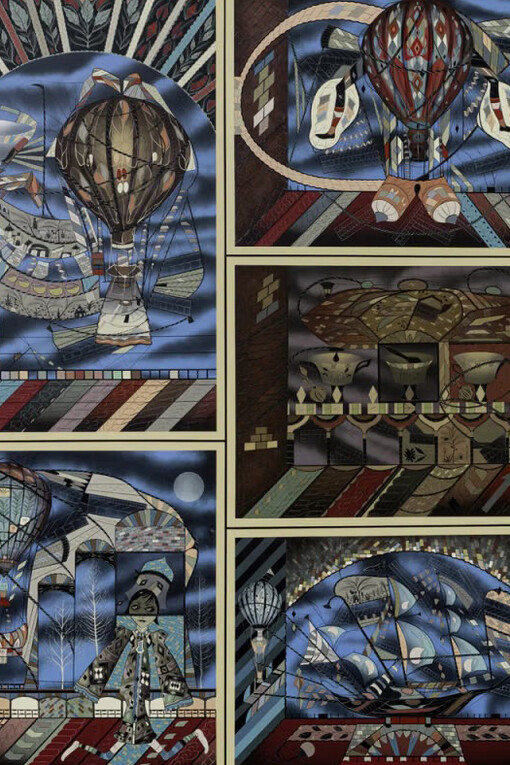
The two largest paintings in the show, each 8 x 10 feet, emulate the form of a Cabinet of Curiosities—Wunderkammer in German or its painted variant, Munbangdo in Korean. Historically, these encyclopedic displays juxtapose elements from the realms of nature and culture: fossils, artifacts, and oddities. Dividing the panels into several discrete compartments, Pittman creates his own “wonder rooms,” pulling freely from global art history—from ancient Etruscan ceramics to Japanese ukiyo-e prints—mixing illustration, pattern, and symbol. The paintings suggest various narrative possibilities without prescribing a specific direction, allowing the viewer to chart their own course through the motley medley.
Set against a backdrop of contemporary political unraveling, these works refuse nostalgia or resolution. Instead, they offer slow time, ornamental density, and symbolic ambiguity as counterweights to collapse. In this suspended atmosphere, Pittman crafts a poetic response to disintegration, not by restoring order, but by imagining what becomes possible when we let go.