English
 Español
 Français
 Deutsch
 Italiano
 Português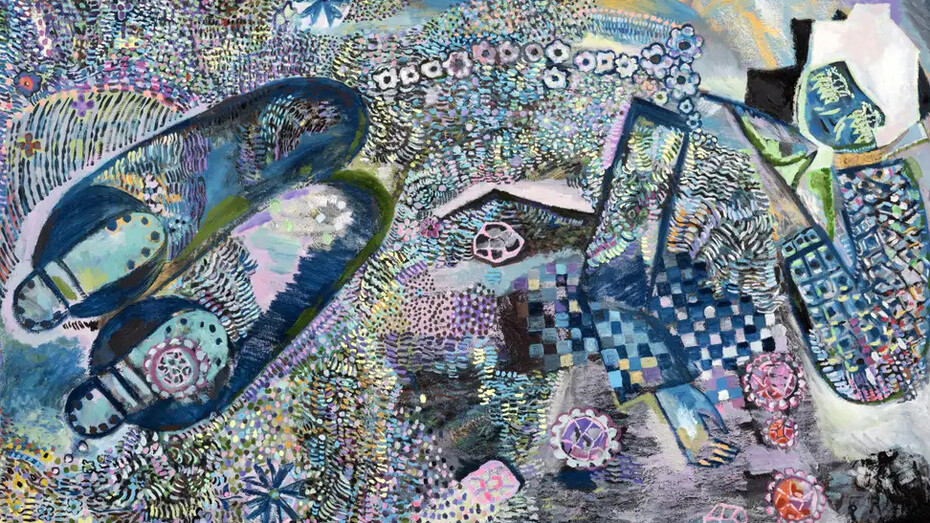
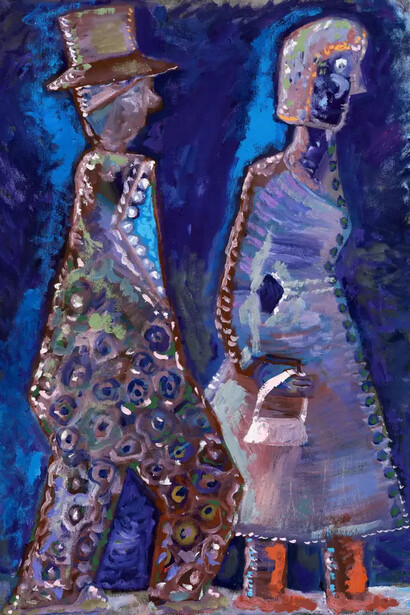
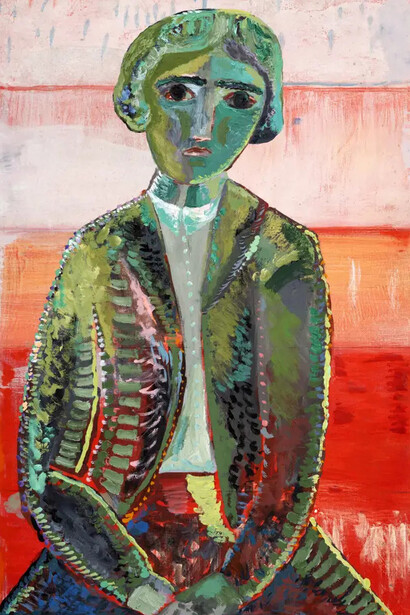
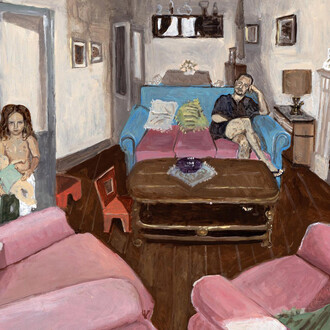
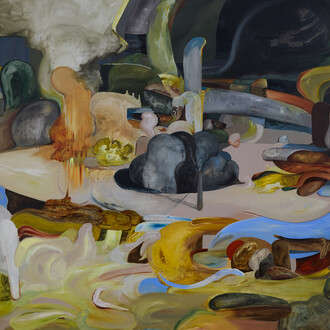
Harkawik is delighted to announce Diamond garden for Cornelia, our third exhibition with Bay Area painter Karen Barbour. Some of these canvases have been with Barbour since the 1980s, when she was working in New York, and she has returned to them across the decades since: first realistic scenes from her life, then the blocky, dismembered bodies, then abstractions, each growing out of the one before.
Images come to Barbour almost daily, and she paints them quickly, before they fade. Others come from her reading. The title painting, Diamond garden for Cornelia (Amongst the Elvers), began with a story about elver eels that grew so precious after a tsunami that a single bucket could be worth a fortune. The elver trade slips into aspects of the diamond trade and the long, feverish search for rare stones and ores buried in the earth, and these stories found their way into a quip to Barbour’s niece, Cornelia, that one day she would make her a diamond garden. In Barbour’s family, only the second daughter of each generation may be named Cornelia, and the name has passed from her great-grandmother to her grandmother, then to an aunt, a cousin, and her niece. Under a stormy blue and ochre sky, two long blue ovals lie side by side like sisters, a first daughter and a second, the one who will be Cornelia. Faceted pink and red stones glint around them like diamonds pulled from the earth, a strand of white blossoms loops overhead like pearls, and at right, a checkered figure wears her grandmother’s white hair.
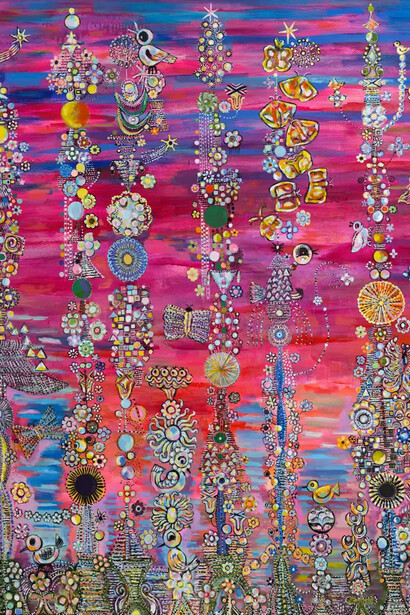
Barbour’s stalks are where these two kinds of inheritance meet. She builds them as structures for holding things, and they grow the way a family tree does, each bloom a place to keep a memory, a name, or an object she cannot let go of. Up close they are jewelry; from across the room they become a skyline, or a family lined up for a portrait, fidgeting. In Phantasmagorical flower landscape, they climb through a sky streaked hot pink, magenta, and blue, strings of jeweled blossoms, beads, and ladybugs budding into remnants of brooches from the 1950s and ‘60s. In Flowering in sufficient abundance / Body structure, they reach back forty years to the clunky body shapes Barbour painted in New York, rising against an acid yellow ground as a body taken apart, a row of scepters, a bouquet of stalks, and an alpine walking stick, in case the climb gets steep.
Barbour keeps many paintings going at once, moving among them with a single color and adding it wherever it is needed; figures leave for years and come back without explanation. In Man and bird in landscape with lanterns, a dismembered idea of the Greek philosopher Diogenes comes slowly forward through a field of lavender, blue, and ochre rosettes, led by his red heart, before slipping back into the crowd. He is easiest to find by not looking for him directly, which suits a man who spent his life searching with a lantern for something he never found. Nothing in these paintings is thrown away, only grown over, the way a garden grows over what came before it. To spend time with them is to walk through a family tree in full flower, every branch remembered, every blossom set where it belongs, and somewhere among them a diamond garden still being tended for the next Cornelia.
(Text by Sierra Pittman)