English
 Español
 Français
 Deutsch
 Italiano
 Português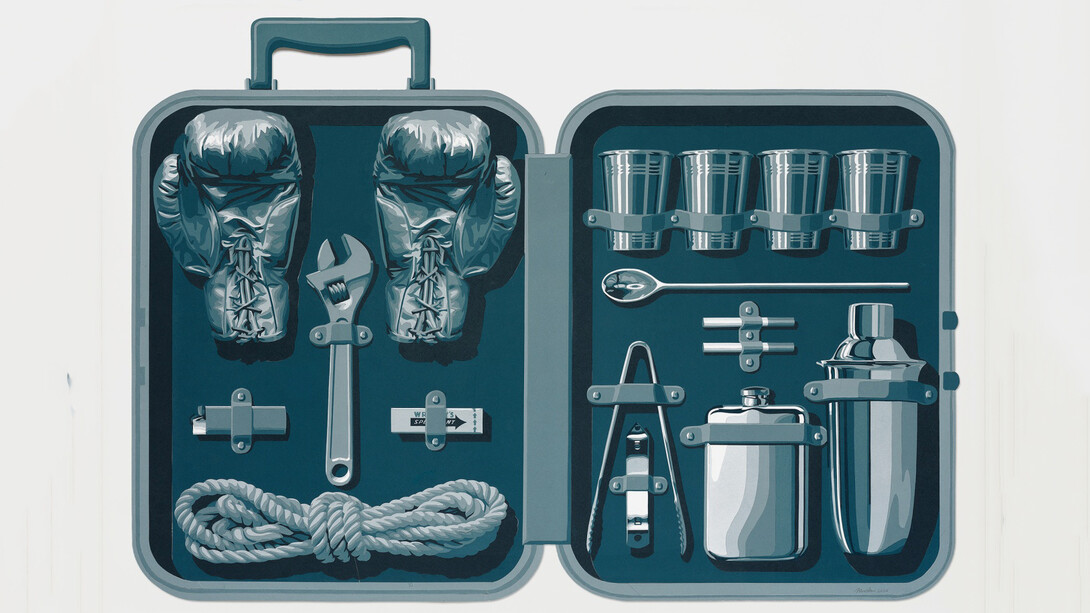
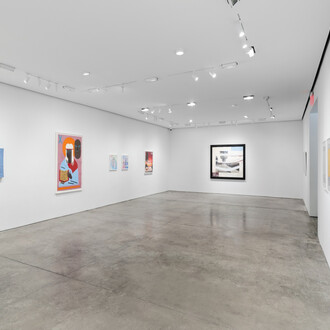
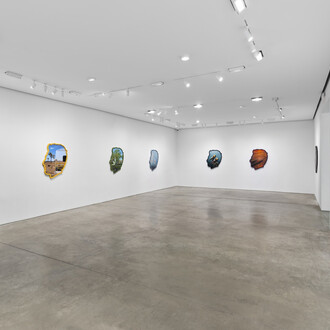
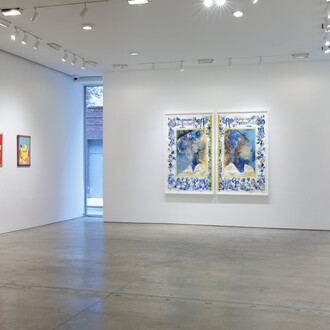
Pace Prints presents Lonely but free I’ll be found, an exploration of blue-toned collage and editioned works by Nick Doyle, examining the contradictions of American life through its familiar icons. With bold, graphic depictions of everyday objects, Doyle takes a clear-eyed survey of American masculinity and the emotional cost of indoctrinated self-reliance. Rendered in his signature jean-blue palette, the works draw on the tropes and promises of American life: escapism, risk/reward, and the mythology of the self-made man. Artwork and additional exhibition information to come.
This masculine ideal provides a lens through which to consider America’s current political turns toward seclusion. The insistence that a man should need no one finds an echo in a nation that regards its ties to others as a constraint on its freedom. Within the rhetoric of “America First,” self-sufficiency becomes a measure of power, while cooperation and mutual reliance are cast as vulnerabilities. Doyle’s examinations bring the costs of this posture into focus, asking what happens when the pursuit of individual freedom becomes a national unwillingness to acknowledge obligation to others.
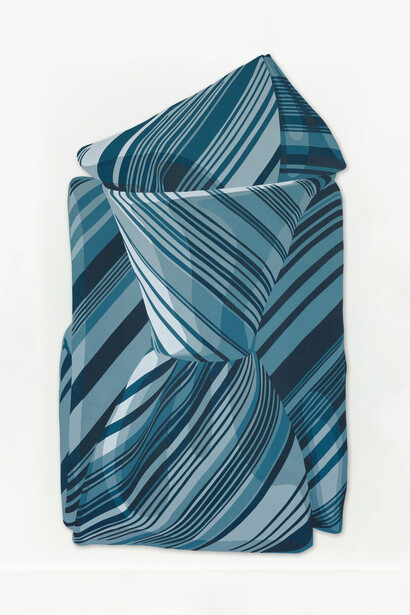
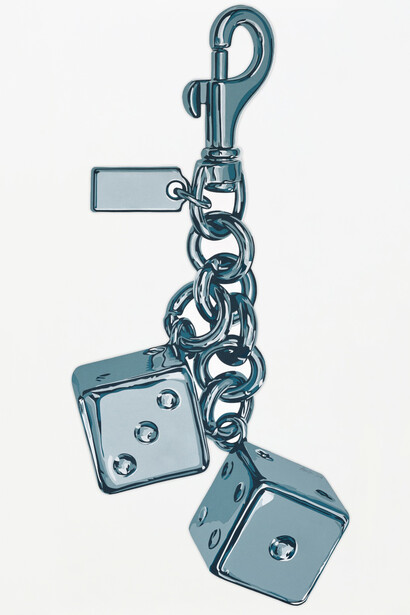
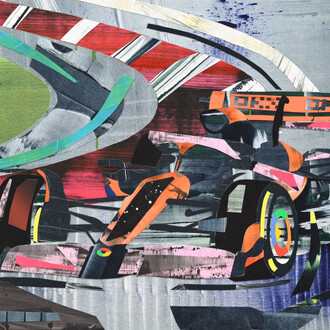
These questions of American identity extend to Doyle’s choice of material and color. Blue tones connect his work to denim, the artist’s primary material, and its associations with American labor, identity, and everyday dress; the hue also acts as a filter, unifying disparate objects and carrying the emotional association of sadness. Doyle approaches his practice as an act of construction, developing compositions digitally before breaking them into individual shapes and reassembling them in physical materials. Each subject is translated into carefully arranged fragments of color and texture. This process of assembly finds a natural extension in printmaking, drawing on his longstanding interest in how images are reproduced and circulated.
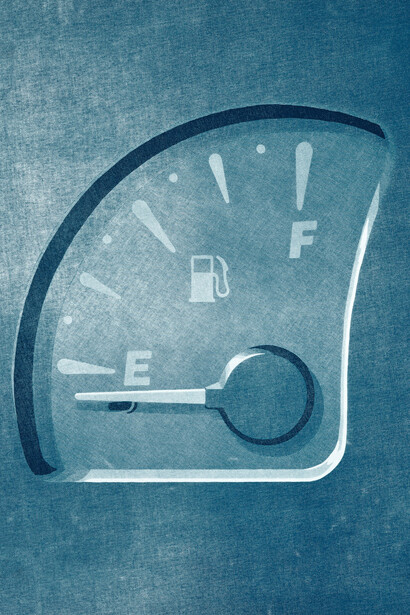
A lottery ticket, a neatly folded shirt, a gas gauge on empty, and a Coca-Cola machine bring emblems of Americana into dialogue, linking the promise of possibility with the impulse to escape. These images take on a plaintive quality as Doyle considers the emotional isolation underlying the ideal of a man without obligations. Stoicism and a willingness to risk everything become markers of independence, even as they undermine the connections that sustain an individual and a community.
Doyle’s upfront presentation and flat expanses of color make his work immediately recognizable, while clever shifts in context unsettle familiarity. Together, the collages and editions consider how deeply American ideals are embedded in the objects that surround us. Through images at once iconic and personal, Doyle brings the loneliness beneath the promise of freedom into view.