English
 Español
 Français
 Deutsch
 Italiano
 Português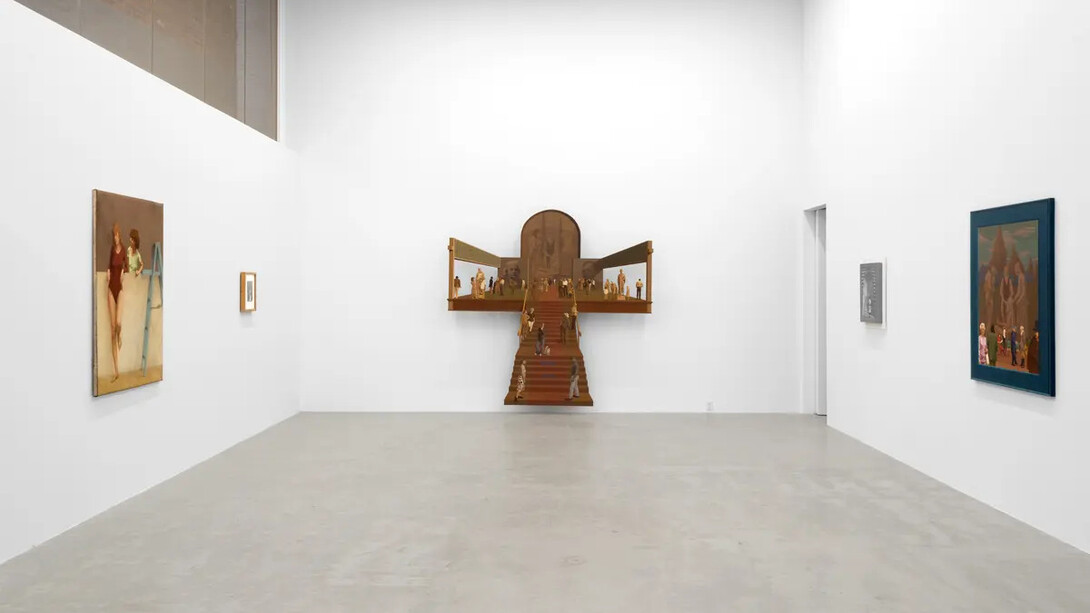
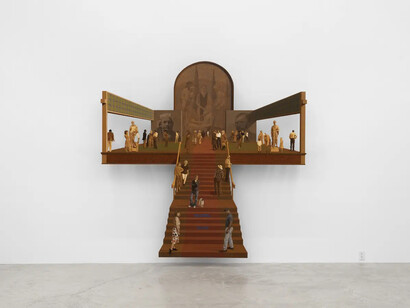
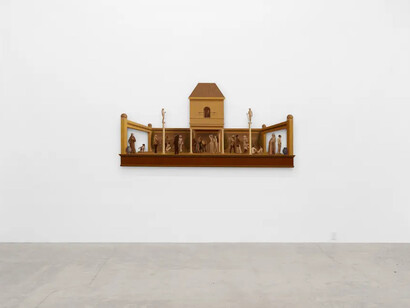
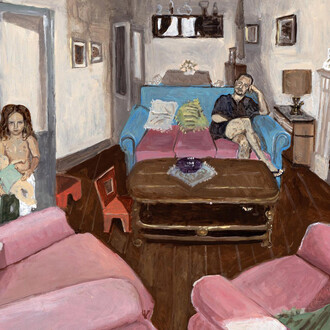
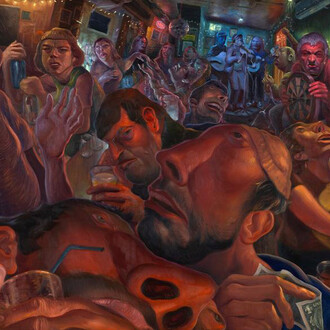
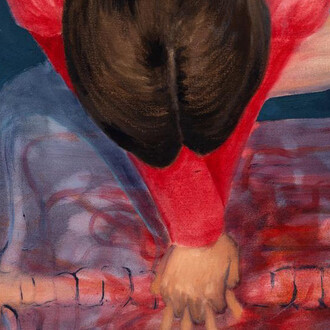
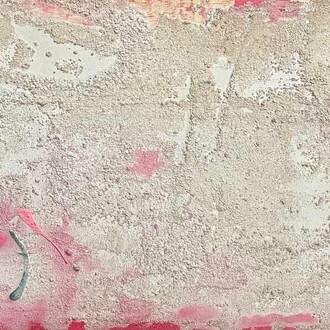
Harkawik is pleased to present Hollowell heaven, our second solo exhibition with artist David Hollowell, focused on works executed between 1985 and 2005, most of which have not been exhibited publicly in the years since. Hollowell heaven is both a fixture within the exhibition — an ecclesiastical presence hovering in space, inviting the viewer to ascend steps to the pearly gates — and a broader framework for understanding the painted tableaux as an aspirational psychic plane, peopled with the characters that distinguish Hollowell’s singular brand of arresting neo-realism. The titular painting itself is a capstone—a wildly ambitious, funny, moving, beguiling salon, in which the artist’s family, contemporaries, strangers and idols shed their standing and ascend to a neo-classical, theatrical plane.
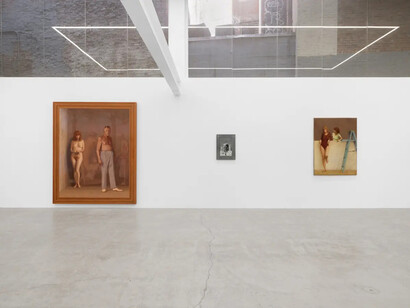
Recognized as one of the great postwar American painters, Hollowell has long worked on his own terms, developing a singular body of work largely outside the dominant rhythms of the art world. This exhibition focuses on the pivotal years in which his mature visual language fully emerged. Beginning in the early 1980s, he moved away from generalized figurative compositions toward a more direct engagement with the world nearest to him. Family members, friends, admired artists, and invented characters entered the paintings, while domestic interiors expanded into theatrical spaces. During these years, Hollowell fused technical virtuosity with personal mythology, establishing the themes and structures that would define his later work.
Hollowell built a practice grounded in observation, invention, and a sustained interrogation of the picture plane—aiming, in his words, to be “real, not realistic.” His meticulous technique serves uncertainty rather than replication, here in full view: trompe l’oeil passages destabilize the very realism they construct, painted objects hover between image and thing, and light structures space as much as it describes it. In Hollowell’s “Heaven,” the figures who shaped his imagination assemble before their keeper in a scene at once grandiose and vulnerable, devotional and absurd—Heaven rendered less as destination than as a theater of longing. Across the work, his recurring fixations come into focus—Americana and suburban ritual, hero worship and artistic lineage, performance and myth-making—tempered throughout by tenderness, humor, and irreverence.