English
 Español
 Français
 Deutsch
 Italiano
 Português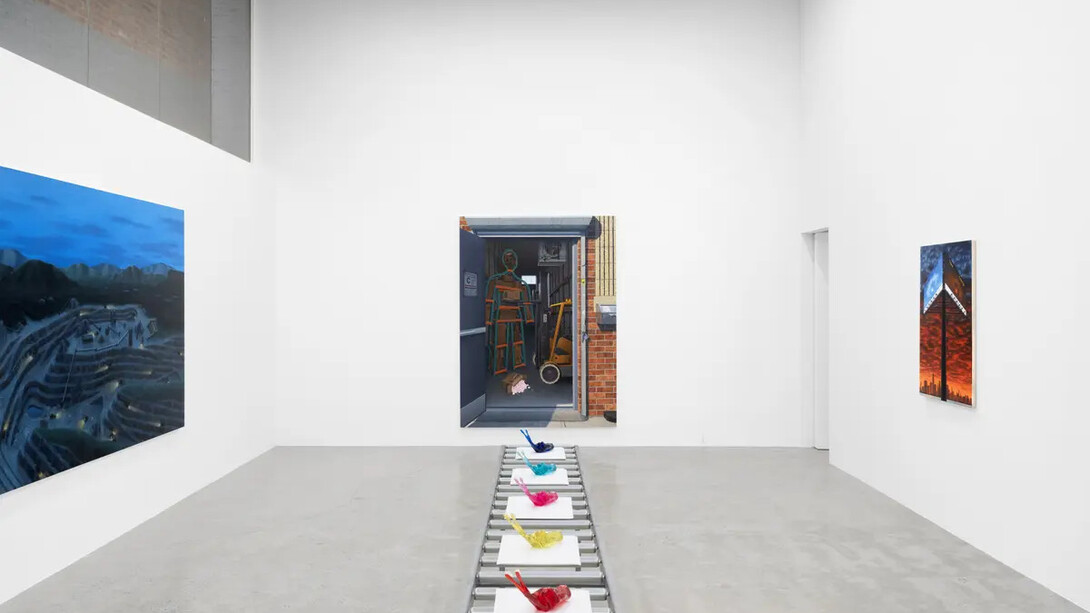
Harkawik is pleased to announce In transit, an exhibition of new paintings and sculptural works by Marc Librizzi. This marks the artist’s fourth solo exhibition with the gallery.
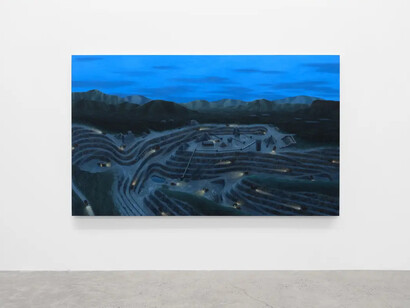
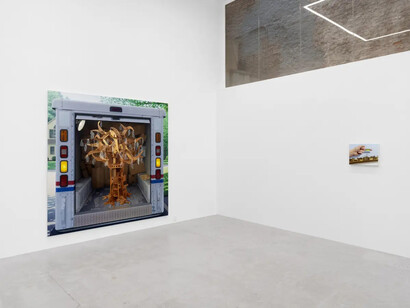
In transit examines infrastructure as something deeply entangled with the individual body—its labor, its promises, and its quiet exhaustion. Librizzi turns his attention to sites of extraction, transit, and containment, tracing how materials move through the world and how meaning accrues in the spaces in between. The exhibition is animated by a sense of aggregation: many parts coming together, temporarily aligning, before being dispersed again. Though human figures rarely appear directly, the body is everywhere implied—collapsed into quarried stone, embedded in shelving units, dispersed across shipping routes. People are both there and not there, absorbed into the systems that sustain them.
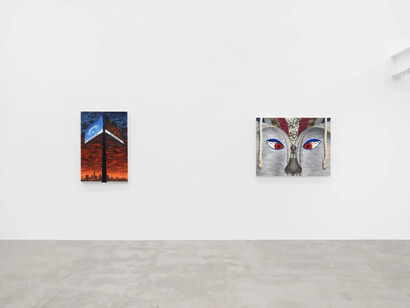
The works are hyper-rendered, marked by an almost obsessive clarity that pushes detail past comfort and into excess. Surfaces gleam, textures accumulate, and edges refuse to soften. This heightened visual fidelity does not aim at realism so much as overload, creating a sense of being caught mid-operation, as if the paintings themselves are paused inside an ongoing system. Detail exceeds necessity: the grit of aggregate, the corrosion on metal, the minute drag of a zipper tooth. None of it is required for the image to read. Instead, the density of attention becomes the subject.
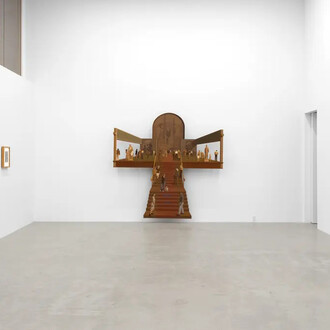
In this sense, Librizzi’s practice resonates with the devotional intensity found reliquaries and Italian renaissance painters. Labor becomes consecration. The surface accumulates presence through the sheer quantity of conscious decisions embedded within it. Librizzi extends this ethos into the language of quarries, mail trucks, storage boxes, and highway systems. His paintings do not depict sacred subjects, yet the act of rendering becomes its own form of devotion.
Billboards and highways introduce another register: a transient, roadside spirituality. Drawing from the artist’s experience traveling through New Jersey, Librizzi treats billboards as moral signposts, advertising not just goods, but values, flashing past alongside trucks loaded with packages, promises, and obligations. Infrastructure becomes a conduit not only for materials, but for belief systems quietly absorbed in motion. The spiritual emerges not through iconography, but through realism pushed beyond utility.
Across In transit, Librizzi presents a world perpetually in the act of being built, shipped, extracted, revealed. What emerges is not a critique of infrastructure so much as an intimate portrait of its psychological texture. These works ask how much of ourselves is embedded in the systems that move around us, and how much agency we retain while passing through them. In Librizzi’s hyper-rendered world, the in-between is not incidental—it is where meaning quietly, precariously, and devotionally takes shape.
(Text by Sierra Pittman)