English
 Español
 Français
 Deutsch
 Italiano
 Português
![Various artists, Histórias latino-americanas [Latin american histories], exhibition view. Courtesy of MASP](/attachments/3090714212d12044656ced40614fe698df098049/store/fill/1090/613/8481e63599516249cba60f15e188644bb76fc1eec25547e2c4b88b8f1c92/Various-artists-Historias-latino-americanas-Latin-american-histories-exhibition-view-Courtesy-of.jpg)
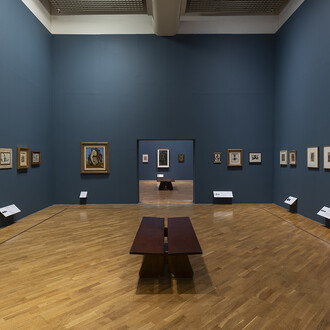
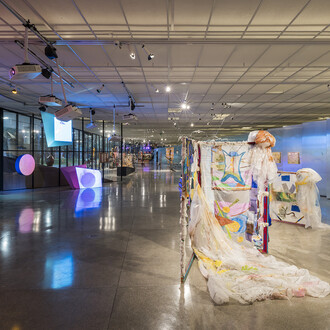
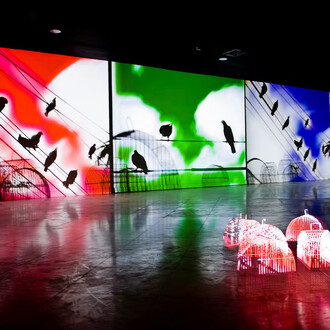
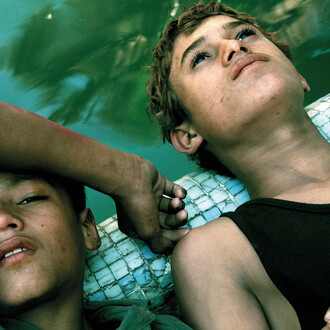
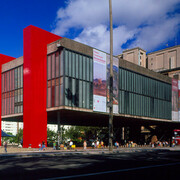
MASP — Museu de Arte de São Paulo Assis Chateaubriand opens the international group exhibition Histórias latino-americanas [Latin american histories] on September 4. Occupying five exhibition galleries in the Pietro Maria Bardi Building, the show features 187 works by 148 artists from 20 countries. It examines how colonization, migration, resistance movements, and nation-building projects have contributed to the creation of different narratives about Latin America.
Curated by Amanda Carneiro, curator, MASP, and Julieta González, associate curator, MASP, the exhibition places works ranging from the pre-colonial period to the present day in dialogue around shared concerns, including colonization, extractivism, projects of progress, forms of collective organization, migration, diasporas, and aspirations for the future. Paintings, documents, maps, sculptures, photographs, installations, textiles, and videos reveal how imaginaries and symbols have been used to invent, govern, and contest the region over time.
“Latin America is interconnected through multiple historical processes, such as colonial invasion, the genocide of populations, the legacy of European colonialism, and U.S. imperialism. It is also connected through collective ways of transforming adversity into creation, through the production and consumption of telenovelas, mass festivities, and complex rhythms shaped by countless exchanges. The region is a zone of conflict and creation. The exhibition does not seek to settle the discussion or offer a comprehensive narrative of the continent. Rather, its gesture is to broaden perceptions of visual regimes, temporalities, and questions,” says Amanda Carneiro.
The exhibition is organized into five sections: The world turned upside down, Rhetoric of progress, Sociedades americanas, Estamos em salsa, and The falling sky.
The world turned upside down draws on the Andean concept of pachakuti, which names a radical reversal of the order of the world. For numerous Indigenous peoples, the European invasion of the Americas produced a rupture of this kind, altering relationships with territory, time, and knowledge. The group of works reflects on how colonization invented a myth of a tropical paradise filled with natural riches that were supposedly available for exploitation by Europe, as well as the Latin American version of the Baroque.
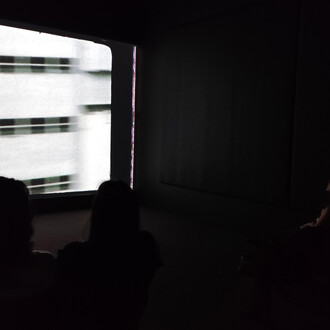
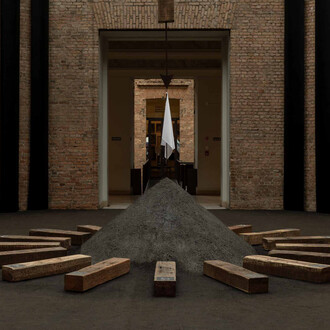
Rhetoric of progress examines how urbanization and industrialization projects shaped a twentieth-century Latin American narrative, revealing both its promises and contradictions. The city, the factory, the highway, architecture, and urban planning emerge as showcases of a promised modernity, but also as instruments of control, inequality, and environmental devastation. The exhibition design allows one of the windows of the Pietro Maria Bardi Building to reveal a view of Avenida Paulista, establishing a dialogue between São Paulo and the show. In this section, the commissioned work Nuremberg map of Tenochtitlan, by Mexican artist Mariana Castillo Deball, occupies part of the gallery floor. The installation reproduces on a large scale one of the first European maps of Tenochtitlan—then the capital of the Aztec Empire and present-day Mexico City. Deball highlights how cartography contributed to classifying, administering, and dominating Indigenous territory. The exhibition also features other commissioned works by JAMAC (Jardim Miriam Arte Clube), Marcela Cantuária, Marcelo Cidade, Manuel Chavajay, Maurício Lupini, and Podeserdesligado.
In Sociedades americanas, the exhibition looks at forms of community organization, such as quilombos, cooperatives, peasant movements, and popular pedagogies, that envision the construction of concrete alternatives to the unfulfilled promises of development.
Estamos em salsa refers to the song of the same name released in 1978 by New York musician of Puerto Rican descent Wayne Gorbea. Rooted in Afro-Caribbean traditions, the musical style emerged from encounters among migrants, record labels, dance halls, and Latino communities, becoming established in New York. Works such as Inserções em circuitos ideológicos: projeto Coca-Cola (1970), by Cildo Meireles, and Colombia (1980), by Antonio Caro, address the relationship between economic dependency and cultural repertoire through products such as Coca-Cola, oil, bananas, palm oil, corn, and tacos. Meireles inscribes political messages on returnable bottles and places them back on store shelves, infiltrating retail logistics with his critique. Caro, in turn, subverts the soft drink’s logo, forcing his country’s identity to conform to the signs of a global commodity.
The final section, The falling sky, takes its name from the book written by Davi Kopenawa and Bruce Albert. Published in 2010, the book reveals how the destruction of the Amazon rainforest through the advance of illegal mining triggers a catastrophe that goes beyond the notion of an environmental crisis and names the concrete collapse of the relationships that sustain life. The section brings together dream and myth, understood as forms of knowledge that offer alternatives to the utopias of progress. The coexistence and overlapping of territories and timelines also informed the exhibition design. Visitors may follow the proposed sequence or establish their own paths, creating different associations and readings. Hélio Oiticica’s painting Metaesquemas (1956–1958) served as a reference for the panels, blocks of color, and diagonal cuts that avoid a rigid separation between the sections, fostering continuity and dialogue among different works.
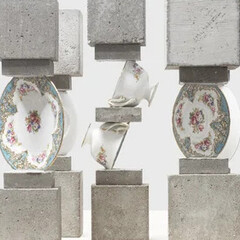
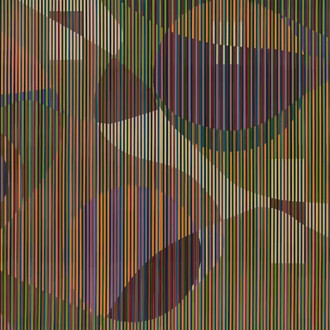
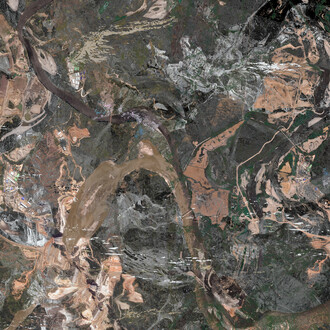
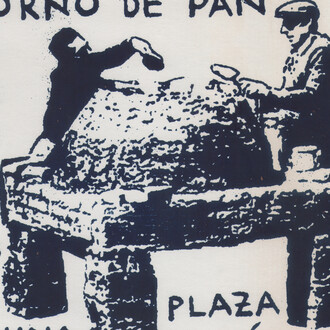
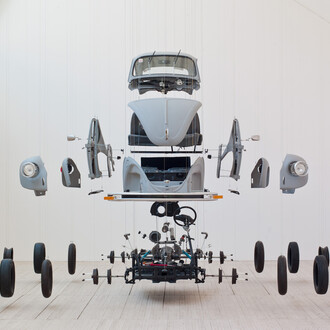
Histórias latino-americanas [Latin american histories] is the theme of the 2026 curatorial cycle. The year’s program also includes exhibitions devoted to Jesús Soto, Pablo Delano, Rosa Elena Curruchich, Manuel Herreros and Mateo Manaure, Carolina Caycedo, Sol Calero, Damián Ortega, Colectivo Acciones de Arte, Claudia Alarcón & Silät, La Chola Poblete, Santiago Yahuarcani, and Sandra Gamarra Heshiki.
The exhibition is part of a series of projects centered on the plural notion of “Histories,” a word that encompasses fiction and nonfiction, personal and political accounts, and private and public narratives, with a speculative, plural, and polyphonic character. These histories have an open-ended, processual quality, in contrast to the more monolithic and definitive character of traditional historical narratives. In this sense, as part of its annual programs and previous exhibitions, MASP has organized Histórias da sexualidade (2017), Histórias afro-atlânticas (2018), Histórias das mulheres, Histórias feministas (2019), Histórias da dança (2020), Histórias brasileiras (2021–22), Histórias indígenas (2023), Histórias LGBTQIA+ (2024) and Histórias da ecologia (2025).
![Various artists, Histórias latino-americanas [Latin american histories], exhibition view. Courtesy of MASP](/attachments/705a752e4922c1251870b2a02c849a41139fb487/store/fill/410/308/838c4117bf036ea12687f0bb3dfdaa052690c68542237a28600fe9dd05a5/Various-artists-Historias-latino-americanas-Latin-american-histories-exhibition-view-Courtesy-of.jpg)
![Various artists, Histórias latino-americanas [Latin american histories], exhibition view. Courtesy of MASP](/attachments/87fad4d7e935878ed5875515f7f87753b50ad87f/store/fill/410/308/3643eea9613be87504550ce911300f7750c1523e8db9def92605c4b94c59/Various-artists-Historias-latino-americanas-Latin-american-histories-exhibition-view-Courtesy-of.jpg)
![Various artists, Histórias latino-americanas [Latin american histories], exhibition view. Courtesy of MASP](/attachments/05fbe26fd84fb20150bac775f97e604a579c4ed2/store/fill/410/308/a6173fb0d5f92a908f95f0a0cccfe1e2dcfed90e81ab6aca6f583c597e0f/Various-artists-Historias-latino-americanas-Latin-american-histories-exhibition-view-Courtesy-of.jpg)
![Colectivo Acciones de Arte, No+ [Não mais] [No more] (detail), 1983. Courtesy of MASP](/attachments/9b5e15c1c6ff59f1c8272376342c34a6f13efb4a/store/fill/330/330/0fcbe6a1da1016b4e092bd89473b45f8f01cb2d5d8ed180582c9b452d1b0/Colectivo-Acciones-de-Arte-No-plus-Nao-mais-No-more-detail-1983-Courtesy-of-MASP.jpg)